
Corral Fence 101: A Guide to Materials & Design

Here in Central Nebraska, we know a fence has to be tough. Our variable soil and harsh weather can quickly reveal any weakness in a structure that isn’t built correctly from the ground up. A corral fence that works perfectly in another state might not last five years in Hall or Buffalo County if the posts aren’t set deep enough or the bracing can’t handle our conditions. Building a corral that lasts means using techniques proven to work right here. This guide is filled with practical advice based on years of local experience, helping you plan and build a structure that is perfectly adapted to our environment.
Key Takeaways
- Design for low-stress handling
: A great corral makes your job easier and keeps animals safe. Use smooth materials, place rails on the inside of posts, and create a logical flow with alleys and gates to prevent injuries and reduce stress.
- Choose materials for the long haul
: The right material is a long-term investment. Match your choice (wood, vinyl, or steel) to your specific livestock and daily tasks, considering that durability and low maintenance often provide the best value over time.
- Build a strong foundation and maintain it
: A fence that lasts starts with a solid build, so set posts deep enough for your soil and use proper bracing. Protect your investment with simple, regular checks to tighten hardware and catch small issues before they become big problems.
What Is a Corral Fence?
A corral fence is much more than just a boundary; it’s a heavy-duty working tool designed to safely contain and manage large livestock like cattle and horses. Think of it as a strong, secure enclosure where you can sort, load, or provide care for your animals. These fences typically stand four to five feet tall and are built from smooth, sturdy materials that won’t bend, sag, or injure an animal that leans or pushes against them. Unlike a perimeter fence, which simply marks a property line or keeps a herd in a large pasture, a corral is built for close contact and high pressure. It's the central hub of your livestock handling operation.
The primary goal of a corral is to create a system that makes handling livestock efficient and low-stress for everyone involved, including the animals. A well-designed corral allows you to move animals smoothly from one area to another, whether you’re guiding them into a loading chute or separating them into different pens. Because it’s such a critical part of your operation, the design and construction have to be spot-on. From the layout of the alleys and gates to the choice of materials, every detail contributes to a system that is safe, durable, and effective for years to come. It’s an investment in the safety of your herd and the efficiency of your work.
How Corral Design Keeps Your Livestock Safe
When you’re working with animals in a confined space, safety is everything. A thoughtfully designed corral minimizes the risk of injury. One of the most important design details is to place all rails and boards on the inside of the posts. This way, when an animal pushes against the fence, its force is directed into the solid post itself, rather than pulling against the screws or nails holding the rails in place. This simple choice dramatically increases the strength and integrity of the enclosure.
Another key safety feature is the choice of materials. You should always avoid using barbed wire or any fencing with sharp, jagged edges inside a working corral. When animals feel pressured, they can move unpredictably, and smooth surfaces prevent them from getting scraped, cut, or seriously injured. The goal is to create a secure space that contains your livestock without causing them harm.
Must-Have Features of a Well-Built Corral
A corral that lasts is built on a solid foundation. To prevent leaning and ensure stability, fence posts should be set at least three feet into the ground, and sometimes even deeper depending on the soft soil conditions we often see in Nebraska. This creates an anchor that can withstand pressure from livestock and the elements. The materials used for the rails, whether wood or steel, must be strong enough to resist bending or breaking under force.
A great corral system is also versatile. Your needs might change depending on the animals you’re handling or the specific task at hand. That’s why we build custom-built corrals that can be adapted with different components, like sorting alleys and gates, to fit your unique operation. A well-built corral is an investment that should be both durable and flexible enough to serve your farm for decades.
How to Plan Your Corral Layout: Location, Size, and Access
Planning your corral’s layout is the first step toward creating a functional system. Start by choosing the right location. You’ll want to place it on high, well-drained ground so you can easily access it with a trailer, even after a heavy rain. Ideally, the corral should be centrally located on your property to make it easier to gather animals from different pastures. This reduces the time and stress involved in moving your herd.
Next, think about the flow. Consider how animals will enter, move through, and exit the corral. Your layout should include alleys and gates that guide livestock logically and prevent them from bunching up or turning back. The size of the pens should match the number of animals you typically handle. When you’re ready to plan your project, we can help you design a layout that considers your property, herd size, and specific handling needs.
Wood, Vinyl, or Steel: Which Corral Fence Material Is Right for You?
Choosing the right material for your corral fence is one of the biggest decisions you'll make for your operation. This isn't just about looks; it's a long-term investment in the safety of your livestock and the efficiency of your daily work. The best material needs to stand up to the pressure of your herd, the force of a Nebraska blizzard, and the test of time. While traditional wood has been a staple for generations, modern options like vinyl and steel bring their own powerful advantages to the table. The right choice really comes down to balancing strength, maintenance, budget, and the specific animals you're managing.
Think about your day-to-day. Are you running a large cattle operation where you need an indestructible barrier for high-pressure alleys and pens? Or are you looking for a safe, clean enclosure for horses that won't require hours of upkeep? Each material offers a different set of trade-offs. Wood provides a classic look and natural flexibility, steel delivers unmatched power, and vinyl offers a lifetime of low maintenance. We’ve built corrals with all three, and we know what works in our local conditions. Let's break down the pros and cons so you can choose with confidence.
Wood Fences: The Traditional Choice
There’s a reason wood has been the go-to for corrals forever: it’s strong, reliable, and looks right at home on a Nebraska farm. A proper wood corral fence, usually built with tough Douglas Fir posts and rails, creates a formidable barrier that’s perfect for containing large animals like cattle and horses. Wood has a natural give to it, which means it can absorb impact if an animal pushes against it, making it a forgiving and safe option. It blends beautifully with the landscape and offers that timeless, sturdy look many ranchers prefer.
Of course, the trade-off for that natural strength is maintenance. To get the most out of a wood fence, it needs to be properly treated to fend off rot and insects. You’ll want to walk the fence line periodically to check for splintered rails or posts that are weakening at the ground level. For many, the proven performance and classic aesthetic of a well-built wood fence are more than worth the effort.
Vinyl Fences: The Low-Maintenance Option
If your goal is to spend less time on fence repairs and more time on your herd, a vinyl corral fence is an outstanding choice. Made from a durable PVC, vinyl is engineered to be both safe and strong for livestock, especially horses. It won't splinter, crack, or peel, and there are no sharp edges or nails that could cause an injury. Best of all, you can put away the paintbrush for good. Vinyl never needs scraping, sanding, or painting, and it holds up against sun exposure without fading or becoming brittle.
This material gives you a clean, uniform look that lasts for decades with minimal effort. It’s a practical, modern solution that provides peace of mind, knowing your animals are secure in an enclosure that’s as tough as it is easy to care for. It’s the definition of a set-it-and-forget-it fence.
Steel & Pipe Fences: The Durable Solution
When you need absolute, uncompromising strength, nothing outperforms steel. Continuous fence and pipe corrals are the heavy-hitters of the fencing world, making them the top choice for high-pressure areas like pens, alleys, and crowding tubs. We rely on galvanized steel for our custom-built corrals because it can handle the intense pressure of a large herd without flinching. It’s the ideal material for containing cattle and ensuring your handling system is both safe and efficient.
Steel is naturally resistant to fire, rot, and insects, giving it an incredibly long lifespan. While the upfront investment can be higher than other materials, its sheer durability and near-zero maintenance needs often make it the most economical choice over the long haul. For a permanent, powerful livestock containment solution, steel is simply unmatched.
How Your Material Choice Impacts Cost
It’s easy to let the initial price tag guide your decision, but the true cost of a fence is measured over its entire lifetime. A fence that seems like a bargain at first can quickly become a money pit if it isn't right for your land or your livestock. Choosing a material based on price alone, without considering our local climate and soil, can lead to premature failure, constant repairs, and the headache of having to do it all over again sooner than you planned.
Here in Central Nebraska, the soil can vary from sandy to heavy clay, and your fence posts need to be set accordingly. Investing in the right material and professional installation from the start is the smartest financial decision. It ensures your fence remains stable and strong for decades. If you're weighing your options, getting a professional assessment can help you make a sound investment that pays off for years to come.
What Should You Look for When Choosing a Corral Fence?
Building the right corral is about more than just picking a material. It’s about creating a safe, functional system that works for your specific operation. A well-designed corral considers the type of animals you’re managing, the layout of your property, and even the soil beneath your feet. When you get these details right, you create a space that not only contains your livestock but also makes handling them safer and more efficient.
Think of your corral as a workspace. Does it have a logical flow? Are the gates placed for easy access? Is it strong enough to handle your herd without causing injury? Answering these questions is the first step toward a successful build. From the height of the rails to the depth of the posts, every choice matters. We’ll walk through the key factors to consider, ensuring you end up with a corral that’s built to last and perfectly suited to your needs. If you're looking for a custom solution, exploring different corral services can give you an idea of what’s possible for your property.
Matching the Fence to Your Livestock
The first question to ask is: who is this corral for? The needs of cattle are different from those of horses, and your fence design should reflect that. For large animals like cattle and horses, you need a heavy-duty fence that can withstand significant pressure. These corral fences are typically built with strong, smooth materials that won’t bend, sag, or injure an animal that leans or pushes against them.
The goal is to create a secure barrier that your animals will respect without creating a hazard. Sharp edges or weak points can lead to costly vet bills and damaged fences. By matching the fence’s strength and materials directly to the size and temperament of your livestock, you ensure a safe environment for them and a durable, long-lasting investment for your farm.
How to Choose the Right Fence Height and Rail Spacing
Once you know what material you’re using, it’s time to think about dimensions. The right fence height provides security while ensuring your animals don’t feel overly confined. For example, most experts agree that the ideal fence height for the average horse is between 4.5 and 5 feet. This is tall enough to discourage jumping but not so tall that it feels like a cage.
Rail spacing is just as important. The gaps between rails should be small enough that an animal can’t get its head or a leg stuck, which can cause serious injury. Proper spacing prevents curious animals from testing the boundaries in dangerous ways. Getting the height and spacing right creates a visual and physical barrier that keeps your livestock safely contained.
Designing Effective Gates, Headgates, and Alleys
A great corral is more than just an enclosure; it’s a functional tool for managing your herd. To make your corral truly effective, you’ll want to include features like alleys and headgates. These components allow you to sort, treat, and handle animals safely without putting yourself or your livestock at risk. An alley leading to a headgate should be narrow enough to keep animals moving forward in a single file line, preventing them from turning around.
This simple design feature makes tasks like administering medication or tagging much smoother. Well-placed gates are also critical for creating a good flow, allowing you to move animals between pens or out to pasture with minimal stress. You can see examples of these features in our gallery of custom corrals.
Adapting to Nebraska Soil: Post Depth and Bracing
A fence is only as strong as its foundation, and in Central Nebraska, that means accounting for our local soil conditions. To ensure your corral stands strong for years, posts must be set deep enough to provide stability. As a rule of thumb, permanent posts should be set at least three feet into the ground. In areas with softer soil, it’s wise to go even deeper.
This depth prevents the posts from leaning under pressure from livestock or shifting due to frost heaves in the winter. Proper bracing, especially at the corners and gates, distributes tension across the fence line and is essential for a long-lasting structure. Understanding how to work with our local soil is key to a professional installation. If you have questions about your property, we’re always here to help you plan.
How Do You Build and Maintain a Corral Fence That Lasts?
A well-built corral is more than just an enclosure; it’s a long-term investment in the safety and efficiency of your operation. The difference between a fence that stands strong for decades and one that fails in a few years comes down to proper construction and consistent upkeep. From setting the posts correctly to knowing when a repair is out of your hands, every step matters. Building it right the first time saves you countless hours and dollars in the long run.
Once your corral is up, a little proactive maintenance goes a long way. Regular inspections and minor fixes prevent small issues from turning into major structural problems. Let’s walk through the essential practices for building a durable corral and keeping it in top condition for years to come.
How to Set Posts for a Stable, Long-Lasting Fence
The posts are the backbone of your entire corral system. If they aren't set correctly, the whole structure is compromised from day one. The most common mistake we see is setting posts too shallow, which almost guarantees they will lean or sag under pressure from livestock or the harsh Nebraska weather. A sturdy fence starts with a solid foundation, so this is one area where you can't afford to cut corners.
For maximum stability, you should dig your post holes to a depth of about one-third of the post’s total length. Using a string line and a level during installation ensures your posts are straight and evenly spaced, which is critical for proper tensioning later. Securing your posts, especially corner and gate posts, with concrete gives them the unshakeable support needed to handle the strain of a working corral.
Avoid Common Mistakes: Tips for Tensioning and Bracing
Once your posts are securely in the ground, the next step is getting the tension and bracing right. A fence without proper tension will sag between posts, creating gaps where animals could potentially get stuck or push through. Likewise, without strong brace assemblies at every corner, end, and gate, the immense force of the stretched wire or rails will pull your posts inward over time, causing the entire fence to fail.
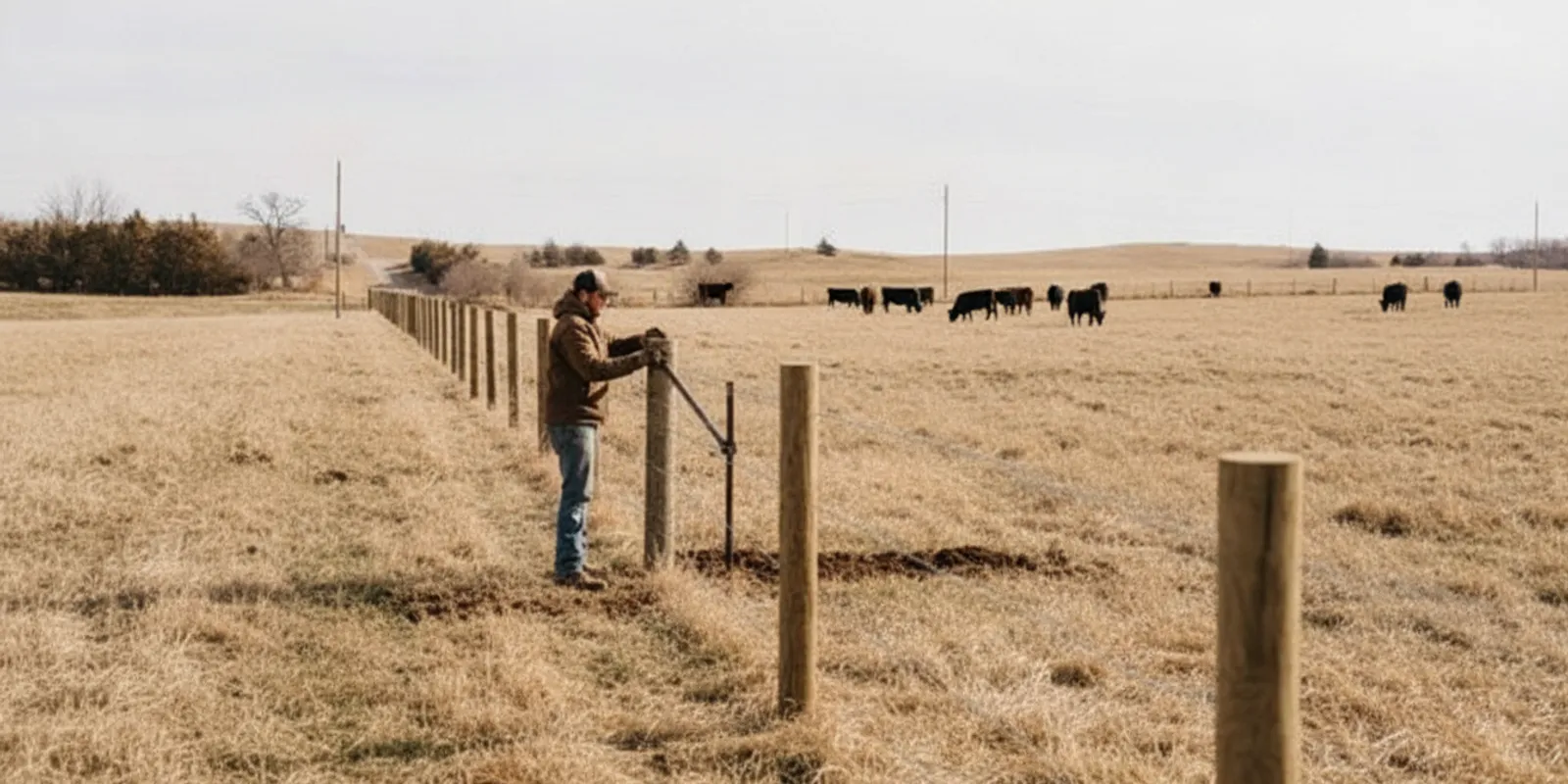
Building a solid H-brace is a fundamental skill for any agricultural fence. These braces distribute the tension load and keep your corner posts perfectly upright. When you install a fence, ensuring every wire is tightened to the correct specification is just as important. It’s a balance: too loose and the fence is weak, but too tight and you risk snapping wires or putting excessive strain on your posts.
Key Safety Features for Your Corral
A corral’s primary job is to keep your livestock safe and contained, especially when they are stressed during sorting or loading. The design and materials you choose play a huge role in animal welfare. Inside a working corral, you should always avoid using barbed wire or any materials with sharp, jagged edges. A panicked animal can easily scrape or cut itself on a protruding bolt or splintered board, leading to injury and infection.
Opt for smooth-sided materials like pipe fencing or high-quality wood panels. Make sure all hardware, like bolts and screws, is flush with the surface. Gates should have secure latches that are easy for you to operate but impossible for a clever cow to nudge open. A safe corral is a quiet corral, and thoughtful design helps keep animals calm and manageable.
Keep Your Fence Strong: A Maintenance Checklist
Your corral fence faces the elements 24/7, so regular check-ups are essential to extending its life. A simple walk along the fenceline a few times a year can help you spot trouble before it starts. During your inspection, look for any signs of wear and tear. For wood fences, check for splintering or rot. For steel, look for rust spots that may need to be sanded and repainted.
Pay close attention to the hardware. Check the functionality of your gate hinges and latches, lubricating any moving parts to keep them from seizing up. Take a wrench with you to tighten any loose nuts or bolts you find along the way. Catching these small issues early is the easiest way to prevent a costly failure down the road and ensure your corral is always ready for work.
Know When to Call a Professional
While tightening a bolt or replacing a single board are manageable DIY tasks, some problems require an expert. If you notice significant structural issues, like multiple leaning posts, widespread sagging, or major damage from a storm or fallen tree, it’s best to call for professional help. Attempting a large-scale repair without the right equipment or experience can sometimes do more harm than good and can even be unsafe.
A professional can accurately diagnose the root cause of the failure, whether it’s improper bracing or footing that has deteriorated over time. We have the tools and knowledge to make safe and effective repairs that restore the integrity of your fence. Investing in a professional fix for major damage ensures your corral remains a secure, reliable asset for your operation.
Frequently Asked Questions
What makes a corral fence different from a regular pasture fence? Think of a corral fence as a heavy-duty workspace, while a pasture fence is more like a property boundary. A corral is built for close contact and high pressure, designed to safely contain and manage animals during sorting, loading, or care. It uses stronger, smoother materials and a more robust construction because it has to withstand the force of animals pushing directly against it in a confined area.
What's the most durable material for a high-pressure cattle corral? When it comes to areas that take a lot of abuse, like crowding tubs and alleys, nothing beats steel. Continuous pipe fencing is the top choice for cattle operations because it offers unmatched strength and can handle the intense pressure of a herd without bending or breaking. While a well-built wood fence is also very strong, steel provides superior durability and requires almost no maintenance, making it the best long-term investment for a working corral.
How deep do my corral posts need to be set in Nebraska soil? A fence is only as strong as its foundation, so post depth is critical. Here in Central Nebraska, your posts should be set at least three feet into the ground. This provides the anchor needed to resist pressure from livestock and prevent shifting from our winter frosts. In areas where the soil is particularly soft or sandy, going even deeper is a smart move to ensure your corral stands straight and strong for decades.
Besides the material, what's the most important safety feature in a corral? One of the most critical, yet simple, safety features is placing all the fence rails on the inside of the posts. This way, when an animal pushes against the fence, its force is transferred directly into the solid post, not against the screws or nails holding the rail. This dramatically increases the strength of the enclosure. Using smooth surfaces and avoiding barbed wire is also essential to prevent cuts and injuries when animals are in close quarters.
My corral is leaning in a few spots. Can I fix it myself or do I need a professional? It depends on the scale of the problem. If you're just tightening a loose bolt or replacing a single damaged board, that's often a manageable DIY job. However, if you have multiple posts leaning or entire sections sagging, it's best to call a professional. These issues usually point to a deeper problem with the foundation or bracing that requires an expert diagnosis and the right equipment to fix properly and safely.
Comments