
Agricultural Fencing Hall County NE

Hall County mixes irrigated crop ground with cattle that still have to stay off the road, the neighbor's pivots, and the Platte bottom. A fence that works on a dry upland pasture can fail where silt loam stays soft after a wet spring or where a feedlot crowd leans on the same corner every day. Agricultural fencing Hall County NE farms need has to match that mix. Use barbwire or hi-tensile on the long pasture and field edges. Use continuous fence where cattle bunch. Hire a crew that will walk the line before quoting it. Rapid Fence builds those systems from Scotia for farms around Grand Island, Wood River, Cairo, Alda, and Doniphan.
What Hall County ground asks of a fence
Hall County is not one kind of farm. The 2022 Census of Agriculture county profile counted 552 farms on 273,923 acres, with an average size of 496 acres. Cropland covers 234,815 of those acres, and 191,002 acres are irrigated. Pastureland is the smaller share, about 31,575 acres, which is why so many cattle fences here sit next to corn, beans, and hay rather than on open range.
That layout changes the job. A perimeter often has to hold cattle off irrigated ground, keep a bull pasture separate from a neighbor's crop, and still leave gateways wide enough for a planter or a feed wagon. USDA's 2024 county inventory put Hall County at 66,000 cattle and calves. The 2022 census put cattle and calf sales at $121.2 million, so a downed fence is not a cosmetic problem. It is cattle in a pivot track or on a county road.
The county's namesake soil is a clue to how posts should be set. The USDA Hall series is a very deep, well-drained silt loam formed in loess or alluvium on uplands and stream terraces, with slopes mostly from 0 to 6 percent. On the Platte and Wood River bottoms the ground can be softer and wetter than that upland description. Posts set shallow in either place heave in a freeze-thaw winter or lean the first time a herd pushes a corner. We set depth and bracing for the spot we are standing on, not for a generic Nebraska fence.
If you want the full build sequence for a new line, the agricultural fence installation guide covers materials and bracing. This page stays on the Hall County decision: which system fits which part of the place, and when to call.
Agricultural fencing Hall County NE farms actually use
Most Hall County jobs are a mix, not a single product. The long edges want tensioned wire. The working pens want steel that can take a hit. Use this comparison when you walk a place between Grand Island and the county line.
Choice | Use it when |
Barbwire | Pasture edges beside cropland. Watch soft gate posts. |
Hi-tensile | Long open terraces. A weak brace is the first failure. |
Steel | Pens and tight lots. Impact at the gates is the risk. |
Barbwire on pasture and field edges
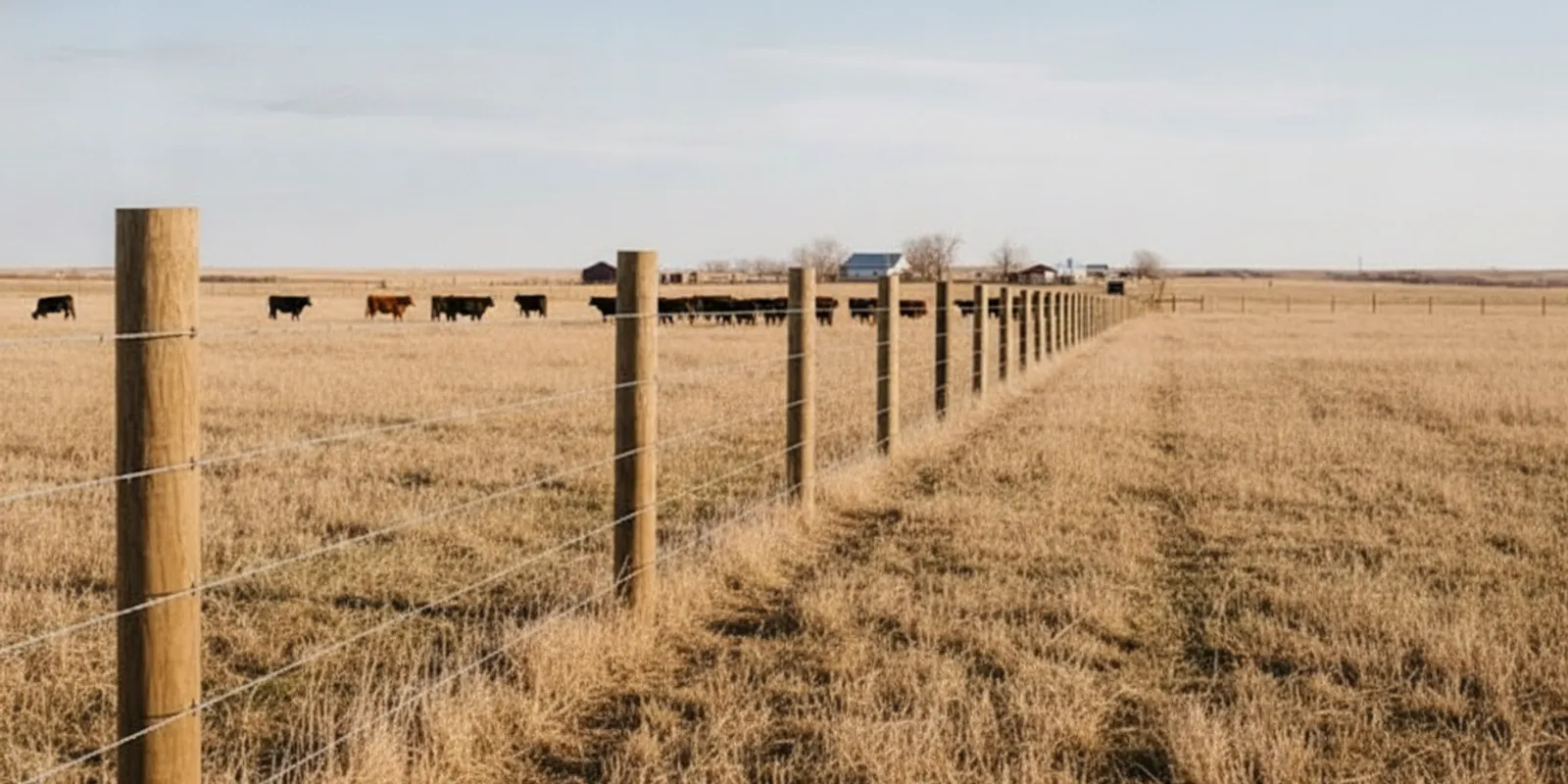
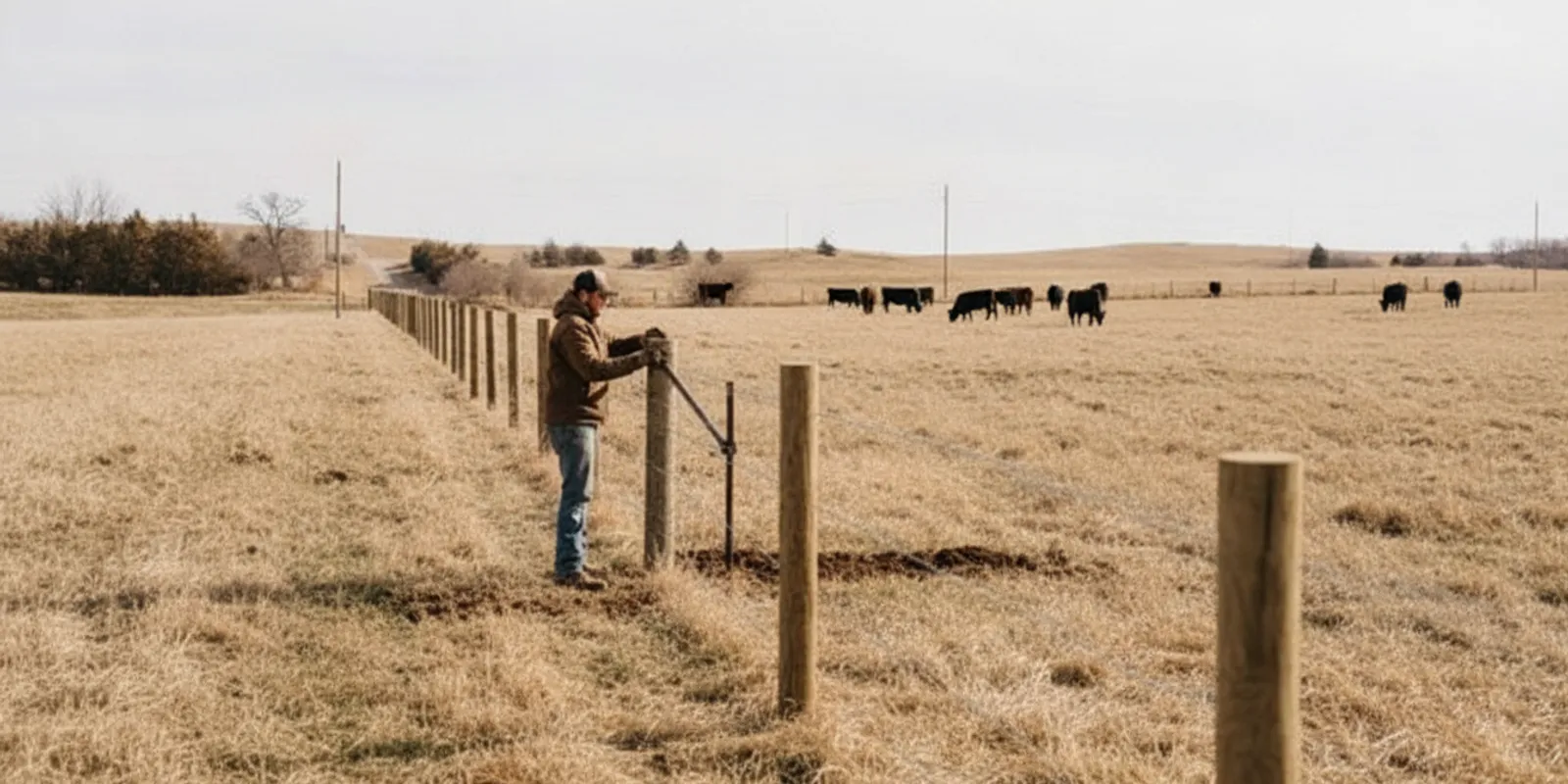
Five- and six-strand barbwire is still the practical perimeter for most cow-calf ground here. It is the right call when the line turns with a creek, a pivot, or a property corner and you want a fence you can repair with hand tools after a storm. The wire is not the hard part. The corner, the end post, and the H-brace are. On Hall silt loam and on wetter bottom ground, a brace that is too light walks out of the hole and the whole run goes slack.
Hi-tensile on the long, open runs
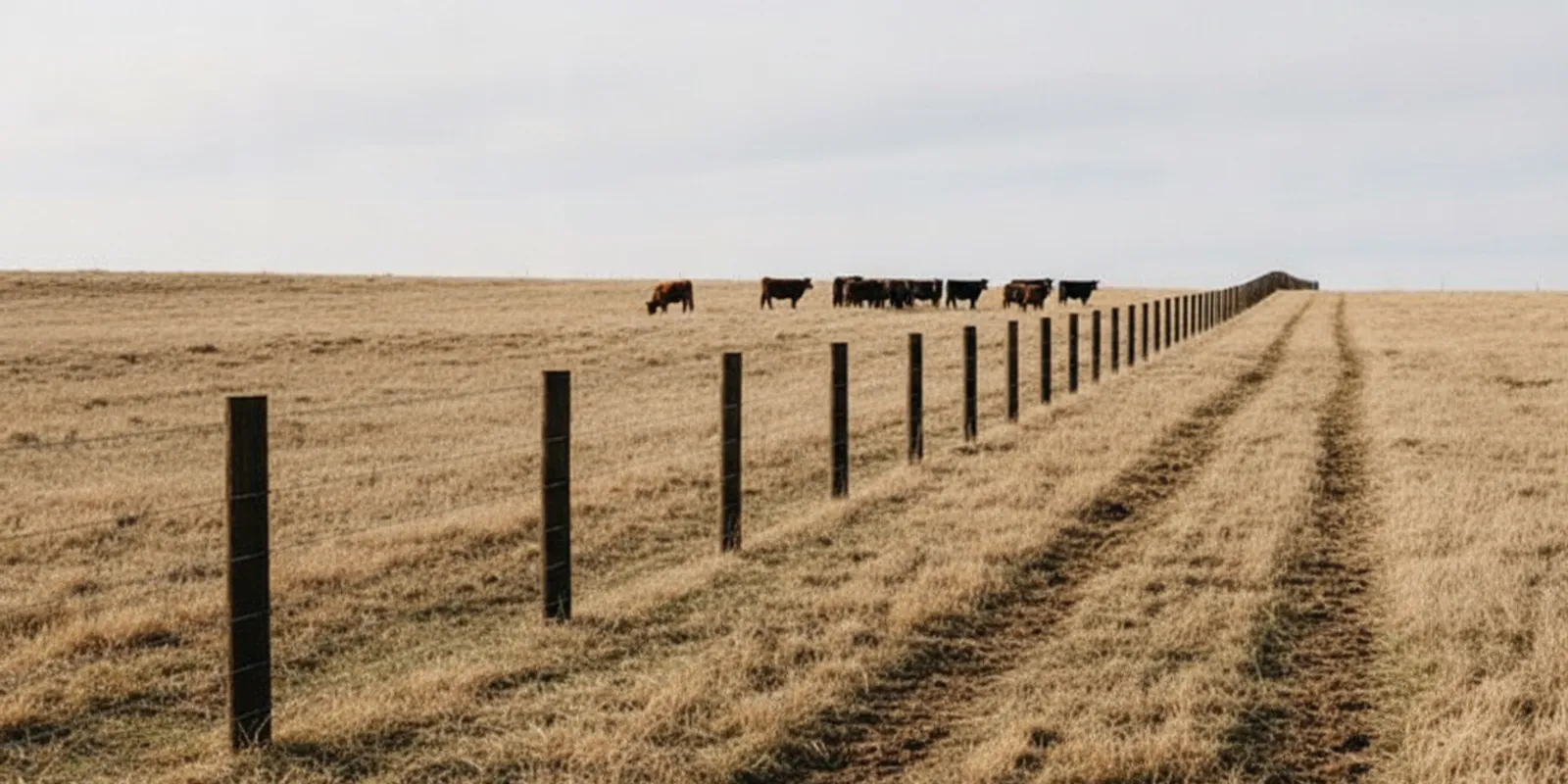
Hi-tensile smooth wire earns its keep on the straighter runs. Think of a half-mile field edge, a new cross-fence, or a boundary you do not want to restretch every few years. It asks more of the braces because the wire is pulled harder. For a side-by-side look at the two wire systems, see barbwire versus hi-tensile for cattle. We will not put hi-tensile on a line full of trees and tight turns just because it lasts longer on paper.
Continuous fence where cattle crowd
Pipe and continuous steel belong where animals pack together: a feeding pen, a sorting alley, a lot beside the yard. Wire is the wrong tool there. Cattle rub it, gates get swung into it, and a single broken strand becomes a hole. Our continuous cattle fence guide goes into pipe spacing and bracing. On a Hall County yard we size that steel to the lot you already use, not to a catalog pen.
Towns and ground we actually plan around
Grand Island is the county seat and the place people search from, but the fence work is usually outside town. Wood River and Alda sit closer to the Platte bottom, where access after a wet spring and soft post holes matter as much as the wire. Cairo and the northern townships sit higher, with more of the open silt-loam terrace the Hall series describes. Doniphan, on the south edge, is a short haul from Hamilton County, where we already build, but the quote still has to be for the Hall County line in front of us.
A few site facts change the recommendation before we talk about strand count. Walk them in this order.
Irrigated edges need gates a tractor and a grain cart can use, not a 10-foot livestock gate placed where the operator will have to back through it.
Creek and river-bottom stretches need posts that stay put when the ground is soft, and sometimes a shorter panel run where debris comes down in high water.
Yard and feedlot corners take more abuse than a pasture line a quarter mile from the house. Those get steel or a heavier brace, even when the rest of the place is barbwire.
Tree rows and old windbreaks drop limbs on the wire. We would rather shorten a span or move a corner than build a perfect line under a cottonwood.
If the project is really a regional contractor question rather than a Hall County site question, the Central Nebraska fence contractor guide covers how we schedule across the wider area. It does not replace a walk of your line.
Repair, tear-out, and the ground under the posts
Not every Hall County call is a new fence. A lot of them are a corner that leaned after a wet fall, a gate end that rotted, or a stretch of wire the cows have been walking through since last winter. We would rather repair a sound line than sell a rebuild. If the posts are rotten for a long run, patching wire does not fix it.
When the old fence has to come out, we do the tear-out, clear the line, and handle the dirt work that lets the new posts sit in firm ground. On flat irrigated fields that can mean filling a low gateway so water does not stand on the only place you drive through. On a bottom pasture it can mean building the approach up before the post driver shows up. Doing that prep with the same crew keeps the new line from inheriting the old fence's lean.
For a failing line anywhere in the central part of the state, the agricultural fence repair guide lists what is usually worth fixing. Use it to sort the obvious failures. The Hall County decision is still whether the ground and the traffic on that exact stretch justify a repair or a new build.
Corrals without redesigning the whole yard
Sorting pens around Grand Island yards fail for the same reasons as a pasture fence. Light posts, bad gate placement, and panels cattle can push are the usual causes. We build and repair those facilities, and we can tie them into the perimeter so cattle move from pasture to pen without a gap. Layout details live in the custom corral builder guide. Bring the herd size and how you load now. We will not invent a new working system you do not need.
What a Hall County quote includes
We do not publish a per-foot price for Hall County, because the number moves with length, access, soil, gate count, and whether an old fence is in the way. A useful quote comes from a site walk: measure the run, check how soft the holes will be, count the gates a pivot or a feed truck has to clear, and note any tear-out. You get one scope for wire or steel, labor, and the prep, and a phone number that reaches the same crew.
Call Rapid Fence at (308) 223-1320. We are based at 80348 Springdale Rd, Scotia, and Hall County is part of the regular service area, not a special trip. The fencing services page lists barbwire, hi-tensile, continuous fence, corrals, repair, tear-outs, and dirt work if you want the full menu before we visit.
FAQ: agricultural fencing Hall County NE
Do you fence around Grand Island, or only closer to Scotia?
We fence in Hall County, including places people search as Grand Island, Wood River, Cairo, Alda, and Doniphan. The drive from Scotia is part of the normal schedule. What changes the plan is the ground and the gates, not the town name on the mailbox.
Is barbwire enough next to irrigated corn?
Often yes, if the corners and gate posts are built for the soil and the gates are wide enough for equipment. Hi-tensile is the better fit on long, straight edges you want to tension once. Tight lots and feeding areas should be continuous fence, not another run of wire.
Can you repair a leaning corner instead of rebuilding the line?
Yes, when the rest of the posts and wire are still sound. We reset or replace the failed brace, pull the wire back to tension, and leave the good spans alone. If the posts are rotten for a long stretch, a repair will not hold cattle.
Will you remove the old fence and fix the gateway?
Yes. Tear-out, fence-line cleaning, and dirt work are part of the same visit when the new line needs them. On irrigated ground that often includes a gateway that holds up under a tractor instead of a low spot that stays wet.
How do I get a number I can plan around?
Call (308) 223-1320 or use the contact form. We walk the line, then quote materials, labor, and any prep. A phone photo helps us prepare. It does not replace seeing the soil and the gates.
Put the right fence on Hall County ground
Hall County cattle sit beside irrigated fields, on silt-loam terraces, and in yards that take a daily beating. The fence has to match the spot: barbwire or hi-tensile where the line runs, steel where animals crowd, and posts set for the soil under them. Rapid Fence builds and repairs that work for farms from Grand Island out to Wood River, Cairo, Alda, and Doniphan.
Call (308) 223-1320 and we will look at the line before anyone sells you a fence that does not fit it.
A spring walk beats a winter emergency
The best time to judge a Hall County fence is before cattle are on it. Walk the line in early spring, while last year's freeze is still written in the posts. A corner that moved an inch will move a foot once the herd starts rubbing it. Mark those spots before green-up hides the lean.
Bring three notes to the call. First, the rough length of the bad stretch. Second, whether equipment has to pass the gates. Third, whether the ground stayed soft last time it rained. Those three facts tell us whether to bring a post driver, a skid steer, or just a repair kit.
Irrigated operators often wait until after harvest, and that can work if the line is still holding. Do not wait if cattle are already using a low spot as a crossing. One night on a county road costs more than a fall repair slot. Wood River and Alda bottoms dry later than the Cairo uplands, so a south-county job may need a later start than a north-county one.
If you are comparing bids, ask each contractor who sets the corners and who pulls the wire. A crew that splits those jobs often leaves the brace underbuilt. Rapid Fence keeps bracing, wire, gates, and any dirt work on one visit so the finished line matches the quote.
Article by Cody Koehn, CEO of Rapid Fence.
Comments