
Farm Fence Post Depth: How Deep for a Lasting Fence?

There are few things more frustrating for a landowner than watching a brand-new fence start to lean after just one or two seasons. That sagging, unstable line is almost always a sign of a problem that started below the surface. The good news is that it’s entirely preventable. The secret to a long-lasting, sturdy fence isn’t just about the materials you use; it’s about understanding the proper farm fence post depth from the very beginning. We’ll cover the key principles, from the one-third rule to accounting for our local frost line, ensuring your next fence is your last one for a long time.
Key Takeaways
- Dig Deeper Than the Frost Line
: The one-third rule is a helpful guide, but your post's absolute minimum depth must be below the local frost line (around 30 to 42 inches in Central Nebraska) to prevent frost heave from pushing your fence upward.
- Customize for Your Soil and Add Gravel
: Your digging depth and technique must adapt to your ground conditions, like going deeper in sandy soil for stability. Regardless of the soil, always add a gravel base to every post hole for proper drainage and rot prevention.
- Reinforce Your Corners and Ends
: Corner, end, and gate posts handle the most tension and require a significantly deeper setting than your line posts. Giving these anchor points extra depth is critical for keeping your entire fence line tight and secure.
How Deep Should You Set Your Farm Fence Posts?
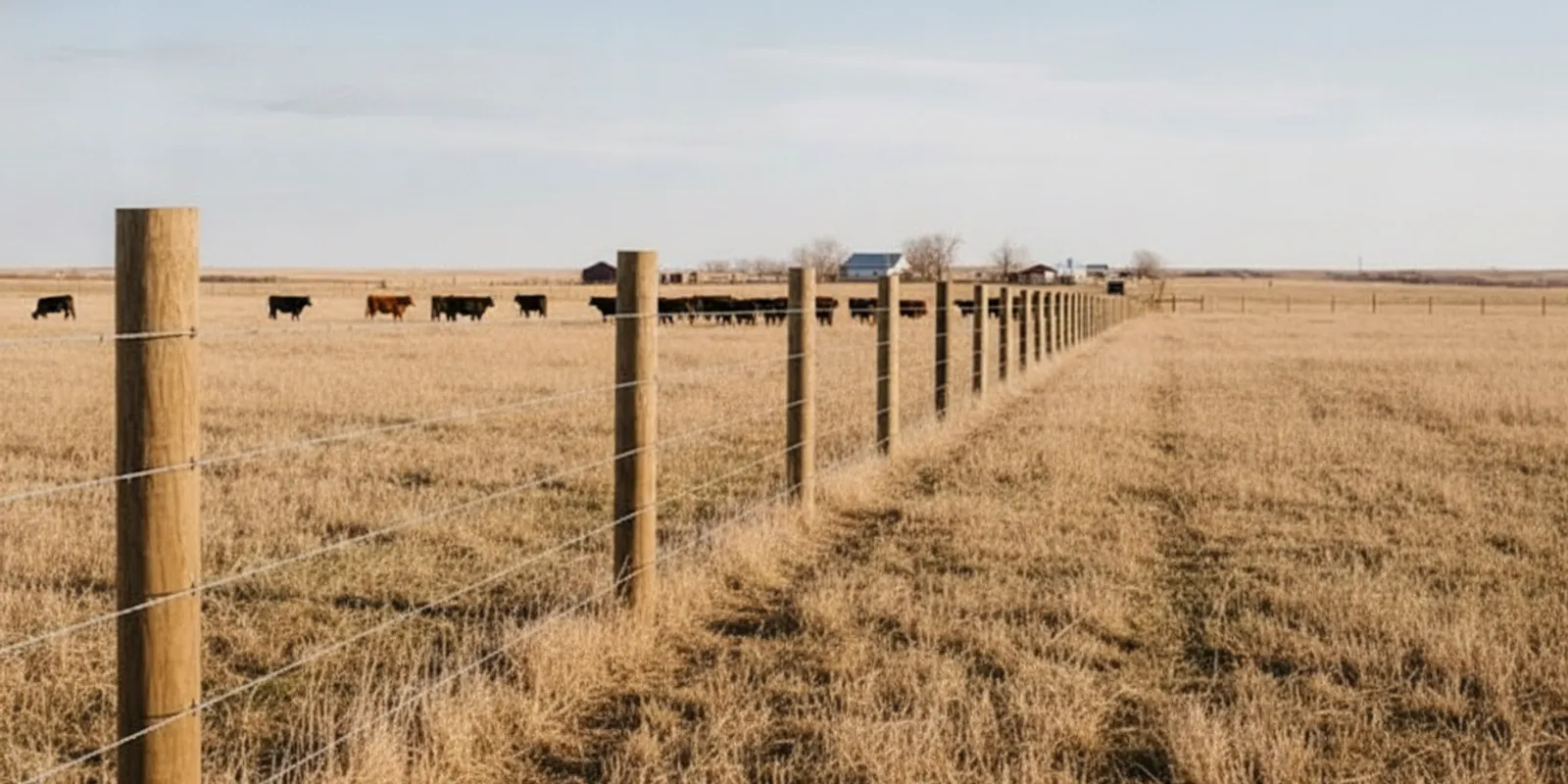
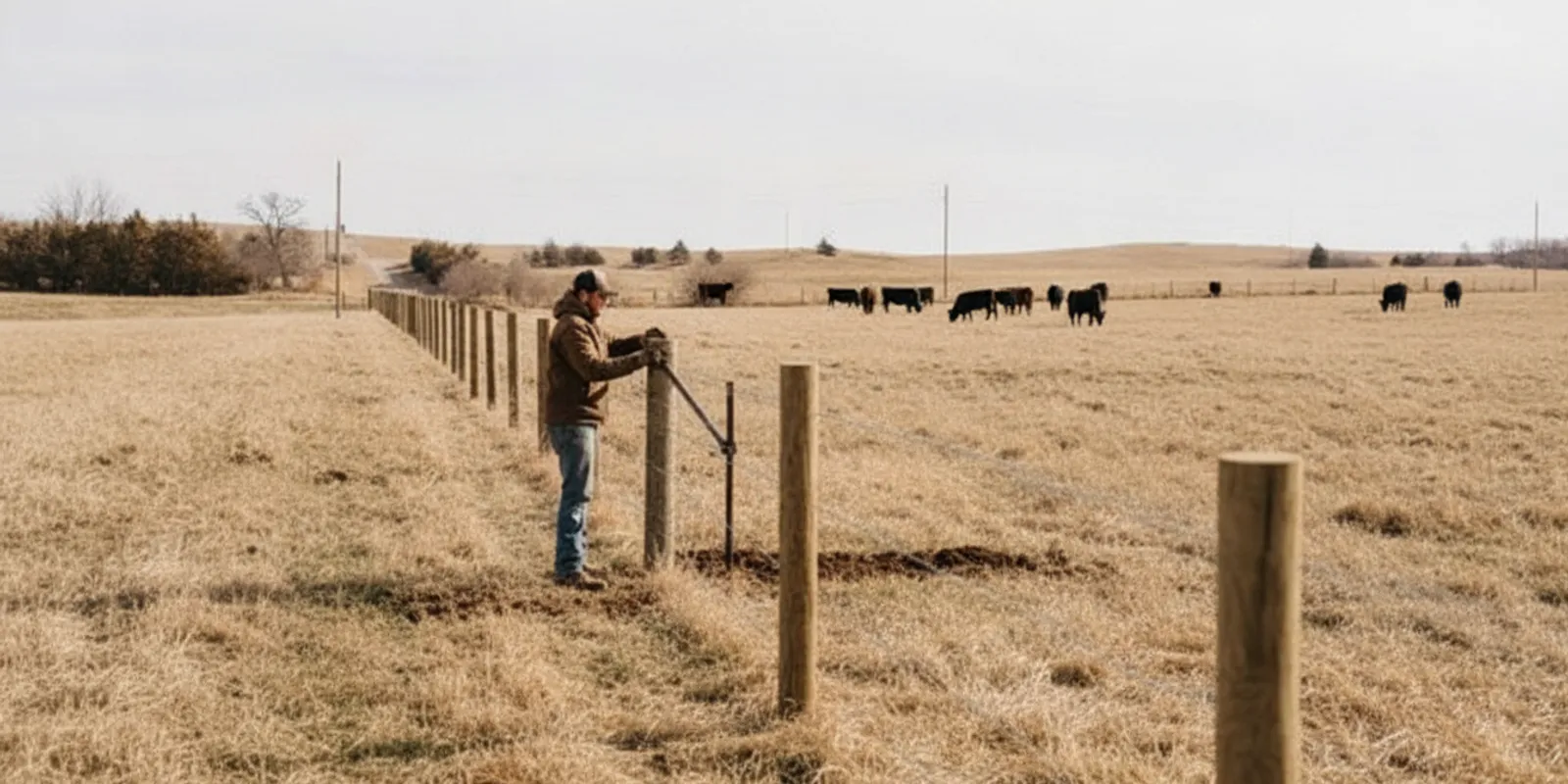
Getting your fence posts set right is the most critical step for a fence that will stand strong for years. A fence is only as sturdy as its foundation, and for livestock fencing, that foundation is buried deep in the Nebraska soil. If your posts are too shallow, you risk them leaning, lifting, or failing entirely when pushed by cattle or hit by our wild weather. While every project is a little different, there are some trusted guidelines that give you a great place to start. We'll walk through the basic rules and then get into how things like your soil type, local frost line, and the kind of fence you're building will change your approach.
The 1/3 Rule: A Solid Starting Point
When you're planning your post depth, the best rule of thumb to start with is the "1/3 rule." It’s simple: at least one-third of your post's total length should be buried in the ground. So, if you have a 7.5-foot post, you'll want at least 2.5 feet (or 30 inches) underground. This guideline ensures the post has enough leverage to stand up to pressure without wobbling or giving way. Before you even place the post, it's a good practice to add about 6 inches of gravel to the bottom of the hole. This creates a solid base and helps water drain away, protecting the post from rot.
Quick Guide: Post Depth by Fence Height
Let's make this practical. To determine the appropriate depth for your posts, you first need to know your desired fence height. For example, if you're building a 5-foot-tall fence, you'll likely use an 8-foot post. Following the 1/3 rule, you would bury one-third of that 8-foot post, which is 32 inches. Then, you add 6 inches for the gravel base, bringing your total hole depth to 38 inches. This calculation gives you a reliable baseline for standard line posts. Keep in mind, this is just the starting point. Factors we'll cover next, like the Central Nebraska frost line and the specific demands of corner posts, will require you to dig even deeper for maximum stability.
How Soil Type Changes Your Digging Depth
The ground beneath your feet is one of the biggest factors in building a fence that lasts. Soil isn't uniform across Central Nebraska, and what works for a post hole in one pasture might not hold up in another. The composition of your soil, from heavy clay to loose sand, directly impacts how stable your posts will be and how deep you need to dig. Getting this right prevents leaning posts and premature fence failure.
Before you start digging, take a moment to understand the ground you’re working with. Each soil type has its own personality, and learning how to handle it is the key to a secure fence line. Whether you’re dealing with stubborn clay or rocky terrain, adjusting your technique will ensure your fence stands strong against weather and livestock for years to come.
Working with Nebraska Clay
If you’re fencing on land with heavy clay, you know it can be tough to work with. Clay soil holds moisture, which means it swells when wet and shrinks when dry. During our freeze-thaw cycles, this expansion and contraction can literally push your fence posts right out of the ground, a process known as frost heaving. To counter this, it’s essential to give that water somewhere to go. Before setting your post, add a solid base of gravel at the bottom of the hole. This creates a drainage field, preventing water from pooling around the base of the post and giving your fence a much better shot at staying put.
Setting Posts in Sandy Soil
Sandy soil is the opposite of clay in many ways. It drains incredibly well, but it offers very little natural stability. Posts set in sand without extra support are prone to leaning over time, especially under pressure from livestock or high winds. To get a firm grip in loose, sandy ground, you need to give the post more to hold onto. The best approach is to dig your post holes deeper than the standard one-third rule suggests. Encapsulating the post in concrete and using crushed stone at the base will create a solid footing that locks it in place, providing the stability that the soil itself lacks.
The Advantage of Loamy Soil
Finding loamy soil on your property is like hitting the jackpot for fence installation. This soil is a balanced mix of sand, silt, and clay, offering the best of both worlds: good drainage and excellent stability. Posts set in loam have a natural advantage because the soil itself provides great support. However, that doesn't mean you can skip the fundamentals. Even in ideal soil, you should still install your posts with the proper depth and a gravel base for drainage. Following these steps in loamy soil ensures you’re building a fence with the strongest possible foundation, ready to stand the test of time.
Tackling Rocky Ground
Digging in rocky ground can feel like a battle. You might start a hole only to hit a large, unmovable rock a foot down. For compacted or rocky soil, a heavy digging bar can help you break up the ground and pry out smaller rocks. If you consistently hit large obstructions, a hydraulic auger might be necessary. Sometimes, the most practical solution is to simply shift the post location a few inches to avoid a major obstacle. Preparing the area with professional fence line cleaning can also clear away surface-level rocks and debris, giving you a better start before you even begin to dig.
What Is the Frost Line and Why Does It Matter?
If you’ve spent any time around Nebraska winters, you know our ground freezes solid. The frost line, or frost depth, is simply how deep that freeze goes. This measurement is one of the most critical factors in building a fence that lasts. As the ground freezes, it expands and pushes upward; when it thaws, it settles back down. This powerful movement, known as frost heave, can slowly but surely shove your fence posts right out of the ground if they aren’t set deep enough.
Imagine putting in all the work to build a sturdy fence, only to see it start leaning and lifting after a couple of winters. Setting your posts below the frost line anchors them in stable, unfrozen soil. This prevents the freeze-thaw cycle from affecting them, ensuring your fence stays straight and secure for years. It’s a non-negotiable step for any permanent fence in Central Nebraska. Ignoring the frost line means you’re not just building a fence; you’re planning for a future repair job.
Finding the Frost Line in Central Nebraska
In areas like Greeley, Buffalo, and Hall counties, the frost line typically sits somewhere between 30 and 42 inches deep. However, this can change based on your specific location, soil type, and the severity of the winter. A colder winter with less snow cover can drive the frost deeper into the ground. While the 30-to-42-inch range is a reliable guideline for our region, it’s always best to confirm the exact requirements. You can often find this information by checking your local building codes or talking with experienced local contractors who understand the specific conditions of your land.
What Happens When Posts Aren't Deep Enough?
Setting a post too shallow is one of the most common and costly fencing mistakes. A post that doesn't reach below the frost line is vulnerable from its first winter. Frost heave will begin to work it loose, causing it to lean. This compromises the tension of your wires, whether it's barbed wire or hi-tensile, creating gaps where livestock can push through. Over a few seasons, this can lead to a complete fence collapse, forcing you to start over. A fence is an investment in your farm’s security and efficiency, and ensuring every post is set to the proper depth is the best way to protect that investment.
Adjusting Post Depth for Your Fence Type
Not all fences are created equal, and the type of fence you’re building plays a huge role in how deep your posts need to go. A fence is a complete system, and the posts are its foundation. The amount of tension the wires carry and the job the fence needs to do will directly impact the stress placed on each post. A low-tension barbed wire fence has very different requirements than a high-tension electric fence designed to keep a herd of bison contained.
Thinking about the specific materials and purpose of your fence from the start helps you plan the right depth for every post, from the line posts to the critical corner assemblies. Getting this right ensures your fence stands strong for years instead of leaning and sagging after the first season. Let’s look at the specific depth requirements for a few common fence types we see here in Nebraska.
Depth for Barbed Wire Fences
For a standard barbwire fence, you can often stick close to the one-third rule we discussed earlier. Because barbed wire isn't under the extreme tension of other systems, the main job of the line posts is to keep the wires properly spaced and supported. Most barbed wire fences use 6.5-foot posts, which means you’ll want to set them about 2 to 2.5 feet deep. This provides enough stability to handle the weight of four to six strands of wire and resist pressure from livestock or wildlife. While the depth for line posts is fairly standard, remember that your corner and brace posts will still need to go deeper to handle the tensioning.
Requirements for Hi-Tensile Fencing
When you’re working with hi-tensile fencing, you have to plan for much deeper posts. This type of fence is designed to be under significant tension, which creates a constant pulling force on the entire structure. To keep the fence from literally pulling itself out of the ground, the posts need to be anchored securely. This is especially true in the sandy or looser soils we sometimes find in Central Nebraska. For hi-tensile fences, you should always set your posts at least 6 inches below the frost line. This prevents frost heave from pushing your posts upward and compromising the fence’s tension and integrity over the winter.
Why Corner and Brace Posts Go Deeper
Think of your corner and brace posts as the anchors for your entire fence line. While line posts simply hold the wires up, corner posts bear the full tension of the wire being pulled in two different directions. If a corner post fails, the two connecting fence lines will sag immediately. That’s why these posts must be set significantly deeper than line posts, often at a depth equal to or greater than the height of the top wire. Properly constructed brace assemblies distribute this immense pressure, but they are only as strong as their deepest post. This is one area where cutting corners will always lead to fence failure down the road.
How Your Livestock Affects Fence and Post Height
The type of animal you’re raising is the single most important factor in designing a fence. A fence that works for a small herd of goats won’t stand a chance against a herd of cattle, and what’s safe for a cow might not be suitable for a horse. Different animals have different behaviors; some are jumpers, some are leaners, and some are clever escape artists who will test every inch of the fenceline.
Thinking about your livestock’s size, strength, and temperament from the start will help you choose the right materials and installation methods. A well-planned fence not only keeps your animals securely contained but also protects them from injury and ensures your investment lasts for decades. The goal is to build a fence that respects the animal it’s holding, creating a safe boundary that can withstand their specific behaviors year after year. This is why a one-size-fits-all approach rarely works for long-term agricultural fencing.
Fencing for Cattle and Large Animals
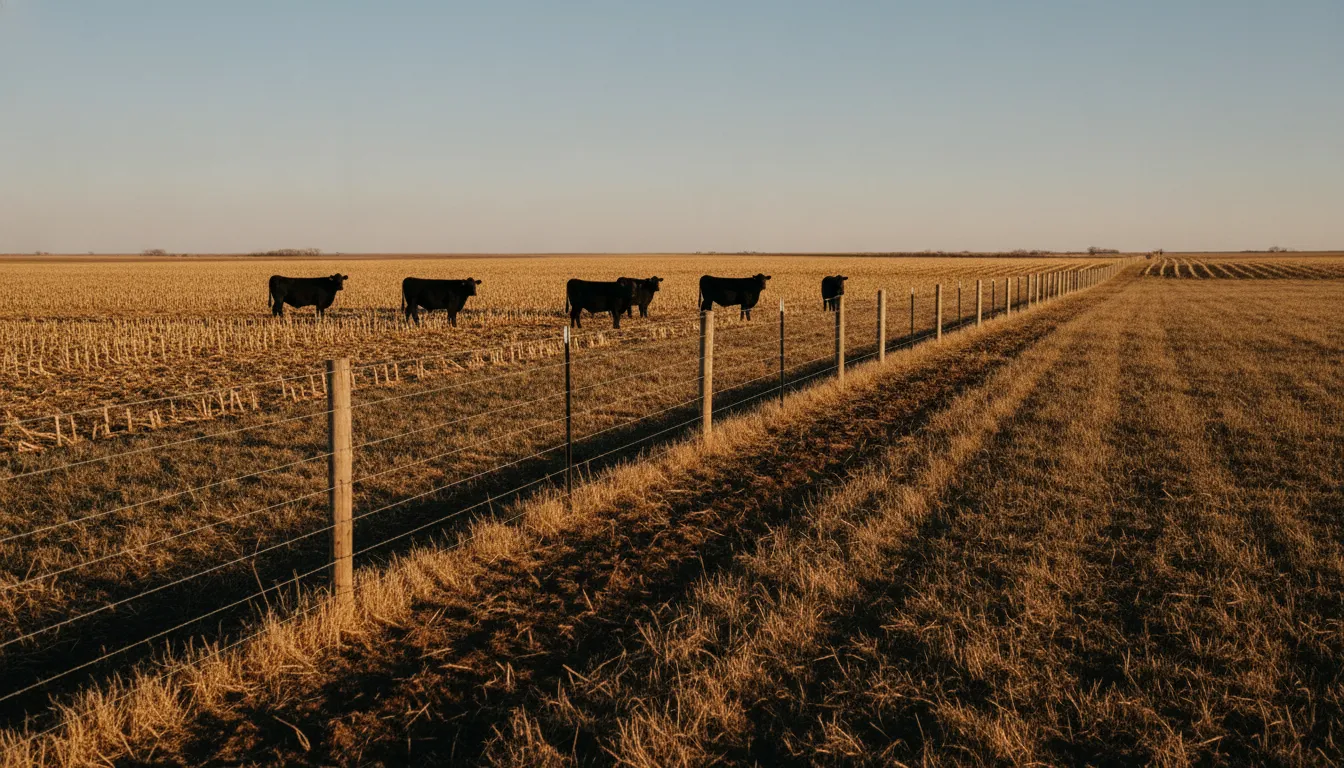
Cattle require strong, durable fences that can handle significant pressure. Because they often lean or rub against fence lines, both the posts and the wire need to be heavy-duty. For corners and gates, where pressure is highest, posts should be set about 10 to 12 feet apart. Along straight stretches, you can extend the spacing to between 16 and 20 feet. This structure ensures the fence can absorb the force of a large animal without failing. Building robust barbwire and hi-tensile fences with proper bracing is essential for keeping your herd safely contained and preventing costly escapes or damage.
Post Guidelines for Horse Pastures
Horses are strong, fast, and can be easily spooked, so their fencing must be both strong and highly visible. For horse pastures, it’s best to use posts with a minimum 4-inch diameter and set them at least 36 inches into the ground. This depth is critical for creating a stable fence that won’t lean or loosen if a horse runs into it or pushes against it. A wobbly post can quickly lead to a downed fence and a potential safety hazard for your animals. A solid, sturdy fence provides a reliable physical and psychological barrier that keeps your horses secure in their pasture.
Containing Goats and Smaller Livestock
Goats are notoriously clever and will exploit any weakness in a fence. While they don’t have the size and weight of cattle, their persistence requires a different kind of security. You can often use wider post spacing than you would for larger animals, but the posts must still be firmly anchored to prevent them from being pushed over. For goats and sheep, the real challenge is often the fencing material between the posts. Woven wire with small openings is crucial for preventing them from squeezing through or climbing. A secure fence for smaller livestock is all about eliminating gaps and creating a barrier they can’t outsmart.
Choosing the Right Post Material for Your Farm
Digging your post holes to the right depth is half the battle; choosing the right post material is the other half. The posts you choose are the backbone of your entire fence, and your decision will impact its strength, lifespan, and the amount of maintenance it needs down the road. For most farm applications in Nebraska, the choice comes down to two main contenders: classic wood and durable metal. Each has its place, and the best fencing systems often use a strategic combination of both.
Understanding the strengths and weaknesses of each material helps you invest your money wisely. A cheap post that rots out in five years isn't a bargain, it's a problem you'll have to solve all over again. We build our fences with longevity in mind, whether that means using sturdy wood for a pasture line or heavy-duty steel for a high-traffic corral. Our fencing services are designed to match the right materials to your specific needs, ensuring your fence stands strong for years.
The Pros and Cons of Wood Posts
Wood posts are a timeless choice for a reason. They have a natural look that blends beautifully into the landscape, and they are generally straightforward to install. However, not all wood posts are created equal. The biggest mistake you can make is using low-quality or untreated wood, which is an open invitation for rot and insects. A post that fails at the ground level can bring down an entire section of your fence.
To get the longevity you need, always choose posts that are properly pressure-treated for ground contact. This treatment helps the wood resist moisture and decay, which is essential for surviving Nebraska's wet springs and humid summers. While they require more upkeep than metal, quality wood posts provide a sturdy, reliable framework for many types of agricultural fencing.
When to Use Metal Posts
When you need maximum strength and minimal maintenance, metal posts are the answer. Steel posts, whether they are T-posts for line support or heavy-gauge pipe for corners and gates, offer exceptional durability. They won’t rot, are impervious to insects, and can withstand the pressure of a leaning cow or the tension of a hi-tensile wire system. They are also fire-resistant, which is a significant advantage in dry conditions.
We often use metal pipe for the corner and brace assemblies in our fences because these points handle the most strain. They provide the rigid anchor needed to keep wires tight and the entire fence secure. While the initial cost can be higher than wood, their long lifespan and resilience make them a smart investment for building strong, permanent structures like custom-built corrals and high-stress fence lines.
Does Post Material Change the Required Depth?
The short answer is no. The fundamental rules for post depth are determined by your fence height, soil type, and local frost line, not the material of the post itself. Whether you’re setting a wood post or a steel one, you still need to dig below the frost line to prevent frost heave from pushing it out of the ground. The "1/3 rule" also remains a great starting point for stability, regardless of material.
However, the post material can influence the how of setting it. For example, a heavy steel corner post that will anchor a hi-tensile fence needs a wider hole to accommodate a larger concrete footing for extra stability. The goal is always the same: to create an unmovable foundation for your fence. If you have questions about the best approach for your specific land and fencing needs, a professional consultation can provide clarity.
How to Set Posts for Proper Drainage
Digging the right depth is only half the battle. If your fence posts sit in water, they’re going to rot, heave, and fail, no matter how deep they are. Proper drainage is the secret to making your fence last for decades, especially with Nebraska’s freeze-thaw cycles. Protecting your posts from moisture at the ground level is one of the most critical steps in any fence installation. It prevents premature decay and ensures the structural integrity of your entire fence line, from the corners to the gates.
The goal is to create a setup that actively sheds water away from the wood. This involves more than just backfilling the hole with dirt. By using a combination of gravel for a solid foundation, the right concrete technique, and protective treatments, you can build a fence that stands strong against the elements. These extra steps don't add much time to the installation process, but they add years to the life of your fence. Whether you're putting in a new barbwire fence or replacing old posts, getting the drainage right from the start will save you a lot of headaches down the road.
Start with a Solid Gravel Base
Before you even think about placing your post in the hole, you need to create a foundation for it to sit on. Adding a few inches of gravel to the bottom of the hole is a non-negotiable step for a long-lasting fence. This gravel base acts as a French drain, giving any water that seeps into the ground a place to go. It prevents water from pooling directly against the bottom of your post, which is a primary cause of rot. This simple layer of stone is your post’s best defense against underground moisture. It also makes future post replacement much easier, as the post won't be locked into a solid block of soil or concrete.
Pouring Concrete the Right Way
Concrete can provide incredible stability for your posts, especially for corners, gates, or fences over six feet tall where local codes might require it. However, if it’s not done correctly, it can do more harm than good by trapping moisture against the wood. The key is to pour the concrete so it stops a few inches below ground level, then top it with soil. Most importantly, you must slope the top of the concrete footing so it forms a small crown around the post. This simple technique sheds water away from the post instead of letting it pool at the base, protecting the most vulnerable part of the wood from constant moisture exposure.
Protecting Posts from Moisture Damage
The area where your post meets the ground is the most susceptible to rot. This is because it’s exposed to a perfect storm of oxygen, moisture, and soil-borne organisms. Setting a post directly into wet soil is a recipe for disaster, as it traps moisture right where the wood is weakest. To combat this, always use pressure-treated posts rated for ground contact. For even greater longevity, consider applying a fence post treatment or a thick coating of tar to the section of the post that will be buried. This creates an additional barrier, sealing the wood and preventing moisture from seeping in and causing decay.
Common Post-Setting Mistakes to Avoid
Building a fence that lasts for decades starts below the ground. While it’s tempting to focus on the wire and rails you see every day, the real secret to a durable fence lies in how you set your posts. Getting this part wrong can lead to leaning, sagging, and a fence that fails years before it should. It’s an expensive and frustrating problem that, thankfully, is entirely preventable. Knowing what not to do is just as important as knowing the right steps.
Many common post-setting errors come from a one-size-fits-all approach that doesn’t account for the unique conditions of your land. From ignoring the soil composition to using materials incorrectly, these small oversights can have big consequences. A fence is a significant investment, and ensuring its foundation is solid protects that investment for the long haul. Let’s walk through some of the most frequent mistakes we see so you can avoid them on your property. By sidestepping these pitfalls, you’ll be well on your way to building a fence that stands strong against time, weather, and livestock.
Not Adjusting for Terrain and Soil
One of the biggest mistakes is treating every patch of ground the same. The soil on your property is not uniform, and factors like soil type, drainage, and terrain have a huge impact on fence stability. Setting a post in dense Nebraska clay requires a different approach than setting one in loose, sandy soil. Loose soil, for example, lacks the natural compaction to hold a post firmly, so you may need to dig deeper or use a wider post hole to create a more substantial concrete footing. Ignoring these variables and not performing proper soil preparation is a primary reason posts fail. A fence on a slope or in a low-lying area that collects water also needs special consideration to prevent erosion and instability.
Skipping the Gravel Foundation
Before you put anything else in the post hole, you should add gravel. Always. We recommend adding about six inches of crushed rock or gravel to the bottom of every single hole. This simple step is critical for drainage. It creates a space for water to drain away from the base of the post, which is especially important for protecting wood posts from moisture and rot. A dry post is a long-lasting post. This gravel layer also provides a solid, stable base for the post to rest on, preventing it from settling or shifting over time. It’s a small, easy step that can add years to the life of your fence.
Using Concrete Incorrectly
Concrete is great for creating a strong anchor, but only when used correctly. A common error is pouring concrete directly into the bottom of the post hole. This traps water right at the base of the post, creating a "bathtub" effect that accelerates rot and decay, even in treated wood. The right way is to pour the concrete on top of your six-inch gravel foundation. This method secures the post firmly in place while still allowing water to drain down and away through the gravel base. This combination gives you the best of both worlds: the unbeatable stability of concrete and the essential drainage that protects your investment.
Ignoring Your Local Frost Line
Here in Central Nebraska, we know a thing or two about cold winters. The frost line, or the depth to which the ground freezes, is a critical factor in fence installation. When water in the soil freezes, it expands and can push posts right out of the ground in a process called "frost heave." To prevent this, you must set your posts so the bottom is at least six inches below the local frost line. This anchors the post in stable soil that isn't affected by the freeze-thaw cycle. You can verify the frost line with your local building department, but it’s a non-negotiable step for a fence that will last through our tough winters.
Inconsistent Spacing for Line and Gate Posts
Not all posts bear the same load. Your line posts primarily keep the fence wire upright, but your corner, end, and gate posts are the structural backbone of the entire fence. They handle immense tension and weight, so they require different considerations. A frequent mistake is using the same depth and spacing for all posts. Corner and gate posts need to be set deeper and often require more substantial bracing to handle the constant pull of the fence line and the motion of a swinging gate. Planning your fence installation with these different roles in mind is key to preventing sagging and maintaining proper tension across the entire fence.
Are There Local Fencing Rules in Nebraska?
Yes, and taking a moment to understand them before you start digging can save you a major headache. While state-level guidance exists, the rules that really matter are often set at the county or city level. What’s required for a fence in Grand Island might be different from the rules for a rural pasture in Greeley County. These local ordinances cover everything from how tall your fence can be to where exactly you can place it along a property line. Getting it right the first time means you won’t have to worry about fines or, even worse, tearing down a freshly installed fence.
Most local regulations focus on a few key areas. Fence height is a common one; for example, many Nebraska counties require a permit for any fence over six feet tall. There may also be rules about specific materials or how far your fence must be set back from a shared property line. While the Nebraska Department of Agriculture offers a look at fencing laws from a state perspective, your local zoning office is the best source for the specific rules you need to follow. A quick call to your county’s planning or building department is the easiest way to get clear answers.
It’s also important to remember that regulations for agricultural land are usually different from those in residential areas. Your farm fence likely won’t face the same strict rules as a backyard fence in town. However, some local ordinances may have specific requirements for things like post depth, especially in relation to the frost line, to ensure fence stability and safety. When you partner with a professional installer, they should be familiar with these local nuances and handle any necessary permits, giving you one less thing to worry about.
When to Call a Professional for Your Fence Installation
Tackling a big project on your own can feel incredibly rewarding, but when it comes to installing a farm fence, the stakes are high. A fence that fails isn't just an inconvenience; it can mean lost livestock and costly repairs. So, how do you know when to trade your post-hole digger for the phone? While many farmers are more than capable of handling repairs, a full-scale installation is a different beast. It might be time to call for a professional installation if you find yourself in over your head.
One of the biggest hurdles is understanding the specific requirements for your area. You’ll need to check your local city or county building rules, which can dictate everything from post depth to whether you need a permit. A professional already has a firm grasp of these regulations, saving you the headache of research and potential redos. They also have the expertise to assess your land. If you're dealing with challenging soil, steep grades, or drainage issues, an expert knows how to adapt.
Local knowledge is especially critical when it comes to the frost line. Here in Nebraska, setting your posts deep enough is essential to prevent frost heave from pushing them out of the ground over winter. A professional brings not only this expertise but also the specialized equipment needed to get the job done right, from augers that can handle rocky soil to the tools for properly tensioning hi-tensile wire. Ultimately, hiring a professional is an investment in a fence that’s built to last, giving you peace of mind and saving you time and money down the road. If you’re unsure about the scope of your project, it never hurts to get in touch for an expert opinion.
Related Articles
Frequently Asked Questions
Is the "1/3 rule" a foolproof guide for post depth? Think of the one-third rule as your starting point, not your final destination. It’s a great guideline for ensuring a post has enough leverage to stay upright. However, you must also account for your local frost line and soil type. If one-third of your post length is shallower than the frost line, you absolutely need to dig deeper. The goal is to anchor the post in stable, unfrozen ground, and sometimes that requires going deeper than the one-third rule suggests.
Why do my corner posts need to be so much deeper than my line posts? Your corner posts are the anchors for the entire fence line. While line posts simply hold the wire up, corner posts bear the constant, immense tension of wires pulling from two different directions. If a corner post moves even slightly, the connecting fence lines will immediately sag. Setting them significantly deeper, often with concrete and proper bracing, gives them the foundation they need to resist that powerful, continuous force and keep your whole fence tight.
My soil is mostly sand (or heavy clay). What's the single most important adjustment I need to make? For loose, sandy soil, your main challenge is creating stability. The best adjustment is to dig your holes deeper and wider than standard and set the posts in concrete to create a solid footing the soil can't provide on its own. With heavy clay, your biggest enemy is water and frost heave. The most critical step is ensuring proper drainage by adding a thick, six-inch layer of gravel to the bottom of the hole before setting the post.
Do I really have to worry about the frost line for a simple barbed wire fence? Yes, absolutely. The frost line is non-negotiable for any permanent fence in Nebraska, regardless of the type. Frost heave is a powerful force that will push any post upward if it isn't anchored in stable soil below the freeze depth. Even a low-tension barbed wire fence will sag and fail if its posts start lifting out of the ground. Taking the time to get below the frost line protects your investment and prevents you from having to rebuild the fence in a few years.
If I use concrete, can I skip the gravel base at the bottom of the hole? No, you should never skip the gravel base, especially when using concrete. Pouring concrete directly into the bottom of the hole creates a "bathtub" that traps water right against the end of your post, which is a perfect recipe for rot. The gravel provides essential drainage, while the concrete provides stability. For the best results, pour the concrete on top of your gravel foundation to get both rock-solid stability and the drainage needed to protect the post.
Comments