
DIY vs professional farm fence installation

DIY vs professional farm fence installation is about more than comparing a wire price with a labor line. Nebraska farmers also have to account for soil, terrain, livestock pressure, gate locations, equipment, time, and the cost of correcting a fence that does not hold tension. Rapid Fence's agricultural fence installation guide explains the broader planning process. This comparison focuses on the decision itself: when a capable landowner can handle a project and when professional installation is the safer long-term choice.
How DIY vs professional farm fence installation decisions affect livestock projects
DIY farm fence installation means owning the entire project, from the first walk of the fence line through final livestock checks. The work includes planning the layout, clearing the line, setting posts, building braces, hanging gates, stringing wire, tensioning each run, and checking the finished enclosure. Buying materials is only one part of the job.
- Layout:
Mark corners, turns, gates, crossings, and transitions before ordering materials.
- Site preparation:
Remove old fence, brush, debris, and obstacles that prevent a straight, accessible line.
- Post work:
Set posts at a depth and spacing that fit the soil, terrain, fence type, and expected livestock pressure.
- Bracing:
Build sound end, corner, and gate assemblies so wire tension has a structure that can resist the load.
- Wire work:
Handle, attach, splice, and tension wire consistently without creating weak points or unsafe slack.
- Finishing:
Test gates, walk the entire line, remove hazards, and plan the first inspection after livestock enters.
The challenge increases when an existing fence has to be removed first, the line crosses uneven ground, or the enclosure will contain cattle. A short, straight repair is a very different project from a perimeter fence with multiple corners, heavy gates, and long wire runs. Treating both as the same DIY job is how a simple material list turns into an unfinished project.
A useful first step is to divide the work into a complete project scope. Sketch the fence line, count corners and gates, note crossings and slopes, and identify sections that need tear-out or fence line cleaning. Then list the equipment, helpers, and days you can realistically commit. This approach makes a DIY decision more honest because it exposes the work that happens before wire is attached. It also gives a professional installer enough information to prepare a meaningful conversation instead of guessing from a material list.
The Real Cost of DIY When You Factor in Time, Equipment, and Mistakes
The real cost of a DIY farm fence includes more than posts, wire, staples, and gates. It also includes equipment access, fuel, helper time, learning time, lost work time, and the cost of redoing a weak section. A fence that looks complete but loses tension or fails under livestock pressure can cost more than a carefully planned professional installation.
Cost category | DIY question to answer | Professional comparison |
Labor and time | How many days can the project take without disrupting planting, harvest, calving, or grazing plans? | A crew brings a defined workflow and helps keep the project moving during a narrow seasonal window. |
Equipment | Do you already have safe access to post-setting, wire-handling, tensioning, and line-clearing equipment? | Professional crews arrive with the equipment and experience needed for the planned scope. |
Site conditions | What will rocky ground, wet soil, slopes, brush, or an old fence add to the work? | A site assessment can identify preparation needs before material and labor are committed. |
Rework | What happens if a corner pulls, a gate sags, or livestock finds a weak point? | Clear scope and construction standards make quality checks part of the installation process. |
Opportunity cost | What farm work, livestock care, or family time will be displaced by the project? | Hiring a specialist can return the landowner's time to the operation. |
There is no honest universal price for either path because every fence line is different. A useful comparison is to list the full DIY scope, then ask a contractor to quote the same scope. Including tear-out, fence line cleaning, dirt work, installation, gates, and final cleanup. That makes the decision about total value instead of a misleading materials-only number.
Time deserves its own line in that comparison. A farm owner may be able to complete a small section between other jobs. But a long perimeter can occupy several weekends or compete with planting, harvest, calving, or grazing plans. Delays can also change where livestock can safely move. If a project must be ready for a specific management date, the value of an organized installation is not simply speed. It is having a defined scope, a workable sequence, and a final check before the enclosure is put into service.
For Nebraska operations, the USDA Natural Resources Conservation Service livestock-handling guidance is a useful reminder that agricultural fencing must support safe, functional livestock movement. The fence is part of the operation's infrastructure, not merely a line on a property map.
What Professionals Do Differently: Bracing, Tensioning, and Site Assessment
Professional agricultural fence installation starts with how the finished fence must perform, not just how quickly wire can be installed. Rapid Fence evaluates the line, livestock use, soil and terrain, corners, gates, and access. The crew can then match materials and construction methods to the conditions instead of forcing one standard layout onto every farm.
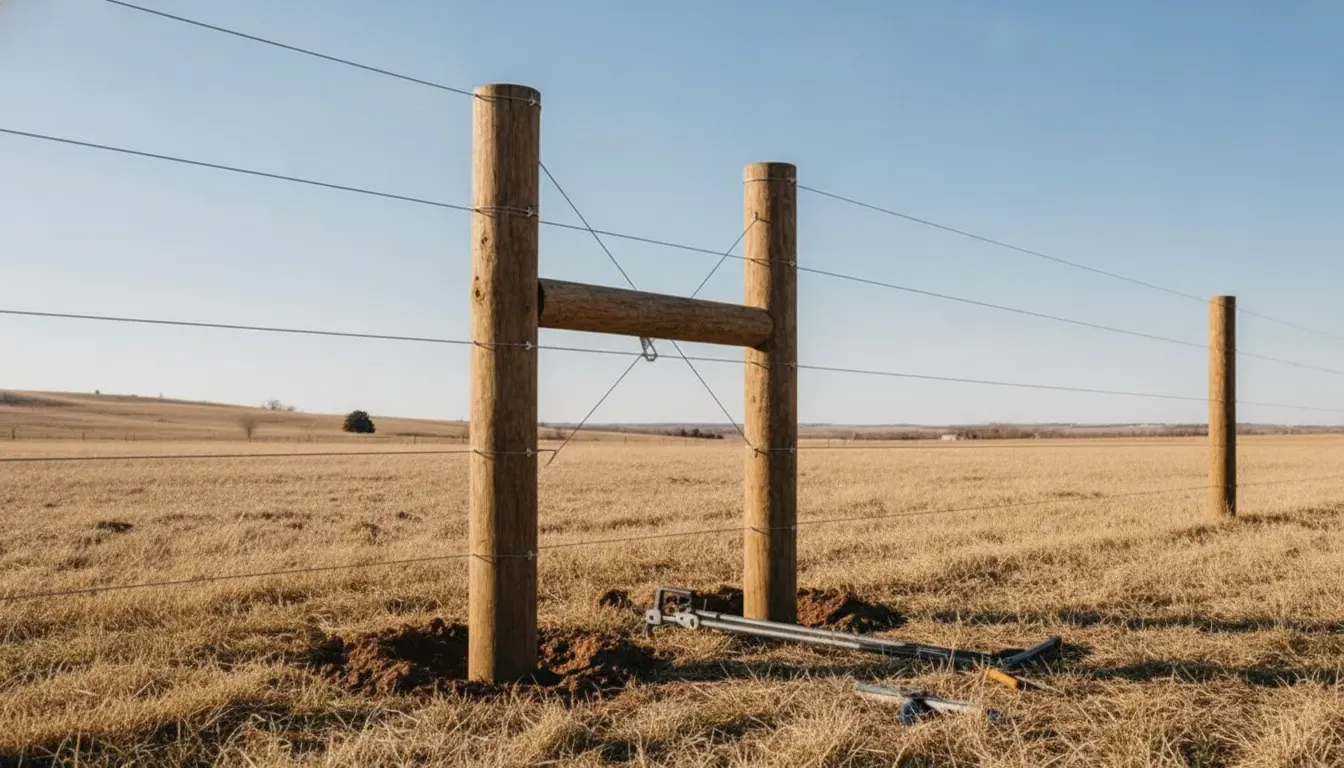
Bracing transfers the load
End and corner assemblies carry the forces created when wire is tensioned and when livestock, gates, weather, or changes in direction load the fence. A professional installer plans those assemblies as structural parts of the system. Posts, brace rails, and diagonal supports have to work together. If a corner moves, the tension of the entire run can change.
Tensioning is a system, not a final pull
Wire should be attached and tensioned in a way that keeps the fence consistent along the run. Too little tension can leave openings and sagging sections. Too much tension can stress posts, braces, splices, and gates. Professionals also account for how weather and seasonal conditions affect materials, then leave the owner with an inspection plan.
Site assessment prevents avoidable problems
Before installation, a careful assessment can reveal drainage paths, rocky or soft ground, steep transitions, brush, access limitations, property corners, and the best location for gates. The University of Nebraska's range and beef cattle research resources reinforce the importance of designing livestock facilities around animal movement and management needs.
These details also affect how a project should be communicated. A quote should identify what the installer is responsible for, what the landowner will provide, and how changes in ground conditions will be handled. Ask whether the scope includes old fence removal, line clearing, dirt work, post setting, wire tensioning, gate installation, debris removal, and a final walk-through. Clear answers help prevent a low initial number from becoming a larger project after work starts.
When DIY Makes Sense and When It Costs You More in the Long Run
DIY can make sense when the project is small, accessible, familiar, and low risk. Professional installation is usually the better fit when the fence is long, structural, livestock-critical, difficult to access, or tied to a firm operating deadline. The right question is not whether a farmer can perform one task. It is whether the whole system can be planned, built, checked, and maintained reliably.
DIY may be reasonable when:
The work is a short, straight section or a straightforward repair.
You have relevant fence-building experience and can identify sound bracing.
The needed equipment is available and safe to operate.
You have time for layout, installation, inspection, and likely adjustments.
A temporary delay or small mistake will not put livestock, crops, or people at risk.
Professional installation deserves serious consideration when:
The project is a perimeter, pasture division, corral, or heavy-use livestock enclosure.
The line includes multiple corners, slopes, gates, water crossings, or difficult soil.
Old fencing must be removed, the line must be cleaned, or dirt work is needed.
You do not have the equipment or enough experienced help to complete the job safely.
The fence must be ready before a grazing, calving, or livestock movement deadline.
A failed section would create a containment, safety, or neighbor problem.
Rapid Fence serves agricultural and livestock owners from Scotia across Central Nebraska, including Greeley, Buffalo, and Hall Counties. Farmers planning work in the wider regional radius, including areas around Platte, Boone, Holt, or Custer Counties, should confirm the current service area and project scope before scheduling. A direct conversation is better than assuming a standard fence package fits every operation.
What to Ask Any Fence Contractor Before You Hire Them
A good contractor should be able to explain what will be built, how the site will be prepared, and what assumptions shape the quote. Ask questions that reveal whether the contractor understands agricultural use rather than only residential fence installation. Written answers also make it easier to compare bids that include different scopes.
What type of fence fits my livestock, terrain, gates, and management plan?
How will you handle corners, ends, gate assemblies, and changes in direction?
Is tear-out, fence line cleaning, dirt work, or debris removal included?
What site conditions could change the scope or schedule?
How will the wire be tensioned and how will the finished work be checked?
What materials and construction methods are included in the written scope?
What is the expected schedule, and how will weather or access affect it?
What should I inspect and maintain after livestock is moved into the enclosure?
Rapid Fence's approach is built around durable agricultural work, proper bracing and tension, efficient service, and local knowledge of Nebraska conditions. Whether you choose DIY for a limited project or professional installation for a complete fence system, a clear scope is the best starting point. Review the company's agricultural fencing services and compare the actual work required on your property.
Frequently Asked Questions
Is DIY farm fence installation always cheaper?
No. DIY may reduce the labor bill, but the complete comparison should include equipment, fuel, helper time, lost farm time, mistakes, and future repairs. A materials-only estimate can make DIY look cheaper than it is.
What part of farm fence installation is hardest to get right?
Bracing, tensioning, corners, ends, and gates are common trouble points because they determine how the fence carries load. A weak assembly can affect a much longer run than the section where the problem first appears.
Can I install part of the fence myself and hire a professional for the rest?
Possibly. Discuss the division of work before starting. The contractor needs to know what has already been built, verify the existing work, and agree on who owns layout, materials, bracing, tensioning, and final inspection.
When should I get a fence contractor involved?
Contact a contractor before buying materials when the project involves livestock-critical containment, long runs, multiple corners, heavy gates, difficult ground, old fence removal, or a time-sensitive farm schedule.
What information should I have ready for a fence quote?
Share the approximate fence line, livestock type, intended use, gates, existing fence conditions, access issues, terrain, desired timing, and any site preparation needs. Photos and a property sketch can help a contractor understand the project before a visit.
Make the Decision Before the Fence Line Decides for You
DIY is a practical option for some limited projects. But a complete agricultural fence is a system that must contain livestock, handle weather, and fit the way a farm operates. If the project depends on sound bracing, consistent tension, site preparation, and a dependable schedule, compare a full professional scope with the full cost of doing it yourself. Rapid Fence can help Nebraska farmers make that comparison before work begins.
Bring your fence line, livestock, and timing questions to the conversation.
Article by Cody Koehn, CEO, Rapid Fence.


Comments