
Fence Contractor Central Nebraska: Farm and Livestock Guide

Updated: Sep 14
When you need a fence contractor central Nebraska farmers can rely on, the job starts with more than wire and posts. A dependable agricultural fence must fit the property layout, livestock, soil, weather, gates, and the season's schedule.
Rapid Fence is a Scotia, Nebraska fence contractor for agricultural and rural properties across Central Nebraska. The team plans and installs barbwire, hi-tensile, continuous fence, custom-built corrals, chain link, and privacy fence, with proper bracing and tension. Rapid Fence also handles fence line cleaning, dirt work, tear-outs, repairs, and quote-based free on-site estimates.
Rapid Fence LLC is based in Scotia in Greeley County. The company serves agricultural owners across Greeley, Buffalo, Hall, and nearby Central Nebraska counties. Cody Koehn, CEO of Rapid Fence, leads a practical process that begins with the property's purpose and ends with a fence ready for daily use. The plan can cover a new pasture boundary, a working corral, a repair, a complete tear-out, or a fence around a home, shop, yard, or service area.
How a Fence Contractor in Central Nebraska Plans Livestock Fencing
A fence contractor does more than set posts and stretch wire. On an agricultural property, the work starts with understanding what the fence must accomplish. The design must contain the intended livestock, work with the land, support equipment access, and make gates practical for the people who use them. It also needs to account for soil, weather, terrain, vegetation, drainage, and the pressure animals can put on a weak section.
Begin with the purpose of the fence
Start by identifying the job of each proposed section. A perimeter fence may define a large boundary and contain animals across a pasture. An interior division may support grazing management or separate groups. A working area may need a more rigid barrier, while a residence or shop may need controlled access or privacy instead of primary livestock containment.
The use of the fence affects height, spacing, gates, materials, and the structural details at corners and ends. A contractor should ask how animals move through the property, where equipment enters. Which gates need to accommodate trucks or tractors, and whether the fence will connect to an existing line. Those answers produce a more useful plan than choosing a material from a catalog without visiting the site.
Review the line and the surrounding property
Rapid Fence can review the proposed line, existing structures, access points, corners, gates, and areas that may need preparation. Fence line cleaning can open a workable route through brush, fallen limbs, old wire, or debris. Dirt work may improve an approach, address uneven ground, or prepare an area around a gate. If an existing fence is no longer useful, a tear-out can remove the old system. That work makes room for a better layout.
A site review can reveal problems that are easy to miss from a map. The shortest route may cross wet ground, crowd a driveway, interfere with equipment, or create an awkward corner. A different alignment may improve access and make the fence easier to inspect. Review Rapid Fence's professional fencing services when outlining a Central Nebraska project.
Build the structure before the visible finish
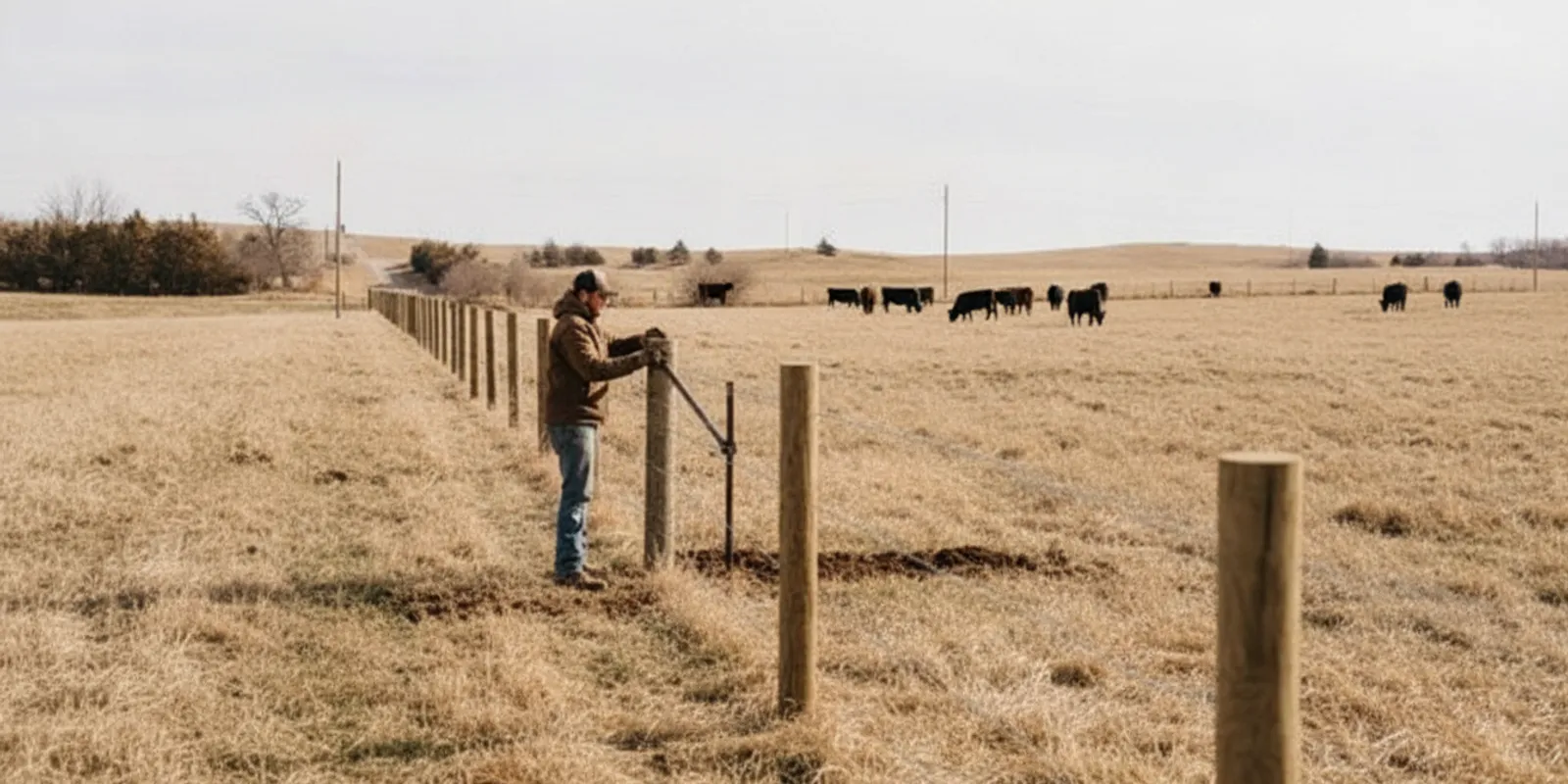
The visible wire, rail, or mesh is only one part of a fence. Corners, ends, gates, and changes in direction concentrate force. Proper bracing gives those points the support needed to hold the line in place. Proper tension then helps the selected fence system perform consistently along the run.
When either detail is overlooked, a fence can sag, shift, or become vulnerable when livestock lean against it or weather stresses the materials.
Rapid Fence plans the structural details around the selected system and the property. Barbwire, hi-tensile, and continuous fence each respond to the site in different ways. A custom-built corral also needs a layout that supports animal flow, handling, loading, and gate access. The final goal is efficient service without treating structural quality as an optional extra.
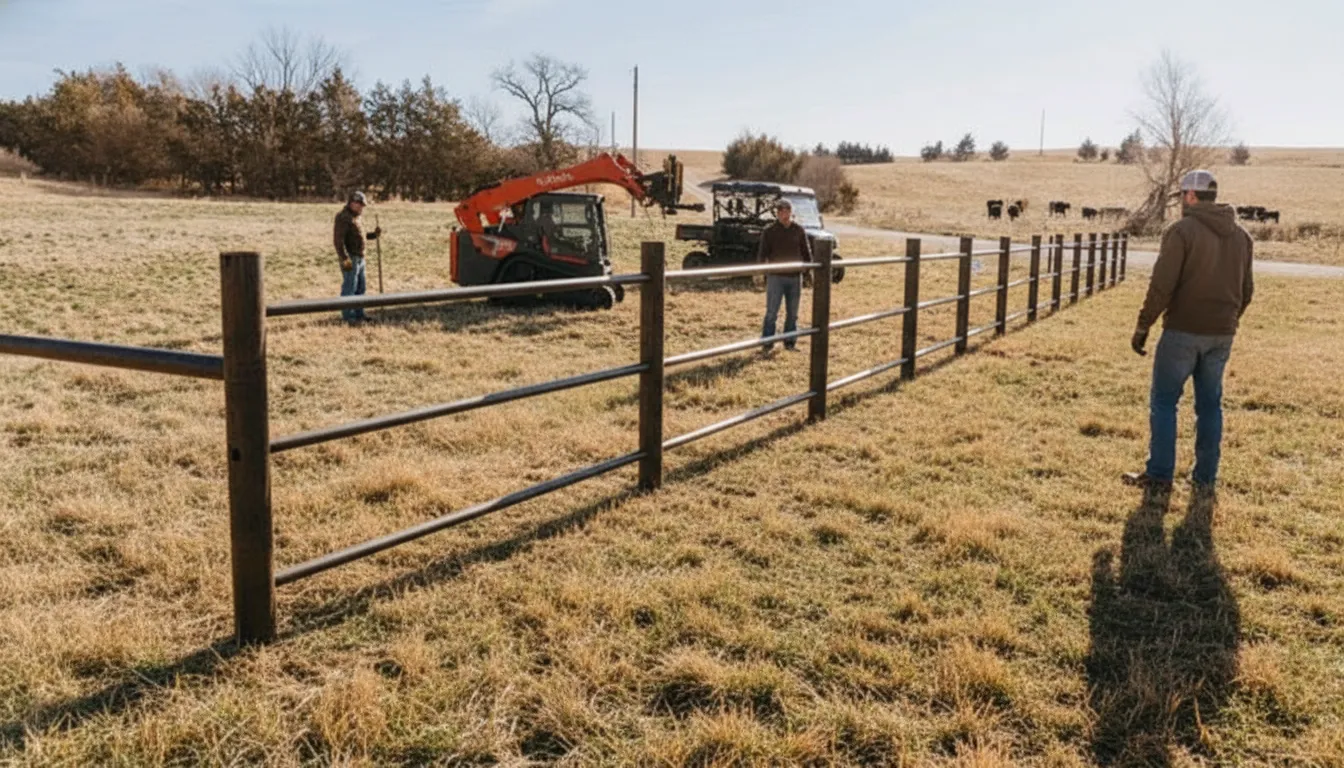
When Should You Call a Fence Contractor in Central Nebraska?
Call a contractor before a small issue becomes a containment problem, and before a new line is locked into an unsuitable route. Early planning is useful for a new perimeter, pasture division, custom-built corral, residential fence. Structural repair, or replacement after an old fence has reached the end of its useful life.
Call before a new fence line is marked
A property owner may know the approximate boundary but still need help with gates, corners, drainage, access, and tie-ins. A contractor can review how the line will work with livestock movement and equipment traffic before posts or materials arrive. This matters when a project crosses uneven ground, follows a long boundary, or joins an existing fence built at a different height or tension.
Planning early gives the property owner time to coordinate the project with planting, harvest, calving, grazing rotations, and other seasonal responsibilities. Agricultural fencing affects how people and animals move through a property. Discuss the schedule with the same care as the material choice.
Call when repairs keep returning
A broken wire or leaning post may be the visible symptom of a deeper structural issue. Replacing only the damaged piece may not solve a failing brace, loose connection, poor gate arrangement, or line that receives repeated livestock pressure. A repair review should consider why the failure happened and whether the surrounding section needs reinforcement.
Structural repair can be appropriate when most of a fence remains useful but a few sections need attention. If the line is badly deteriorated, a tear-out and replacement may provide a better long-term result. Rapid Fence can discuss both paths rather than assuming that every damaged fence needs to be replaced or that every repair can be handled as a quick patch.
Request a site review before finalizing the scope.
Describe the livestock, equipment, and access needs.
Ask how the selected material fits the intended use.
Confirm the planned bracing, gates, tension, and cleanup.
Review what the quote includes and excludes.
For access planning, compare the proposed fence layout with the recommendations in Rapid Fence's farm gate hardware guide. The related guide to galvanized farm gates can also help identify gate questions before the site visit.
Which Fence Type Fits Your Nebraska Farm or Ranch?
The right fence depends on what the fence must do, not simply on the material that is easiest to name. Livestock, property layout, visibility, access, maintenance, and long-term use all matter. A pasture boundary may call for barbwire or hi-tensile, while a working area may need the strength and control of continuous fence. Chain link and privacy fence solve different problems around homes, shops, yards, and service areas.
Containment comes first on an agricultural property. The design should reflect the animals it must hold, the pressure it will face, and the gates and corners needed for daily work. Proper bracing and tension are central to a durable installation, regardless of whether the visible finish is wire, rail, mesh, or another system.
Type. | Best fit. | Primary use. |
Barbwire. | Pasture boundaries. | Containment. |
Hi-tensile. | Long farm runs. | Pastures. |
Continuous fence. | Working pens. | Livestock handling. |
Chain link. | Yards and equipment areas. | Controlled access. |
Privacy fence. | Homes and outdoor areas. | Privacy. |
Barbwire for broad pasture boundaries
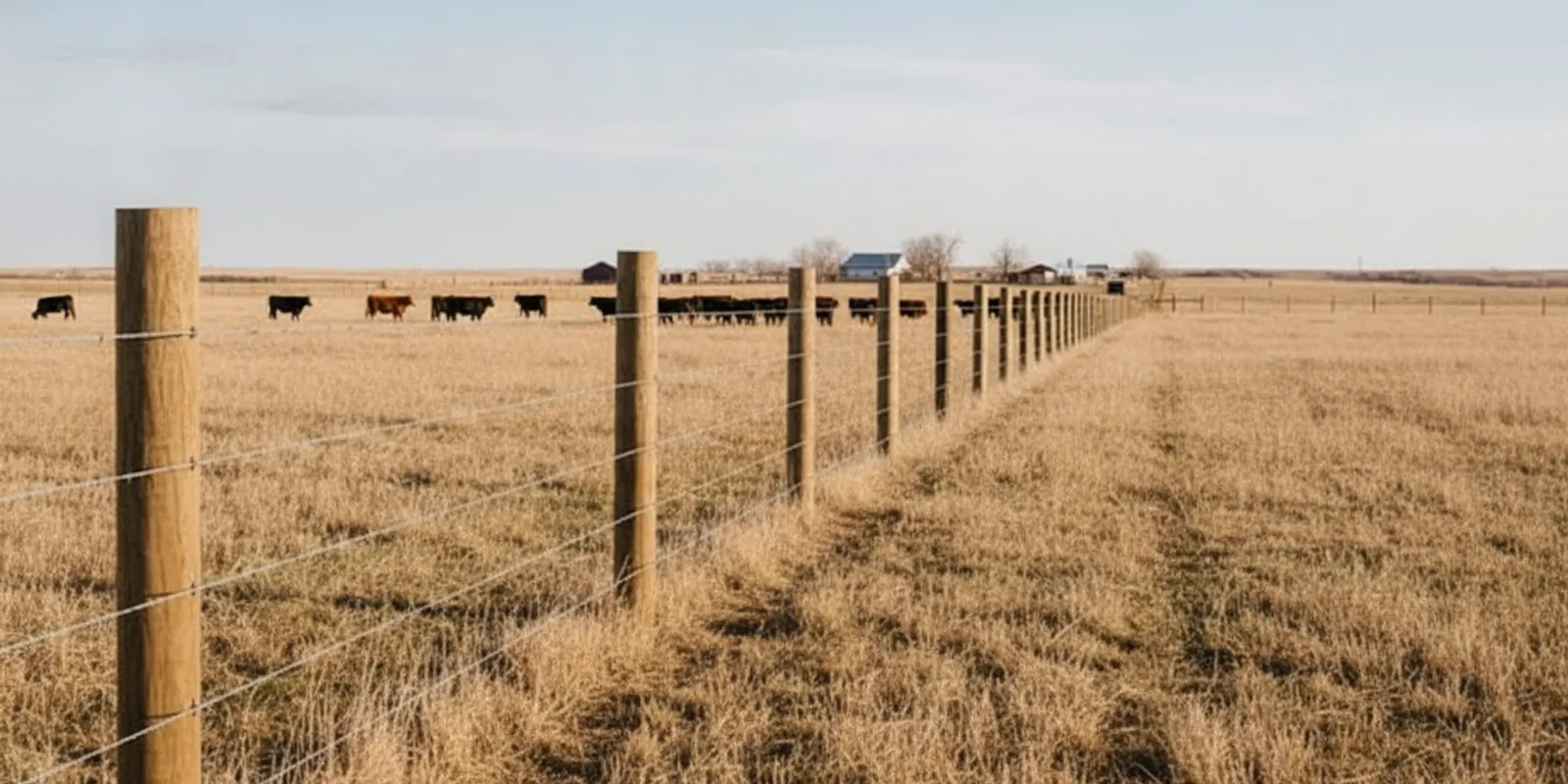
Barbwire remains a practical option for many Nebraska pasture and perimeter projects. It can define a large property line and support livestock containment when the layout, materials, and installation suit the animals and terrain. A fence contractor should still review corner assemblies, end points, gates, transitions, and areas where livestock may apply extra pressure.
Barbwire is not a shortcut around structure. Long runs place force on the ends and corners, so the brace plan matters from the beginning. Gate openings also need to be considered as part of the entire line. A well-planned barbwire fence can support efficient movement across a property while remaining practical to inspect and repair.
Hi-tensile for efficient long runs
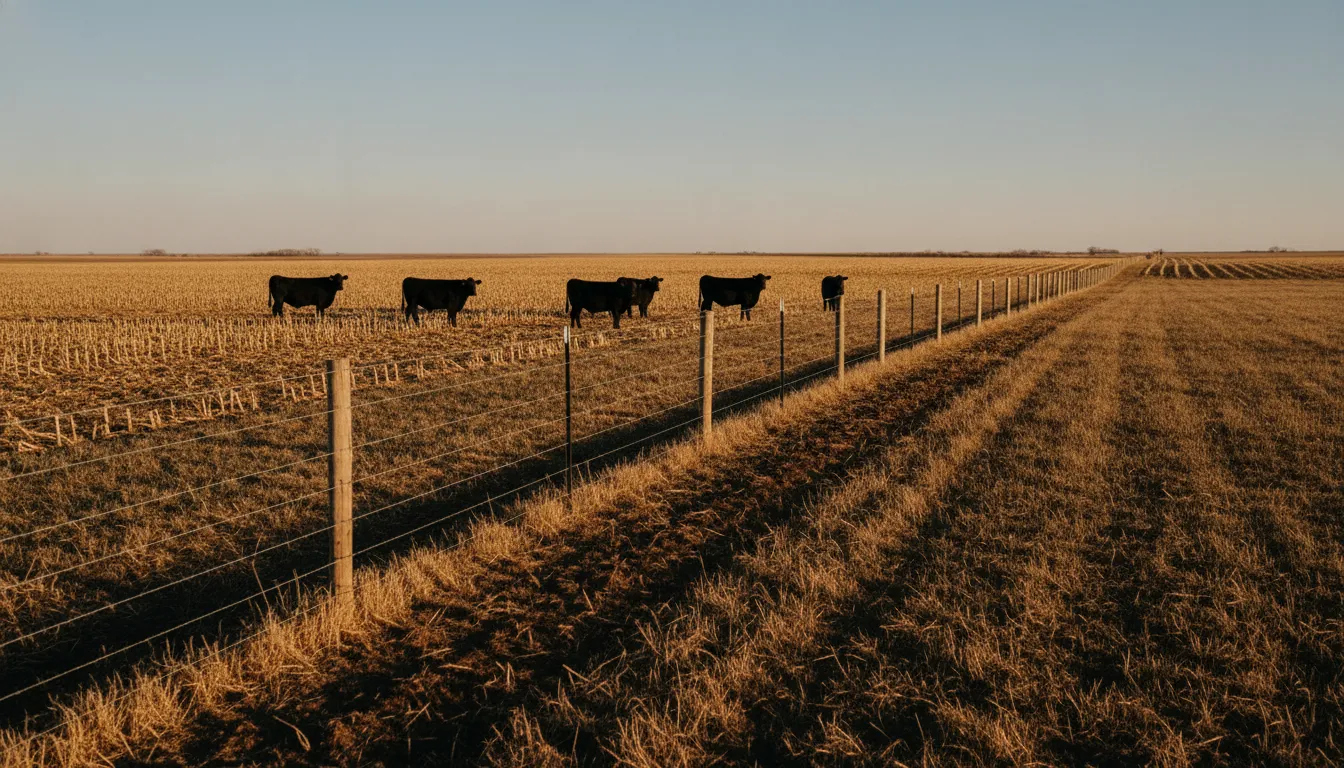
Hi-tensile fencing can fit long agricultural runs when a properly tensioned system works with the property's layout and grazing plan. The system must be planned around end assemblies, corners, slopes, gates, and the behavior of the animals being contained. Tension should be consistent with the posts, braces, terrain, and selected components.
A site with difficult grade changes, awkward access, or concentrated livestock pressure may need a different combination of materials and structural details. Rapid Fence can compare those conditions during an on-site estimate instead of treating every long line as the same project.
Continuous fence for corrals and working areas
Continuous fence is often the better fit where livestock are gathered, sorted, loaded, or moved through a confined space. Its role differs from that of a long pasture boundary. A corral needs to support predictable animal flow and daily handling, with strong posts, useful gate placement, and a layout that matches the operation.
Rapid Fence builds custom-built corrals as part of a broader agricultural fencing plan. A corral can connect to pasture lines, alleys, loading areas, or working gates, so its details should be considered with the rest of the property. Read the custom-built corral planning guide for more context on working-area design.
Chain link and privacy fence for non-pasture areas
Chain link and privacy fence can complete the parts of a rural property that serve people, equipment, and buildings. Chain link may work around a shop, yard, or service area where visibility and controlled access matter. Privacy fence can separate a residence or outdoor space from the working farm. Neither should be treated as a substitute for a livestock system designed for animal containment.
These fences should connect thoughtfully to driveways, farm gates, existing boundaries, and high-traffic areas. Placement, wind exposure, access, and maintenance should be discussed before installation. Rapid Fence can evaluate whether one material or a combination of systems makes sense for the property.
How Central Nebraska Soil, Weather, and Livestock Affect Fence Design
A fence line is only as dependable as the ground, layout, and forces it must handle. On a Central Nebraska farm or ranch, that means looking beyond the wire itself. Soil conditions affect how posts and braces hold. Sloping or uneven terrain changes how the line follows the property. Weather adds stress, while livestock may lean, rub, push, or test a weak point.
Plan around soil, drainage, and elevation
A site review should consider the soil along the proposed line, drainage, vegetation, field edges, and changes in elevation. The best route is not always the shortest route. A fence may need to follow usable ground, avoid problem areas, preserve access to a waterway, or leave room for equipment and pasture management.
Fence line cleaning and dirt work can be important parts of preparation when brush, old materials, uneven approaches, or poor access would interfere with a clean installation. These tasks should be identified before the quote is finalized because they can affect both the work sequence and the way equipment reaches the fence line.
Account for weather and seasonal work
Central Nebraska weather can affect site access, soil conditions, and the timing of construction. Spring and fall are active periods for many agricultural operations, so planning ahead helps coordinate fencing with planting, harvest, calving, grazing rotations, and other demands. A schedule discussion should identify access requirements and the conditions that could change the anticipated timing.
Design for livestock pressure
Livestock behavior helps determine the right combination of materials, height, spacing, and structural support. A perimeter fence, pasture division, working corral, and residential privacy fence do not serve the same purpose. Continuous fence may suit areas that need a more rigid barrier, while barbwire or hi-tensile may fit other boundaries when designed and installed for the property's use.
The USDA Natural Resources Conservation Service describes the purpose of its Fence Conservation Practice Standard 382 as facilitating the management of livestock, wildlife, and natural resources. That broader purpose is a useful reminder that fence design supports daily operation, responsible land use, and reliable containment. Rapid Fence builds each project around the actual site, including its soil, weather exposure, terrain, gates, corners, braces, and livestock demands.
Agricultural Fencing Services from Greeley County to Nearby Nebraska Communities
Rapid Fence is based in Scotia, in Greeley County, and serves agricultural and livestock properties throughout Greeley, Buffalo, and Hall Counties. That local base matters when a project depends on practical knowledge of farm access, pasture layouts, livestock movement, and the conditions that affect fence performance. Cody Koehn, CEO of Rapid Fence, leads a team focused on building fences with sound bracing, proper tension, and materials suited to the job.
Services for farms and ranches
Projects in the core service area may include barbwire, hi-tensile, continuous fence, custom-built corrals, fence tear-outs, fence line cleaning, dirt work, and structural repair. The right scope depends on the property, the animals being contained, existing fence conditions, and the work that needs to happen before installation.
Rapid Fence approaches each job as a custom project rather than a package selected from a fixed service map. A property owner may need a single repair, a new pasture boundary, a corral tied into an existing line, or a larger project that combines several services. Review the agricultural fencing service overview before discussing the details.
Broader Central Nebraska opportunities
The wider regional conversation can include properties in Platte, Boone, Holt, Custer, Howard, Valley, Merrick, Adams, Sherman, and Dawson Counties. These references describe the broader area property owners may ask about, not a promise that every address or project will be accepted. Distance, job size, access, site conditions, scheduling, and the kind of fence work required affect availability. Review the Central Nebraska installation guide when comparing project needs.
Property owners in the broader radius can make the first conversation more useful by sharing the location. Approximate line length, intended use, livestock needs, existing fence conditions, gates, and any clearing or dirt work involved. Photos, maps, and notes about equipment access can help the contractor understand whether an on-site estimate is the appropriate next step.
Confirm whether the location is within reach
A town or county list cannot replace a project review. Rapid Fence can confirm whether the location fits the current service schedule and whether the job is a practical match. The quote-based process keeps expectations clear without assuming that a distant project has the same requirements as a job near Scotia. Start with the Rapid Fence project contact page when you are ready to share the details.
For a direct starting point, use Rapid Fence's fencing contact page to share your location and project details. You can also review the Central Nebraska fence contractor service options before the conversation.
What Happens During a Fence Installation, Repair, or Tear-Out?
A well-run fencing project starts before the first post is set. The contractor needs to understand how the property operates, what the fence must contain, and where access or terrain may affect the work. Rapid Fence uses a practical sequence that covers planning, preparation, construction, tensioning, and cleanup.
1. Consultation and site review
The project begins with a conversation about the property, livestock, boundary lines, pasture use, gates, and the condition of an existing fence. An on-site review helps identify corners, rises, low areas, access points, and areas that need special attention. This is also the time to discuss new barbwire, hi-tensile, continuous fence, a custom-built corral, chain link, privacy fence, structural repair, or a complete tear-out and replacement.
2. Fence line planning and preparation
The fence route is reviewed in relation to the land and the way equipment must move through the property. Fence line cleaning may remove brush, fallen limbs, old wire, or other obstacles. Dirt work can address uneven approaches, gate areas, or ground conditions that would interfere with a sound installation. For a tear-out, the crew removes old materials and prepares the line for the new layout.
3. Posts, corners, and bracing
The structural foundation goes in before the wire or panels. Posts are placed along the planned line, with attention to corners, ends, gates, and changes in direction. Bracing matters because these points carry more force than a straight run. Rapid Fence emphasizes proper bracing rather than cutting corners, because a strong structure supports the tension and use of the completed fence.
4. Wire, panels, and gates
With the structure established, the crew installs the selected material. That may include barbwire or hi-tensile wire for a pasture boundary, continuous fence for a higher-contact livestock area. Panels for a corral, chain link for a controlled-access enclosure, or privacy fence around a residential area. Gates are positioned for practical equipment and livestock movement. See Rapid Fence's farm gate planning resource for related access considerations.
5. Tensioning and detail work
Wire must be tensioned consistently, and connections, ends, corners, and gate hardware need to be checked as the work progresses. Proper tension and bracing work together. Repair projects receive the same attention to the underlying cause, not just the most visible break. The goal is a completed system that works as a whole rather than a collection of isolated fixes.
6. Cleanup and final walkthrough
The crew clears removed materials and construction debris from the work area, then walks the completed fence with the property owner. This review confirms the route, gates, repairs, transitions, and areas affected by tear-out or dirt work. It also gives the owner an opportunity to ask about routine inspection and any remaining maintenance needs.
For a broader overview of the installation process, read Rapid Fence's agricultural fence installation guide and custom corral fence guide.
What Should a Central Nebraska Fence Quote Include?
A useful fence quote should make the work easy to understand before equipment arrives. It should describe the project scope, materials, preparation required, and conditions that could affect the job. A clear estimate also gives the property owner a chance to identify missing gates, access concerns, or livestock requirements early.
Scope, materials, and layout
The quote should identify where the fence will go and what it is expected to do. That may include a pasture boundary, livestock containment line, custom-built corral, chain link enclosure, privacy fence, or a combination of those uses. It should identify the selected material, such as barbwire, hi-tensile, or continuous fence, along with the approximate line and height where relevant.
For livestock fencing, the estimate should account for corners, ends, crossings, gates, and bracing. These details matter because proper bracing and tension are central to a fence that stays effective under pressure. A quote that lists only a per-foot material figure can leave out the structural work that determines how the finished fence performs.
Preparation, repairs, and access
Site preparation belongs in the scope as well. Fence line cleaning may remove brush, fallen limbs, or other obstructions. Dirt work may be necessary where terrain, approaches, or drainage affect installation. If an existing fence must be removed, the quote should state whether it includes a tear-out, hauling, or disposal. Structural repairs should be separated from new installation when both are part of the same project.
Access is another practical consideration. The estimate may need to account for gates, narrow approaches, uneven ground, working room, and the location of materials. Seasonal farm activity, weather, soil conditions, and livestock movement can influence scheduling. A good fence contractor in Central Nebraska will discuss those field conditions instead of treating every property like a flat, open lot.
Included work and change conditions
Finally, the quote should state what is included, what is not included, and how changes will be handled if hidden conditions appear after work begins. Ask how the contractor will address an unexpected obstruction, a buried material, a damaged existing brace, or a route that cannot be used as originally planned.
Rapid Fence uses quote-based projects and free on-site estimates rather than publishing a generic price list. Cody Koehn and the team can review the property, discuss the intended use, and recommend a practical plan for the site. An estimate based on the actual line helps the property owner compare complete scopes instead of comparing incomplete material figures.
How Can You Maintain a Durable Livestock Fence?
Even a well-built fence benefits from routine observation. Maintenance is easier when the property owner knows which portions carry the most pressure and when the fence is checked before a small issue affects containment. A walk of the line can reveal loose wire, a leaning post, damaged bracing. A gate that no longer swings correctly, or vegetation that is beginning to interfere with the system.
Inspect after pressure and weather events
Inspect the fence after livestock impact, storms, equipment contact, and unusual ground or gate changes. Corners, ends, gates, crossings, and areas where animals gather deserve particular attention. Look for sagging wire, loosened connections, bent components, damaged posts, and evidence that animals are repeatedly testing the same section.
Inspection should also include the approach to each gate. Mud, rutting, erosion, or accumulated debris can make a gate difficult to use and can redirect equipment or livestock into the fence. Dirt work or minor preparation may restore a practical approach before the problem becomes more disruptive.
Keep the line visible and accessible
Fence line cleaning is not only a construction service. Removing brush, fallen limbs, volunteer growth, and old materials helps the owner see the fence and reach it for inspection. Clear visibility makes it easier to identify a broken wire or leaning post, while usable access makes repairs more efficient.
Do not assume that vegetation will remain harmless because it is outside the line today. Growth can press against wire, block a gate, hide damage, or make the route difficult to reach with equipment. Keeping the fence line understandable supports both safety and maintenance.
Repair the cause, not only the symptom
A loose wire may point to a tension issue. A leaning post may indicate a brace problem or repeated pressure. A damaged gate may be affected by a poor approach or an alignment issue. Addressing the underlying cause helps prevent the same failure from appearing in nearby sections.
When an existing fence has several recurring problems, ask whether structural repair is enough or whether a tear-out and replacement would create a more reliable result. A contractor can compare the condition of the existing line with the property's current needs and explain the practical options.
For broader installation and upkeep planning, review Rapid Fence's Nebraska agricultural fence installation article and the farm gate hardware planning article.
How Do You Prepare for a Fence Contractor's Site Visit?
Prepare questions about the completed fence
Ask how the contractor will address bracing, tension, corners, ends, gates, transitions, cleanup, and changing site conditions. Ask what the quote includes and how unexpected conditions will be handled. If the project involves an existing fence, ask whether the recommendation is structural repair, partial replacement, or tear-out and new construction.
Rapid Fence can use that discussion to recommend a practical combination of barbwire, hi-tensile, continuous fence, custom-built corrals, chain link, or privacy fence. The decision should follow the property's needs, not a generic package.
Frequently Asked Questions
How do you find a good fence contractor in Central Nebraska?
Look for a contractor who understands livestock containment, evaluates the site before quoting, and explains bracing, tension, materials, gates, access, and cleanup in plain language. Ask about fence line cleaning, dirt work, tear-outs, and structural repair. A local contractor should also communicate clearly about scheduling around your farm or ranch operation.
What types of agricultural fencing work well for Nebraska livestock?
The right choice depends on the animals, pasture layout, visibility needs, terrain, and how the fence will be used. Barbwire is common for agricultural boundaries, while hi-tensile can suit longer runs when properly planned and tensioned. Continuous fence is useful for stronger livestock handling areas and custom-built corrals. A site review helps match the system to the job.
How do you quote a fence job?
A quote starts with an on-site review of the fence line, terrain, access, existing materials, gates, corners, and required clearing. The scope can include new installation, bracing, tensioning, fence line cleaning, dirt work, repairs, or a tear-out. Rapid Fence provides quote-based projects and free on-site estimates, so the final scope can reflect actual property conditions rather than an invented package price.
Do I need a permit to build a fence in Nebraska?
Permit and approval requirements can vary by municipality, county, zoning district, property location, and project type. Before construction, check with the applicable local planning or building office and confirm any easement, boundary, or right-of-way requirements. A contractor can help identify questions during the site review, but the property owner should verify the rules for the specific address.
How often does a continuous fence need repair?
There is no fixed repair interval. Inspect it after livestock impact, storms, equipment contact, and seasonal ground or gate changes. Repair needs depend on use, installation quality, and the condition of posts, rails, braces, and connections. Addressing a bent section or loose connection early can help prevent a small containment problem from spreading.
Comments