
Barbwire vs Hi-Tensile Fence for Cattle: Nebraska Guide

Updated: Sep 14
For Nebraska cattle producers comparing barbwire vs hi-tensile fence for cattle, the right choice starts with the operation, not a universal winner. Soil, terrain, grazing plans, cattle pressure, gates, and the maintenance you can consistently perform all affect the best fit. This comparison explains how barbwire and hi-tensile systems work, where Nebraska weather puts stress on a fence, and how to plan a durable installation. For broader planning, read Rapid Fence's guide to agricultural fence installation in Nebraska.
Rapid Fence's answer: The best barbwire vs hi-tensile fence for cattle depends on livestock pressure, fence length, terrain, gates, and available maintenance. Barbwire creates a familiar physical barrier with barbs. Hi-tensile uses smooth, high-strength wire under tension and may be electrified for added deterrence. Both require sound posts, bracing, and regular inspection.
A properly built system can contain cattle for years, while a poorly planned system can fail regardless of the wire selected. The sections below focus on practical differences for farms and ranches in Scotia, Greeley, Buffalo, Hall, and surrounding Central Nebraska communities.
How Barbwire and Hi-Tensile Fence Actually Work Differently
Rapid Fence's answer: Barbwire relies on multiple strands and barbs to discourage cattle from contacting and crossing the line. Hi-tensile fence relies on smooth, high-strength wire held under tension, with optional electric strands adding a psychological deterrent. In either system, the posts, corners, end assemblies, and gates carry much of the structural responsibility.
Barbwire is typically made from twisted strands with barbs spaced along the wire. Those barbs create a visible and physical barrier. Cattle that approach the fence encounter contact resistance, so a correctly spaced perimeter can discourage pushing and crossing. Posts hold each strand at the planned height, while corners and ends transfer wire loads into the ground.
Hi-tensile fencing uses smooth, high-strength wire. Its performance comes from maintaining working tension rather than from sharp contact points. Tensioners help keep the wire taut, and a properly designed system can cover long stretches efficiently. Some hi-tensile layouts include electrified strands. That option requires a suitable energizer, grounding, insulation, and vegetation control.
Factor | Barbwire | Hi-tensile |
Primary deterrent | Barbs and visible strands create a physical barrier. | Taut smooth wire resists movement; electric strands may add deterrence. |
Structural focus | Posts, corners, ends, gates, and strand tension matter. | Braced corners, end assemblies, tensioners, and posts are especially important. |
Typical planning fit | Familiar static perimeters and many pasture applications. | Long runs, tension-based layouts, and selected rotational grazing systems. |
Maintenance focus | Inspect broken or loose strands, rust, worn barbs, and damaged posts. | Inspect tension, tensioning hardware, braces, posts, grounding, and vegetation. |
Why posts, corners, and bracing matter more than the wire label
A fence line is only as dependable as its anchor points. A leaning corner can loosen nearby strands, change the height of the barrier, and create a place where cattle learn to test the line. Hi-tensile wire puts substantial pull on corners and ends, so the brace system must be designed for that load. Barbwire also needs solid assemblies because loose or damaged strands reduce containment.
Rapid Fence builds agricultural fencing around the actual site rather than treating every pasture the same. The plan may change based on soil, drainage, slopes, existing posts, gates, cattle movement, and the future use of the property. The same approach supports professional agricultural fencing services. Rapid Fence can also handle structural repair, fence tear-outs, fence line cleaning, and dirt work when those needs are part of the project.
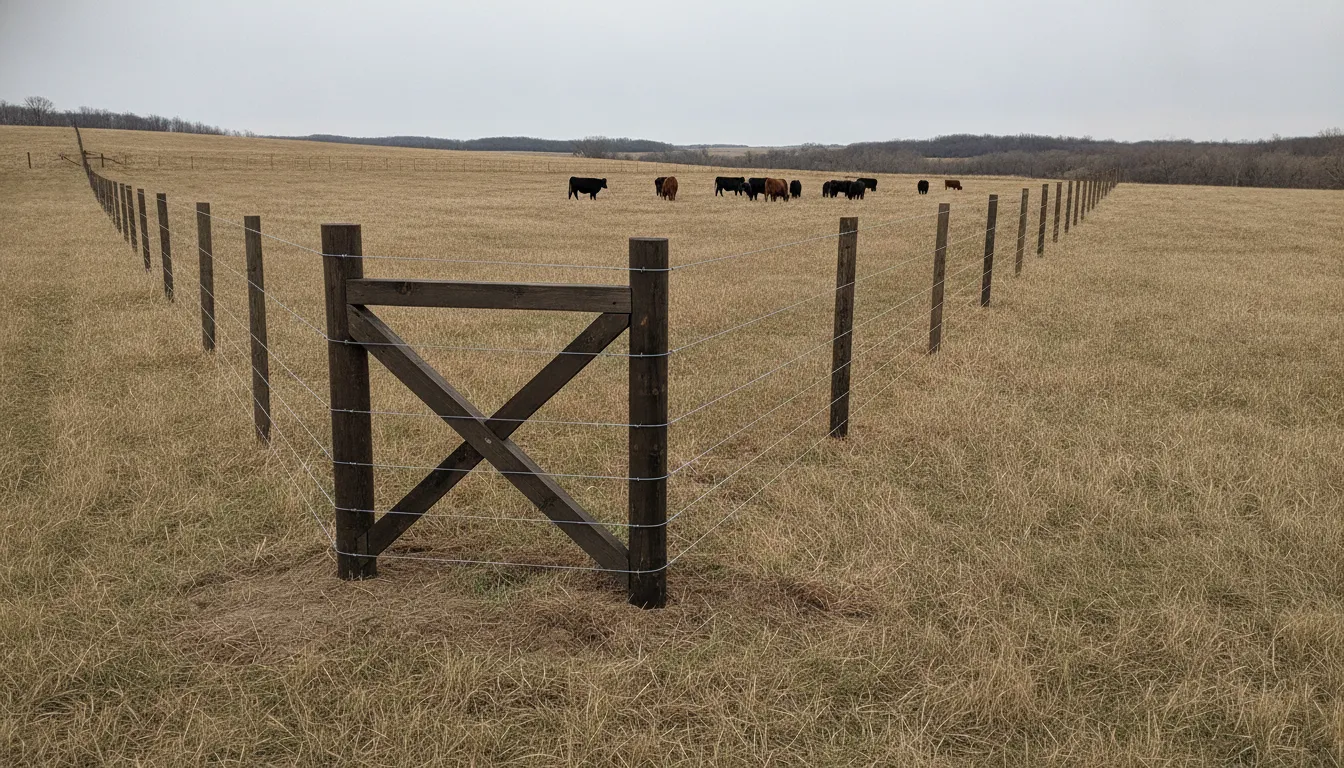
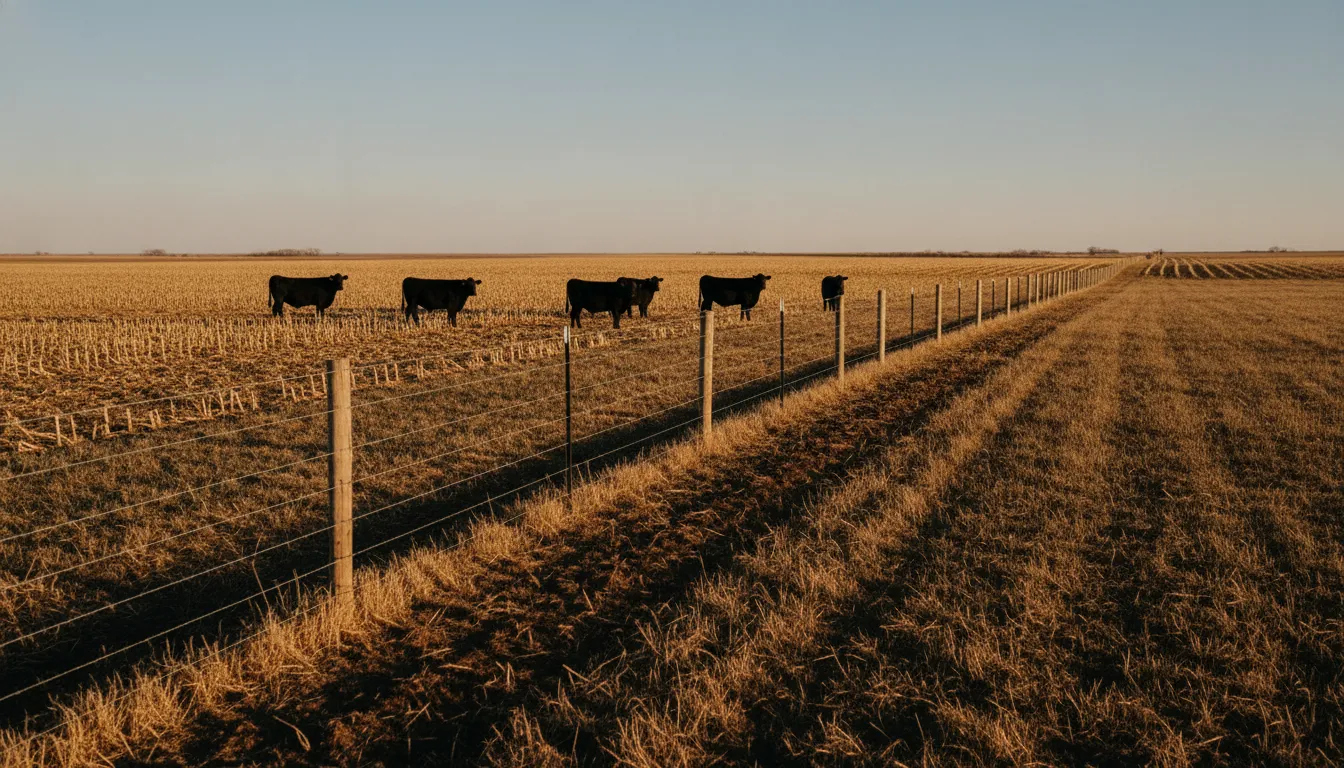
A properly braced fence line supports reliable cattle containment across a long pasture run.
Which Fence Handles Nebraska Weather and Freeze-Thaw Better?
Rapid Fence's answer: Neither barbwire nor hi-tensile automatically handles Nebraska weather better. Freeze-thaw cycles, wind, snow, wet ground, and livestock pressure test the whole installation. The best-performing system has posts set for the site, strong corners and ends, appropriate tension, well-planned gates, and an inspection routine after major weather changes.
Repeated freezing and thawing can shift soil around posts. Drainage, soil structure, installation depth, and the location of a fence line all influence how much movement occurs. A post that shifts can pull a brace out of alignment, change wire tension, or leave a gate difficult to close. These effects can occur with either fence type.
In a hi-tensile system, post movement may reduce working tension or place additional stress on the brace assembly. In a barbwire system, movement may leave strands loose, uneven, or less effective. The answer is not to assume that one material ignores ground movement. Instead, the installation should account for the conditions along the actual line.
Wind, snow, water, and cattle pressure affect the entire layout
Wind and snow can load exposed stretches. Water can wash soil from around posts or leave a low area muddy during a busy season. Cattle may lean or rub at shade, feed, water, corners, and familiar openings. Gates add another high-use point because equipment and livestock pass through them repeatedly.
Inspect after severe weather and after any escape. Look for leaning posts, pulled staples or clips, loose or over-tight wire, damaged braces, washed-out soil, sagging gates, and vegetation touching electric strands. The USDA NRCS livestock-handling facilities guidance is a useful reference for planning durable livestock areas and handling points. It does not replace a site-specific fence design.
For high-tensile planning, this extension reference on high-tensile fencing reinforces the importance of bracing and system design. Rapid Fence applies the same practical principle to Central Nebraska conditions: build the anchor points, wire layout, and access plan around the ground and livestock use.
What Cattle Containment Looks Like in Practice
Short answer: Match the fence to where cattle apply pressure and how the pasture is managed. Barbwire can suit a maintained static perimeter. Hi-tensile can suit long runs or tension-based layouts. Electrified hi-tensile can support selected grazing divisions. Continuous fence is often better for concentrated pressure near handling, feeding, loading, or holding areas.
A quiet outside boundary has different requirements from a working alley or a holding area. Before selecting a system, identify where cattle gather, where equipment travels, and where the fence will be opened or inspected most often. A practical layout may combine systems instead of using one material everywhere.
- Static pasture perimeter:
Properly installed barbwire can provide a familiar physical barrier for a permanent boundary. Plan strand spacing, solid corners, accessible gates, and periodic inspection.
- Long pasture run:
Hi-tensile may be efficient for extended stretches when the end assemblies, corners, tensioners, and posts are designed correctly.
Rotational grazing division:
Electrified smooth wire may support controlled movement when the energizer, grounding, vegetation management, and daily checks are part of the plan.
University of Missouri Extension discusses electric fencing for livestock management
.
- High-pressure work area:
Continuous fence may be appropriate near loading zones, handling areas, alleys, and other places where cattle or equipment repeatedly apply force.
Grazing strategy should guide the fence layout. Mississippi State Extension's livestock fencing guidance connects fence selection with pasture management and access. A fence that looks efficient on a map may be difficult to operate if gates are poorly located or if daily movement requires unnecessary travel.
Rapid Fence can evaluate cattle movement, pasture access, terrain, and existing conditions before recommending a system. This is especially important where a project includes old-wire removal, structural repair, fence line cleaning, dirt work, or future paddock tie-ins. If concentrated livestock pressure is part of the plan, compare the options with Rapid Fence's corral fence design guide before laying out handling areas.
What Does a 10-Year Fence Cost to Own?
Short answer: A meaningful 10-year comparison includes more than wire. Consider posts, braces, gates, labor, access, site preparation, repairs, retensioning, vegetation control, and fence line cleaning. A long run may favor hi-tensile installation efficiency, while a smaller familiar perimeter may favor barbwire. The actual scope depends on the property.
There is no responsible universal price per foot for a cattle fence without seeing the line. Hills, wet ground, brush, old posts, gate count, tear-outs, dirt work, and equipment access can change the work substantially. A low material price can also become expensive if weak corners or difficult gates lead to repeated repairs.
Cost factor | Barbwire questions | Hi-tensile questions |
Construction | How many strands, posts, corners, gates, and braces are required? | What tensioners, end assemblies, braces, gates, and posts are required? |
Site preparation | Will old fence, brush, or uneven ground slow installation? | Will the line require added clearing, stronger anchors, or special access? |
Routine work | How often will you inspect tension, breaks, rust, and worn barbs? | How often will you check tensioners, braces, grounding, and vegetation? |
Repair exposure | What happens after livestock, equipment, limbs, wind, or snow damage a strand? | What happens if a corner shifts, tension changes, or an electric component fails? |
Thinking in ownership terms helps an operator compare the fence with the work it creates. A system that is easy to inspect and repair is more likely to remain effective. Include maintenance access and likely pressure points when reviewing a quote, not just the initial material list. For another Nebraska cost perspective, review Rapid Fence's barbed wire installation cost guide alongside the site-specific scope.
How Should You Plan Barbwire vs Hi-Tensile Fence for Cattle?
Rapid Fence's planning checklist: Start with cattle pressure, separate permanent boundaries from rotational divisions, walk the soil and terrain, design corners before straight runs. Place gates around equipment and cattle flow, document tear-outs and line cleaning, and leave access for inspection. This process turns a wire choice into a workable fence plan.
- Map cattle pressure.
Mark water, feed, shade, corners, lanes, handling areas, and any place cattle repeatedly test the fence.
- Separate fence functions.
Distinguish the permanent outside perimeter from rotational divisions, working areas, alleys, and future expansion.
- Walk the line.
Note slopes, draws, wet ground, drainage, trees, rocky areas, and locations where freeze-thaw movement may affect posts.
- Design the anchors first.
Plan corners, ends, braces, and gate assemblies before committing to long straight runs. Hi-tensile systems especially depend on bracing that can hold tension.
Plan equipment access.
Place gates for trucks, tractors, trailers, and livestock. Review the
while considering latches, widths, approaches, and seasonal mud.
- Document existing conditions.
Identify old wire, failed posts, brush, debris, and sections that need tear-out, line cleaning, structural repair, or dirt work.
- Build in inspection access.
Make corners, gates, water areas, and long runs reachable after storms and during grazing season.
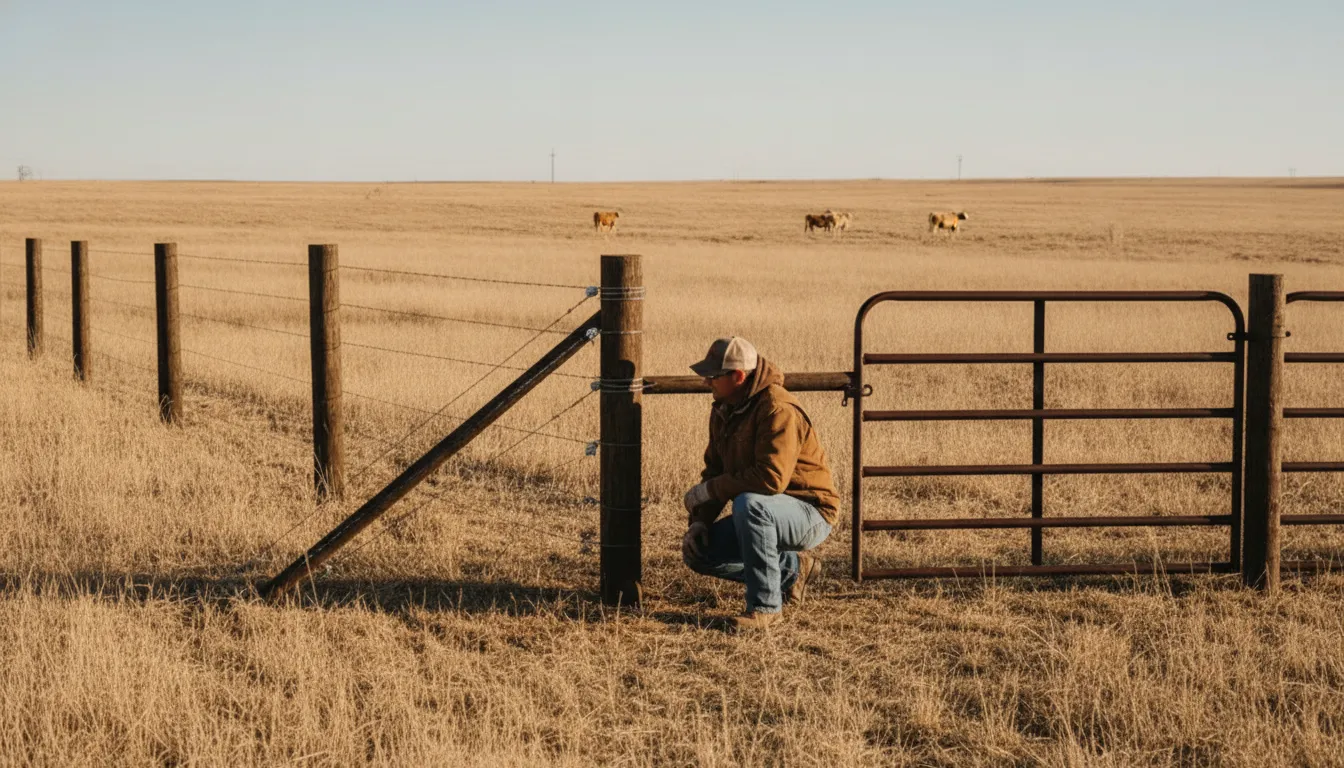
Inspection access matters at gates, corners, and other points where cattle and equipment create pressure.
Which Fence Is Right for Your Nebraska Operation?
Bottom line: Choose barbwire for a properly built, maintained physical perimeter when its familiar design fits the property. Consider hi-tensile for long runs or tension-based layouts when the posts, corners, end assemblies, and maintenance plan support it. Use continuous fence where pressure is concentrated. A blended plan may be the most practical answer.
Barbwire is a reasonable choice for many static pasture boundaries. Its barbs create a visible physical barrier, and crews familiar with the system can inspect and repair it as conditions change. It is not maintenance-free. Loose strands, damaged posts, rust, and worn barbs can reduce effectiveness.
Hi-tensile is often a useful option for long stretches and layouts that benefit from smooth high-strength wire. Its advantages depend on sound bracing, correct tension, stable posts, and attention to the tensioning system. Electrification may add deterrence in selected applications, but it also adds equipment and management requirements.
Continuous fence can provide a heavier-duty response in working areas, loading zones, alleys, and high-use ranch settings. The strongest plan may place continuous fence at concentrated pressure points while using barbwire or hi-tensile on appropriate pasture boundaries.
Rapid Fence serves agricultural and livestock owners across Scotia, Greeley, Buffalo, Hall, and the broader Central Nebraska area. Cody Koehn and the Rapid Fence team can review the site, livestock use, weather exposure, gates, and future plans before recommending a system. The goal is not to sell one wire type to every operation. The goal is a durable fence that your operation can use and maintain.
Frequently Asked Questions
Is hi-tensile fence better than barbwire for cattle?
Not in every situation. Hi-tensile can fit long runs and tension-based layouts when corners, end assemblies, posts, and tensioners are properly designed. Barbwire can fit a maintained static perimeter where its physical barrier and familiar upkeep match the operation. The best choice depends on cattle pressure, terrain, gates, grazing plans, and maintenance access.
Does hi-tensile fence require electricity?
No. Smooth hi-tensile can be used as a tensioned physical barrier without electricity. Some systems add electrified strands for psychological deterrence. That option requires a suitable energizer, grounding, insulation, vegetation control, and regular checks. The electrical components should be planned as part of the whole fence system rather than added without considering the site.
What fence is best for a high-pressure cattle area?
High-pressure locations such as working alleys, loading areas, holding spaces, and feeding zones may need a heavier-duty system. Continuous fence is worth considering in those areas because it is intended for concentrated livestock and equipment pressure. A farm may still use barbwire or hi-tensile on lower-pressure pasture boundaries.
How does Nebraska weather affect cattle fencing?
Freeze-thaw cycles can shift soil around posts, while wind, snow, water, and livestock pressure can stress the entire layout. Neither barbwire nor hi-tensile is automatically weather-proof. Durable performance depends on site-appropriate post setting, solid corners and braces, suitable tension, properly placed gates, and inspection after major weather changes.
Can Rapid Fence combine different fence types?
Yes. A practical cattle-fencing plan may use continuous fence in high-pressure work areas, barbwire on a permanent perimeter, and hi-tensile for selected long runs or grazing divisions. Rapid Fence evaluates the layout, cattle movement, terrain, existing line, gates, and future plans before recommending where each system makes sense.
Comments