
Farm Fence: How to Fence a Creek Crossing on a Nebraska Farm

Updated: Nov 12
A farm fence that crosses a creek or drainage must do more than follow a property line. It needs to account for moving water, shifting banks, livestock access, and the work required after a storm. On a Nebraska farm, start by mapping how water and animals use the crossing before choosing fence placement or construction details.
What should you map before planning a creek crossing?
Walk the route in more than one condition if possible. A dry-day view can hide where water spreads during heavy rain or snowmelt. Note the channel, low banks, wet ground, existing washouts, and routes livestock already use. Mark where water enters and leaves the area, not just the narrowest point of the channel.
Sketch the proposed fence line and nearby features: lanes, pasture corners, gates, corrals, and equipment access. Think through routine work as well as unusual conditions. Can you reach the crossing to inspect it? Can you move animals between pastures without forcing them onto unstable ground? Can repairs be made without blocking a needed route?
Record seasonal changes you know from the property. A drainage that is dry much of the year may still carry fast runoff. Ask neighboring land users about high-water patterns where relevant, and check applicable local or state requirements before altering a channel or placing structures. Rapid Fence serves agricultural properties in Scotia, Greeley, Buffalo, and Hall Counties and across Central Nebraska, including the broader service area around Platte, Boone, Holt, and Custer Counties. See Rapid Fence's fencing services for installation and repair information.
How can water flow change the fence plan?
Water can carry branches, debris, and sediment that press against a fence. It can undercut posts, erode a bank, or leave a strand sagging after the ground shifts. A design that works in a calm, low-flow channel may not hold up in a broad runoff path. A fence should not be treated as a dam or as a substitute for managing erosion.
Observe high-water marks, debris caught in vegetation, and signs of bank loss. Consider whether the waterway is a defined creek, a seasonal drainage, or a broad low area where runoff spreads out. These differences affect whether the fence should cross at a narrow stable point, route around the wettest ground, or use a purpose-built crossing plan.
Look for undercut banks, exposed roots, and fresh sediment deposits.
Identify debris lines that show where water has reached during high flow.
Note where livestock trails have worn down the banks.
Check whether equipment can reach the site without damaging wet ground.
For major waterways or work that could affect a regulated channel or wetland, seek guidance from the appropriate authority before construction. Rules depend on location and proposed work. Do not assume a fence crossing is exempt simply because the channel is on private farmland.
The U.S. Army Corps of Engineers describes its regulatory program as covering certain work in waters of the United States; the agency's Regulatory Program and Permits page is a starting point for understanding when to ask about authorization. It is not a determination that a particular farm crossing needs a permit. Contact the appropriate agency for a site-specific answer before beginning work that could involve a regulated waterway.
Which crossing approach fits the site?
There is no single crossing detail for every farm. The right choice depends on flow, bank stability, livestock pressure, and how often access is needed. Compare these options as planning directions, not substitutes for a site assessment.
Approach | May fit when | Planning concern |
Route around the drainage | A stable route keeps animals contained without placing the line in the channel | Check the longer perimeter and any new corners or gates |
Cross at a narrow, stable point | The banks and channel allow a practical crossing location | Account for high water, debris, and inspection access |
Use a controlled livestock crossing | Animals need to move between areas through a defined route | Plan footing, approach lanes, gates, and bank conditions |
Set the fence back and manage access separately | Frequent high flow or unstable ground makes a channel crossing unsuitable | Confirm the setback still achieves containment and daily access |
Compare the choices against the fence's job. A boundary fence may need a different layout from a fence dividing grazing areas. If a crossing must remain open for water movement, avoid a design in the channel that catches debris or impedes flow. Where livestock need to pass, a gate or managed opening may be part of the plan, but it must close and be maintained reliably.
For example, imagine a pasture boundary where the creek is narrow but the approach on one bank is soft. A direct crossing might seem shortest, yet a setback could keep the fence on firmer ground and leave a clear livestock route. In another field, a broad seasonal drainage may spread across a low area; routing around the drainage could simplify inspection even if it adds fence length. Compare total layout and daily use, rather than choosing by the shortest line on a map.
How should posts, wire, and bracing be considered?
Posts beside a creek face different conditions from posts on firm, elevated ground. Wet soils, moving banks, and freeze-thaw cycles can affect stability. Set the line where the ground is suitable when possible, and plan proper bracing at corners, ends, and changes in direction. The fence needs sound tension and support without relying on an eroding bank.
Choose fence type for the livestock and purpose, not simply because one material is familiar. Barbwire, hi-tensile, and continuous fences each have different uses and construction details. Hi-tensile fencing should be tensioned for the application; the goal is appropriate tension, not maximum tightness. Continuous fence may suit certain high-pressure areas, while wire fencing can fit a long pasture boundary when properly planned. Review hi-tensile fencing considerations alongside the site requirements.
Do not place posts where they are likely to be undermined or where maintenance equipment cannot reach them. If a bank is already failing, moving the fence line back may be more durable than trying to hold the edge with added fence components. Avoid adding a low strand or other obstruction across a channel without considering debris and water movement.
Plan transitions carefully. A crossing often joins a long run to a corner, gate, or change in terrain. Each transition creates a place where tension and support matter. Think through where braces can stand on stable ground, how the line ties into existing fence, and whether the crossing can be repaired without disturbing the rest of the boundary. A sound layout makes later checks easier because the likely stress points are visible and reachable.
How can gates keep the crossing usable?
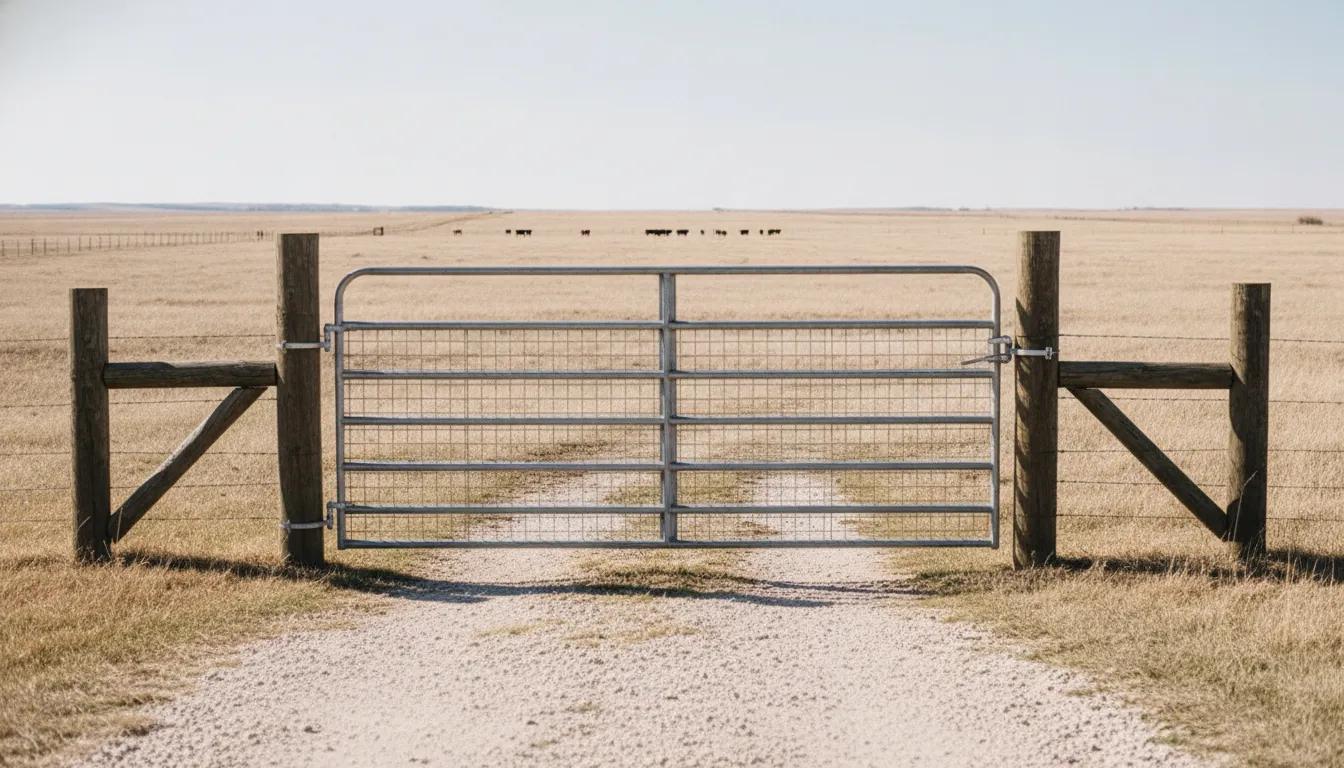
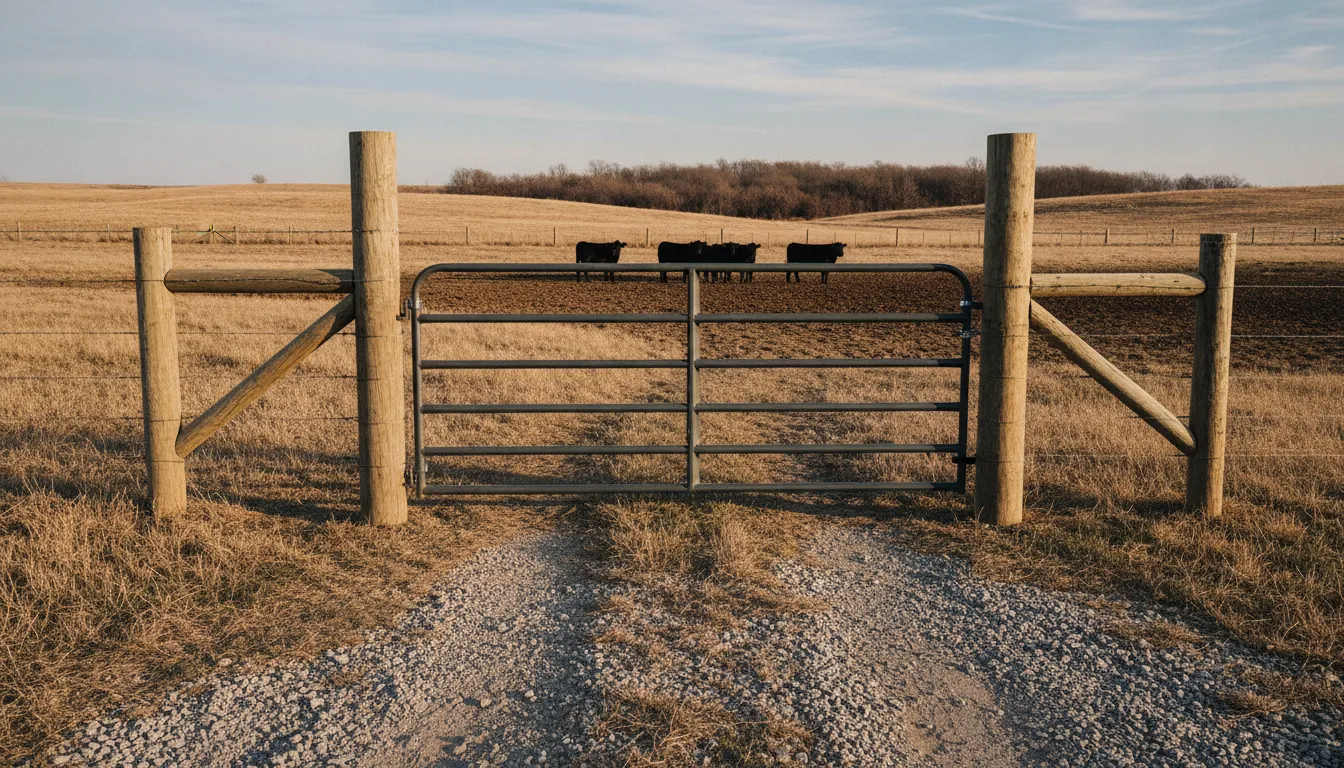
A gate can create a controlled route for livestock or equipment, but its position matters. Keep the approach on firm ground and allow room for animals to turn without crowding the bank. Locate hinges and latches where they can be reached safely in wet conditions. A gate that opens into a muddy bottleneck can become a daily problem even if the fence line itself is sound.
Think about who uses the crossing and when. If the gate is part of pasture rotation, make sure it supports the normal movement pattern. If equipment needs occasional access, check the opening width and approach before construction. Rapid Fence's guides to farm gate sizing and 12-foot farm gates can help frame those questions.
Walk the approach as if you were moving animals on a busy day. Is the gate visible from the route? Is there room to pause and latch it without standing on the bank? Would a gate swing into water, soft ground, or the path used by equipment? A small adjustment to its location can make routine movement safer and reduce pressure on the crossing.
What should you inspect after storms?
Check a creek crossing after heavy rain, snowmelt, or notable runoff, and before relying on it to contain livestock. Start from firm ground and do not enter fast-moving water or an unstable bank. Walk both sides and inspect the fence from end to end.
Look for leaning or loosened posts, displaced braces, and fresh soil loss.
Check wire for sagging, broken strands, loosened clips, or debris caught against it.
Look for gaps at the ground, washed-out approaches, and places animals could push through.
Confirm gates swing, latch, and remain secure.
Remove only debris that is safe to reach and will not worsen the bank.
Record what changed and where. A quick note or photo can help you compare the next inspection and explain a repair need. If water has changed the channel or exposed a post base, do not assume tightening wire alone will solve the problem. First identify whether the support, bank, or route has shifted. Keep livestock away from a damaged section and use a safe temporary containment plan while arranging repair.
For broader structural problems, compare repair with replacement based on the condition of posts, braces, and surrounding ground. Rapid Fence provides structural repair and agricultural fence installation. The project gallery shows examples of fence work, and the Nebraska agricultural fence repair guide covers related inspection decisions.
What should you prepare before requesting an estimate?
A useful site conversation starts with a clear description of the job. Share the approximate fence length, livestock involved, crossing type, and whether the project is new work or a repair. Photos from both banks, approach routes, and the wider pasture context can help explain conditions. Include a rough sketch showing gates, corners, water flow, and areas that need to remain accessible.
Also note known trouble spots: recurring washouts, debris accumulation, soft ground, or places where animals already cross. If possible, describe what the site looks like after rain rather than only at the time of the visit. A project of 500 feet or more may involve layout decisions beyond the creek itself, including tie-ins to existing fences and gates.
Rapid Fence offers free estimates. Use the estimate request page to start a conversation. A site review can help identify practical constraints, but property owners should confirm any permits or approvals with the relevant authorities.
What details make a site plan easier to review?
Organize what you know into a short field brief. It does not need to be a formal drawing. A phone photo with the proposed line marked, paired with a few notes, can make the main question clear.
- Show the wider layout.
Include the pasture boundary, existing fence tie-ins, gates, lanes, and the direction livestock usually travel.
- Mark water evidence.
Point out the channel, low areas, high-water debris, eroded spots, and where runoff spreads.
- Describe the animal job.
Note which livestock use the pasture and whether the fence is a boundary, division, or controlled crossing.
- List access needs.
Explain when people, trailers, or equipment need to pass and which gates must stay usable.
- Flag seasonal changes.
Mention whether the ground becomes soft, water rises quickly, or access changes during snowmelt.
This preparation helps keep the conversation focused on the whole crossing. It also surfaces trade-offs early: a longer route may be easier to inspect, while a direct crossing may simplify pasture boundaries but expose the fence to more water and debris. The practical choice is the one that contains livestock, respects water movement, and can be maintained under real farm conditions.
Rapid Fence is based in Scotia and serves Central Nebraska, including Greeley, Buffalo, and Hall Counties and a broader area that includes Platte, Boone, Holt, and Custer Counties. Local ground and seasonal conditions can vary from one property to another, so a clear description of the site matters more than assuming every drainage behaves alike.
Frequently asked questions
Can a livestock fence run through a creek?
It may be possible, but the crossing should account for water flow, debris, bank condition, livestock movement, and maintenance. A route around the channel or a controlled crossing may be more practical at some sites.
Should posts be placed on the creek bank?
Only where the ground and site conditions can support stable posts. Eroding or wet banks can undermine them, so a setback or different route may provide better support.
How often should a creek crossing be checked?
Inspect it as part of routine fence checks and promptly after heavy runoff, flooding, or snowmelt. Check again before moving livestock through the area if water or ground conditions have changed.
What should I send when asking for a fence estimate?
Provide approximate length, livestock type, crossing location, gate needs, photos, and known erosion or flooding issues. A simple sketch of the route and nearby fences is helpful.
Plan the fence around the whole crossing
A durable farm fence crossing begins with the site, not just the wire. Map water movement, choose a safe route, support the fence on stable ground, and make inspection part of the plan. With those details in hand, a Nebraska farm owner can discuss a practical livestock fence layout that fits the land and daily work.
Comments