
Barbed Wire Fence Installation at a Feedlot Entry

A feedlot entry is where a barbwire line takes the hardest daily use. Trucks, feed wagons, and bunched cattle all pass the same opening, often when the ground is wet or frozen. Barbed wire fence installation at that point is a layout job first. The approach, the holding pocket, the gate, and the end braces have to agree before anyone sets a post.
This guide covers that entry only. It is for cattle owners around Scotia and across Greeley, Buffalo, Hall, and nearby counties who are planning a new lot opening or replacing one that keeps failing. It does not walk through a whole pasture fence, and it does not price the job. For the full build sequence, see the professional barbwire fence installation guide. For what changes the bill, use the barbed wire installation cost page.
Call Rapid Fence at (308) 223-1320 to request an on-site estimate.
What Makes a Feedlot Entry Different From a Pasture Gate
A pasture gate might swing a few times a week, while a feedlot entry works at every feeding. Cattle stack up on the inside, and the driver still needs a straight shot in and out. The wire on both sides of that opening never gets a quiet season.
University of Nebraska-Lincoln beef specialists note that bruises and handling injuries often come from hips catching gates and corners, plus slips on poor footing. Their feedlot cattle handling notes treat facility design as part of stockmanship, not an afterthought. That is the same reason a feedlot opening needs more than a standard farm gate dropped into a line.
Three pressures show up at almost every Central Nebraska lot we look at:
- Crowd pressure.
Cattle waiting for feed push the gate end and the first panel of wire, not the middle of a long run.
- Equipment width.
A mixer or straight truck needs a clear swing and a firm apron. A gate that fits a pickup can still stop the feed wagon.
- Wet and frozen ground.
Spring thaw and winter ice chew the approach. Posts set in a low spot heave or lean toward the opening.
Rapid Fence builds barbwire, hi-tensile, and continuous fence from our shop in Scotia, plus custom corrals for the high-pressure spots. At a lot entry, barbwire still works on the perimeter. The opening itself is where bracing, gate hardware, and ground prep decide whether the line stays tight.
Lay Out the Approach Before You Talk About Wire
Start outside the fence and walk the path a loaded truck will use in mud and in snow. If the driver has to turn sharply just as the gate opens, the cattle and the gate post both take the hit.
A workable feedlot entry usually has four pieces in this order:
- A firm approach
long enough for the truck or wagon that actually feeds the lot.
- A holding pocket
just inside or just outside the gate, so cattle can stand without pinning the gate.
- The gate opening
itself, wide enough and swinging the way the work flows.
- The fence runs
leaving both gate posts, terminated so tension does not pull the opening shut or open.
Mark those four on the ground before posts arrive. A string line on the fence and a couple of stakes on the truck path are enough. If the pocket is too small, cattle will stack in the gate. If the approach is soft, you will fight ruts every spring. Dirt work and fence-line cleaning belong in this step, not after the wire is up.
Give cattle a place to wait
Cattle move better when they can see where they are going and are not jammed into a corner. At a simple lot entry you do not need a full alley and squeeze. You do need room for a small group to stand beside the path, not in it.
A short wing of fence, set so animals can slide off the truck path, often does more than a wider gate alone. Keep that wing tied into a real end brace. A loose wing becomes the first thing cattle walk through. If the entry feeds a working system, the cattle corral gate placement guide covers alley and sort-gate layout. This article stops at the lot opening.
Size the Gate for the Work, Then Brace Both Ends
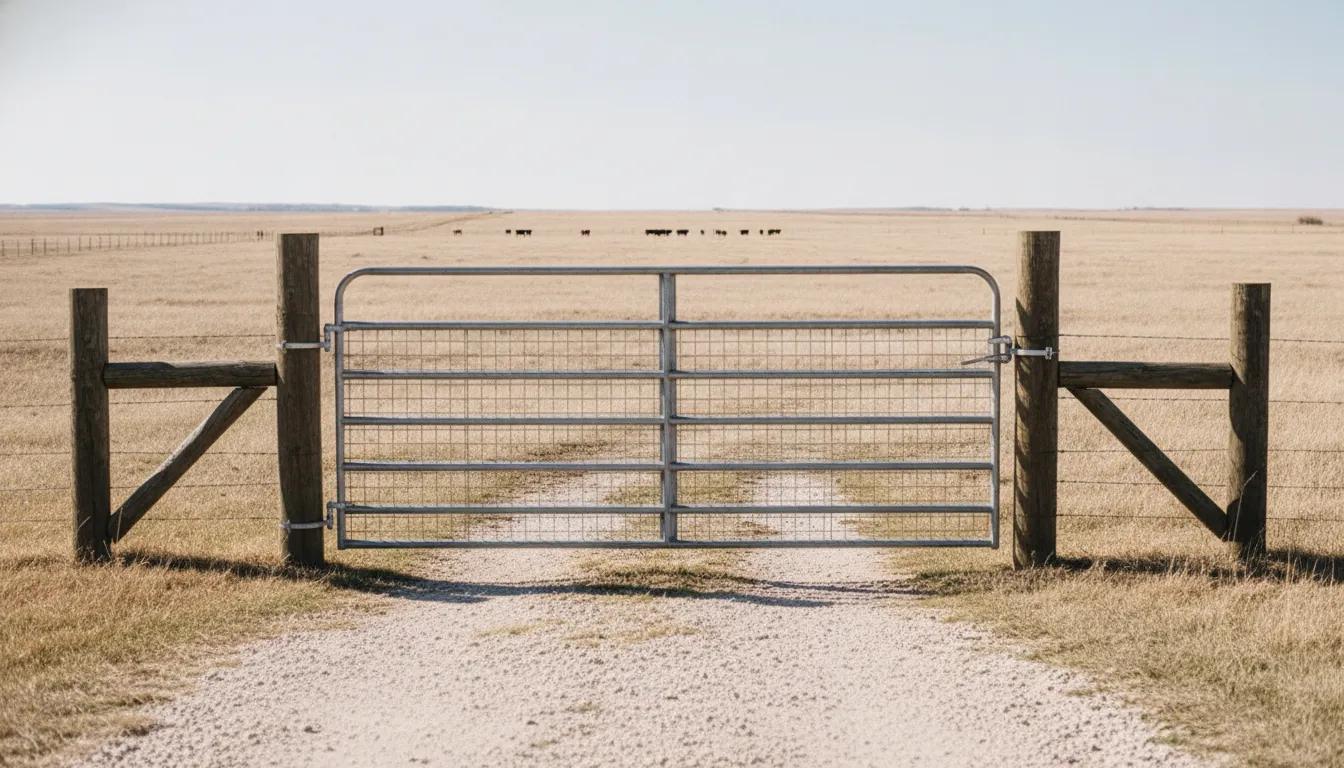
Gate width follows the widest machine, not a catalog default. Many pasture gates in the 10- to 14-foot range are fine for pickups and small groups of cattle. A feed wagon, mixer, or straight truck often needs more, plus swing clearance so the gate leaf does not sit in the tire path.
Decide three things on site:
Which way the gate swings, and whether it needs to open fully against a fence so it stays out of the drive.
Whether one leaf is enough, or a double gate is safer because each leaf is lighter and easier to latch in wind.
Where the latch lands. A latch buried in a post that cattle rub will get bent. Put it where a person can reach it without standing in the bunch.
For help matching hardware to the opening, see the farm and ranch gates guide and the notes on a 5 ft livestock gate when a people gate is separate from the equipment gate. The install detail that matters here is the frame around that hardware.
The gate posts carry two loads
Each gate post holds the gate's weight and the pull of the barbwire. Skip the brace and the post leans. The gate drags, the latch misses, and the first spans of wire go slack. That is the failure we see most often on older lot entries around Greeley County and the Platte Valley.
Build a real brace assembly on both sides of the opening, in line with the fence, before wire is strung. The corner brace fence installation page explains H-braces, floating braces, and how deep corner posts need to go in Nebraska soil. Use that page for brace choice. At a feedlot entry, plan on a brace at each gate post even when the fence run looks straight. The opening is an end, not a line post.
Set the posts plumb, with the hinge side able to carry a heavy steel gate without twisting. If the old posts are rotted or already leaning, tear them out. Sistering a new post to a failed one rarely holds truck traffic and cattle pressure together.
How Barbed Wire Fence Installation Should End at the Gate
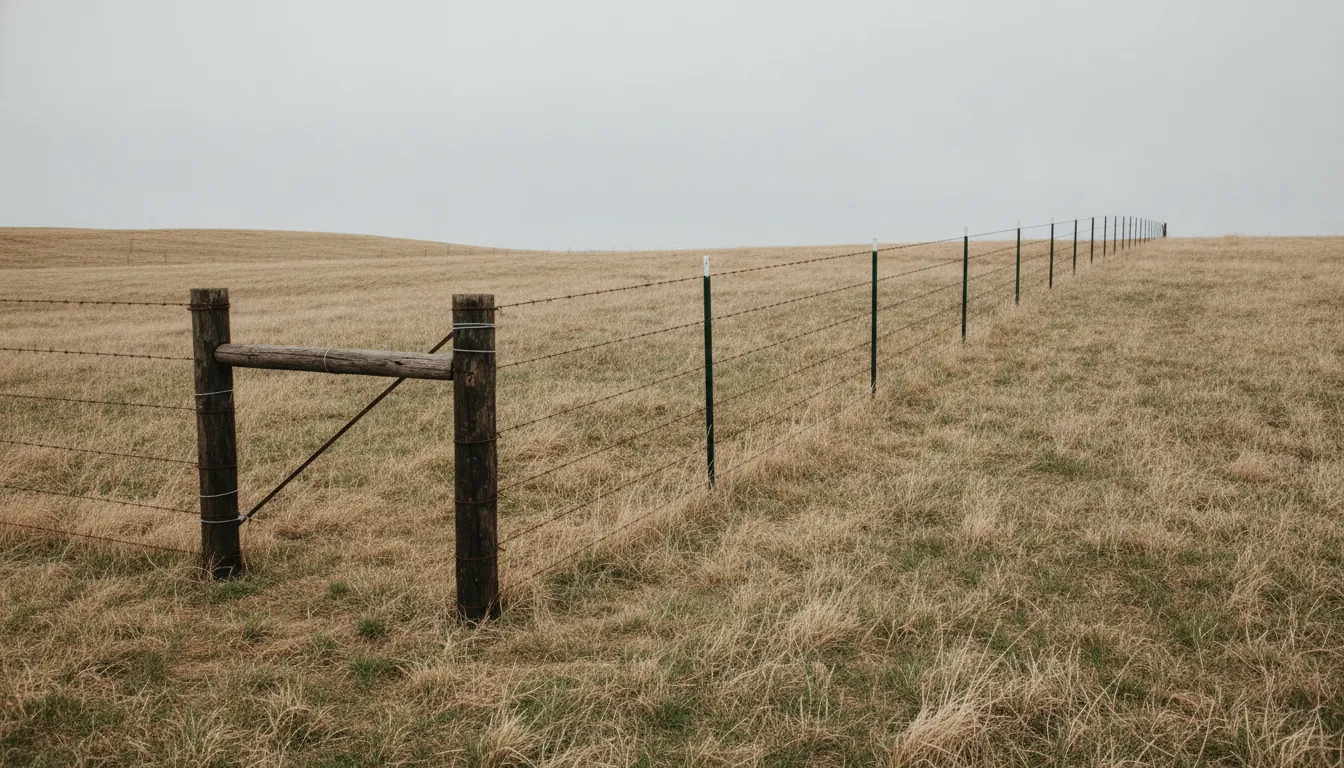
Wire should not stop somewhere near the gate. Each strand should end on the brace post, with a wrap and tie that will not slip when cattle push the next span. Leave enough clearance that a horn or a hip does not catch a stub of wire at the hinge.
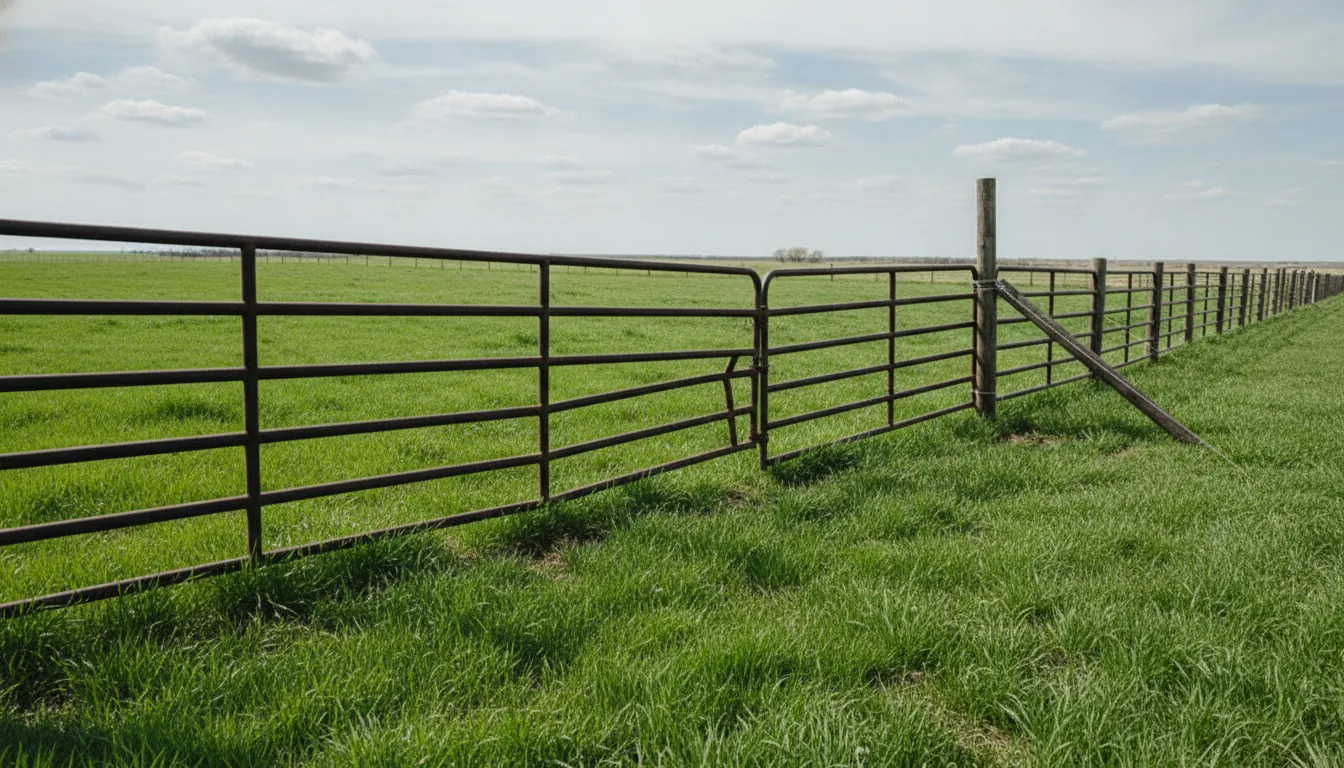
Strand count and spacing for the pasture runs are covered in how many strands of barbed wire for cattle. Do not reopen that choice at the gate. Match the adjoining fence so calves cannot find a new gap where the line changes. If one side of the entry is a continuous or pipe panel because cattle stand there all day. Terminate the barbwire on the brace and start the heavier panel as its own structure. Do not staple barbwire onto a panel and hope the two systems share a load.
Tension belongs on the line, not on the gate. Pull the fence to working tension, then check that the gate posts did not draw in. If they moved, the braces are too light or the anchors are soft. Fix that before you call the entry done. A gate that will not latch on day one will be wired shut by the first winter.
Entry piece | What to decide on site | What usually fails later |
Approach. | Truck path, turning room, and whether the soil needs fill. | Ruts, ice, and drivers clipping the gate. |
Holding pocket. | Room for a group to stand off the drive. | Cattle pinning the gate and pushing the end post. |
Gate. | Width, swing direction, single or double leaf, and latch side. | A leaf that is too heavy, a missed latch, or a blocked opening. |
Gate posts and braces. | A brace on both ends, plumb posts, and sound anchors. | Leaning posts, a dragging gate, and slack first spans. |
Wire ends. | Each strand tied off on the brace and matched to the pasture fence. | Slipped ties, calf gaps, and wire catching hips. |
Drainage. | Water leaving the apron instead of pooling at the posts. | Heave, rot, and a soft gate threshold. |
Drainage and Ground Prep in Central Nebraska
A tight fence on a soft apron still fails, because water that sits at the gate rots wood posts and heaves them in a freeze. By the first warm week the threshold is a bog. Look at where roof water, lot runoff, and the field slope actually go, and do not guess from a dry August visit.
Practical prep, the kind we do with fence-line cleaning and dirt work before posts go in, usually means:
Stripping the chewed-up surface where the truck stops.
Filling low spots so the apron sheds water away from both gate posts.
Keeping the gate threshold slightly higher than the mud line inside the lot, without building a hump cattle will balk at.
Leaving a place for snow to be pushed that is not the hinge post.
Rocky ground and rolling pasture around Scotia, Ord, and the Hall County lots change post setting. What matters at the entry is a stable hinge and latch, not a perfect line across the whole quarter. If an old fence has to come out first, plan the tear-out so the new posts are not set in the same rotten holes. The barbed wire fence removal guide covers that cleanup.
Continuous fence is the heavier steel option when cattle live against a panel every day. Many lots still want barbwire on the long perimeter because it is the right tool for the pasture edge. The entry is where those two ideas meet. Say so in the estimate request. A crew can build either, but the layout changes if one wing is pipe or continuous panel and the other is five strands of barbwire.
Questions to Settle Before Posts Are Set
Bring these answers to the estimate. They keep the visit useful and stop a change order after the braces are built.
What is the widest vehicle that must pass, including mirrors and a swung gate?
Do cattle need to stand in a pocket while that vehicle is in the opening?
Which direction should the gate swing so it latches out of the wind and out of the drive?
Is the adjoining fence staying, or is the entry part of a tear-out and rebuild?
Where does water sit after a rain or a thaw?
Will this opening also serve a corral, or is it only the lot gate?
Photos help, but they do not replace a walk of the truck path, the wet spot, and the old posts. Seeing those in person is how a barbwire entry gets braces and a gate that match the work, instead of a pasture gate forced into a feedlot job.
Service from Rapid Fence runs through Central Nebraska and the broader country within a few hours of Scotia, including Greeley, Buffalo, Hall, Platte, Boone, Holt, and Custer counties. If the entry is part of a larger perimeter, we can look at the whole line. The quote should still call out the opening on its own, because that is where the fence earns its keep.
Ready for a quote? Call Rapid Fence at (308) 223-1320.
Frequently Asked Questions
Can barbed wire fence a feedlot entry, or do I need pipe?
Barbwire is a sound perimeter at most cattle lots. The opening still needs heavy gate posts, braces on both ends, and a gate sized for the feed equipment. Use continuous fence or pipe only where cattle stand and push all day. Many Nebraska lots use both, with barbwire on the long runs and a stronger panel right at the gate.
How wide should the gate be?
Measure the widest truck or wagon that feeds the lot, then add room for the open leaf and for a driver to pass without clipping a post. A common pasture gate is often too narrow for a mixer. Decide the width on site before posts are set, because moving a braced opening later means rebuilding both ends.
Why do feedlot gates start to drag?
The hinge post is usually leaning. Gate weight plus wire tension, cattle pressure, and soft or heaved ground pull it toward the opening. A brace on both gate posts, sound anchors, and an apron that sheds water prevent most of that. Once the post has leaned, resetting the hinge is more reliable than bending the latch.
Should I replace the whole fence if only the entry is bad?
Not always. If the pasture runs are still tight and the posts are sound, rebuilding the opening, the braces, and the first spans can solve the daily problem. If the wire is spliced, the braces are rotten, or calves are getting out along the line, look at a larger rebuild. We can say which is which after a walk of the fence.
What should I have ready when I call for an estimate?
Know the gate width you need, which way traffic moves, whether cattle must hold beside the drive, and whether old fence has to come out. A rough location in Greeley, Buffalo, Hall, or a neighboring county is enough to schedule the visit. Call (308) 223-1320 and describe the entry. We will look at the ground before anyone prices a guess.
Comments