
Broken Fence After Livestock Impact
A broken fence after livestock impact is rarely just one bent rail. Cattle lean, rub, and crowd a continuous panel until the steel bows, a post shifts, and the next brace starts carrying a load it was not built to hold alone. In a high-pressure alley, sorting pen, or water gap, that movement can open a gap before the rest of the run looks bad. This guide is for Central Nebraska owners who need to read that damage and keep livestock in for the night. It also covers when the line needs structural repair instead of a quick patch.
What livestock impact does to a continuous panel
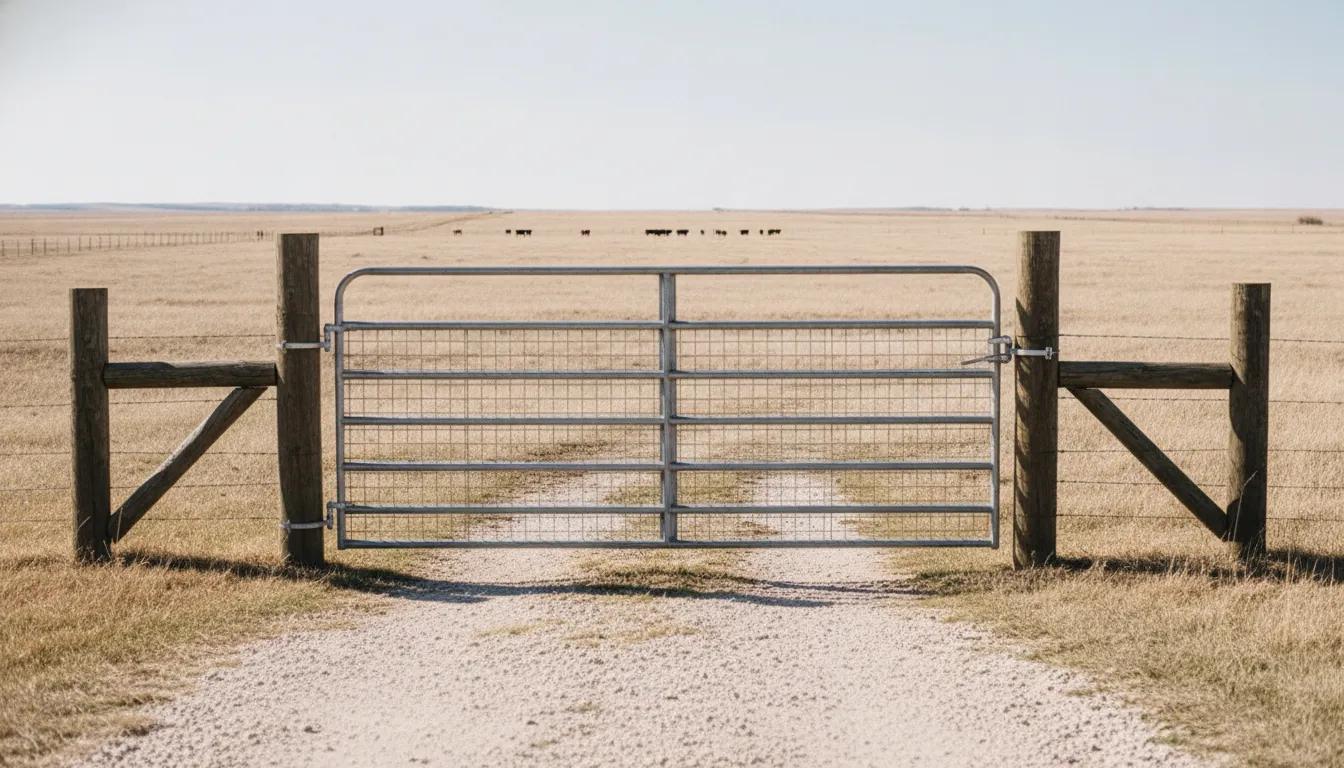
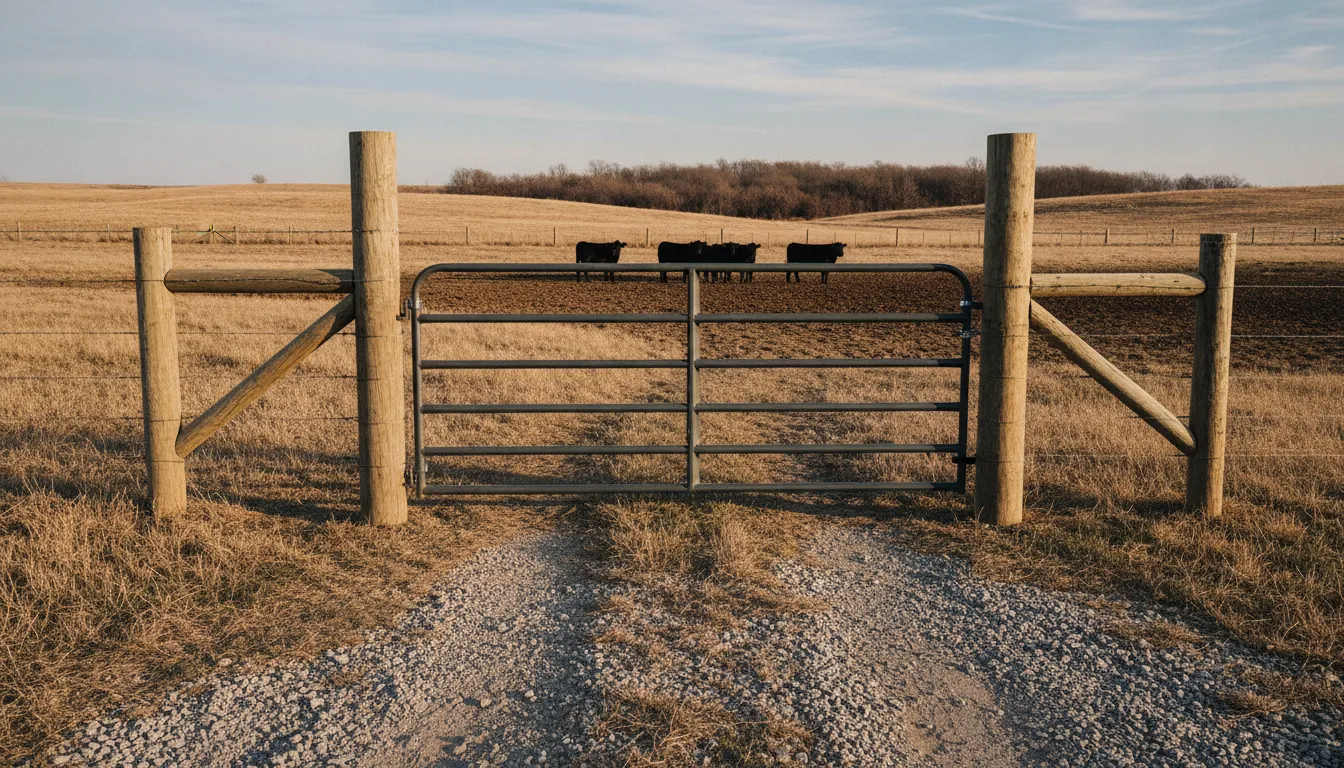
Continuous fence is the heavy steel Rapid Fence builds for high-pressure livestock areas. It is meant to take daily rubbing and crowding that would loosen barbwire or hi-tensile wire. It is not meant to hide damage. A panel that has taken a hard hit often looks almost straight from the pickup. Walk the line and the story changes.
Look for a panel that bows toward the outside of the pen. Check for a rail that no longer sits in the same plane as its neighbors. Also look for a connection that has opened at the post. Cattle push low when they crowd a gate and higher when they rub. Either force can rack the panel so one end lifts while the other drops. Once the panel is out of plane, the next animal finds the weak spot and adds to it.
A single bent stick of pipe is not the whole job. The panel is tied into posts, and those posts are tied into the brace that holds the run. If the panel moved, ask whether the post moved with it. A post that has rotated in the hole, pulled away from the concrete, or started to lean will not hold a new panel any better than it held the old one. That is the difference between swapping steel and repairing the structure.
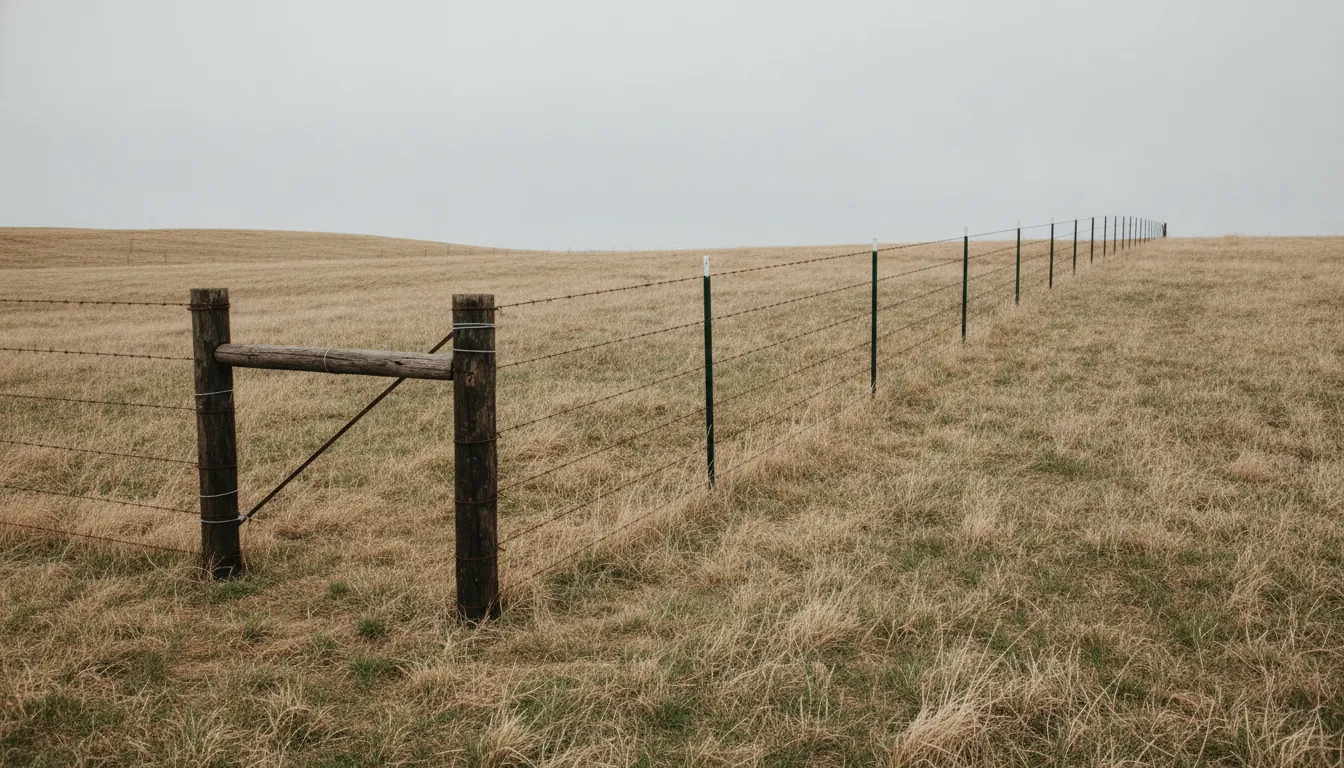
University of Nebraska-Lincoln beef specialists note that posts and wire have to match livestock pressure. Closer spacing keeps slack out where cattle test the fence. The same idea applies after a hit on a pipe run. If the posts were already far apart or shallow for the soil, livestock impact shows up as a broken fence faster than it would on a tighter layout. Read their notes on temporary fence around cropland for how post choice and spacing change under livestock pressure. That page is about movable electric fence, not continuous pipe, but the pressure lesson transfers.
How the load moves into braces and the next section
A continuous panel does not fail in a vacuum. When cattle hit one panel, the force travels through the clamps or weld into the post, then into the brace, then into the panels on either side. Owners often fix the obvious bow and leave the neighbor panel, which is already starting to rack. A week later the "new" damage is the section they walked past.
Check the brace before you order steel. On a pipe run the brace is what keeps the corner or end from folding when animals pile up. Look for a horizontal member that has dropped, a diagonal that is loose, or a post that has soil cracked around it in a crescent. Those are signs the brace took the hit even if the panel in front of it is the only piece that looks bent. Our corner brace fence installation guide explains how a sound brace carries tension. Use it to see what a healthy brace looks like, then compare it with the one in front of you. This article does not reteach brace construction.
Then walk one panel past the damage in each direction. A shifted post can pull the next panel's connection open without leaving a dramatic bend. Run a hand along the rail. A gap at a clamp, a bolt that spins, or a panel that rattles when you push it means the load already left the broken section. Patching only the bowed panel leaves that loose joint for the next crowd of cattle.
Gates deserve the same walk. Livestock impact often starts at the gate because that is where animals stack up. A gate that drags, a hinge post that leans into the opening, or a latch that no longer meets the catch is part of the broken fence, not a separate hardware problem. If the gate post moved, the panel tied to it moved too.
Field checks before you call for structural repair
You can learn a lot from a careful walk without taking the fence apart. Stay off the line if cattle are still pushing on it, and do not stand in the gap. The goal is to describe the damage, not to tension a wrecked panel back into place.
Count the panels that are out of line, not just the one with the worst bend.
Push each nearby post at chest height. A post that rocks in the hole is no longer holding the panel.
Look at the ground. Cracked soil, a new mound, or a post that sits higher than its neighbors means the set has moved.
Check every clamp, bolt, and weld on the damaged panel and one panel each way.
Open and close the nearest gate once, slowly, and stop if the post moves.
Note what the fence is holding. A sorting alley and a perimeter are not the same repair.
Take photos from the side and from each end so the lean is visible.
Those notes are what a structural repair visit needs. Rapid Fence restores compromised lines so a ranch can get back to work. The useful call includes where the break is, what kind of fence it is, and whether cattle can already get through. Photos of the brace and the adjacent panels matter as much as a photo of the bent pipe.
Do not winch a bowed panel straight and call it finished. Pulling steel back into line without resetting the post loads the next connection and can crack a weld that was only bent. Wire can sometimes be re-stapled. A continuous panel that has taken a body hit usually needs the steel, the post, or both evaluated together.
When a local repair is enough, and when it is not
Some hits stay local. A panel dented by a single animal, with posts that do not rock and clamps that are still tight, can be a limited repair. The brace is plumb, the next panels sit in plane, and the gate still latches. In that case the job is the damaged panel and its connections, not a rebuild of the pen.
Call for structural repair when any of these are true:
More than one panel is racked, or the panel on either side has opened at the post.
A post rocks, leans, or has separated from its footing.
The brace has dropped, loosened, or twisted.
The gate post moved, or the gate will not latch without lifting.
Cattle have already been through, so the next crowd will hit the same spot harder.
The break is in an alley, crowding pen, or other high-pressure area.
The table below is a field sort, not a quote. Ground conditions, access, and how much steel has to come out all change the visit.
What you see. | What likely moved. | Usual next step. |
One panel dented, posts firm, clamps tight. | The panel face only. | Limited panel repair. |
Panel bowed and one connection open. | Panel plus the joint at the post. | Repair the panel and the connection. |
Post rocks or soil is cracked at the base. | The set, not just the steel. | Reset or replace the post before new panels. |
Brace dropped or the next panel rattles. | Load has left the first break. | Structural repair of the brace and adjacent section. |
Gate post leaning, latch misses. | Gate end of the run. | Repair the gate post with the tied-in panels. |
Repeated breaks in a crowding area. | The layout is taking more pressure than it can hold. | Repair the break, then review the continuous layout. |
If the layout itself is the problem, read the continuous cattle fence guide for how pipe spacing, gates, and bracing are planned. That page owns installation and layout. This one stays on the damage in front of you. For a buying comparison of panel types, the farm fence panels guide is the better stop. Do not treat a portable cattle panel and a built-in continuous run as the same repair.
How a broken fence differs from other repairs
A broken fence question pulls up a lot of different jobs. The right page depends on what failed.
General farm fence repair, storm damage, and seasonal checks belong on the agricultural fence repair guide. That piece covers assessment through tear-out and is the right read for barbwire, hi-tensile, and mixed lines. It mentions continuous fence, but it does not walk a panel run after cattle have hit it.
Corral damage is its own decision. If the question is whether to patch a working system or replace it, use fence repair services on the corral guide's terms and the corral repair page itself. This post does not price a corral rebuild or decide replacement. It tells you when livestock impact has already moved past one continuous panel.
The parent cluster still matters. A continuous run often ties into the same cattle system as the corral. If the broken section feeds the pens, say so when you call. The repair has to match how cattle move, not only how the pipe looks.
What to do tonight if cattle can get out
Containment comes first. University of Nebraska-Lincoln's Center for Agricultural Profitability explains a simple duty. Livestock owners in Nebraska must use reasonable care to keep animals from trespassing. A sound fence is the usual way they do it. A break does not wait on a materials order. Their overview of rebuilding fences after a disaster is about storm losses and assistance programs. The containment point is the same after a cattle hit. Close the opening before you debate the permanent repair.
Move the herd off the damaged run if you can do it safely. A second group through the same gap turns a bowed panel into a downed section. If you cannot move them, block the opening with a spare gate, panels you already own, or another temporary barrier that cattle cannot push aside. Do not rely on a single strand pulled across a hole where cows are already shouldering through.
Then protect the neighbors and the road. A break on a shared line is not only your containment problem. UNL has long noted that adjoining owners often split the cost of a division fence or agree on who maintains which stretch. That is a neighbor conversation, not a reason to leave the gap open. Keep the legal sorting separate from the emergency close-up.
Once the animals are held, write down what you saw on the walk-through. The side of the bow, which posts rock, whether the brace dropped, and whether the next panel is loose will save a second trip. Rapid Fence serves that work from Scotia across Greeley, Buffalo, and Hall counties. The same notes cover runs toward Custer, Boone, Holt, and Platte counties. They are enough to start a structural repair call.
What Rapid Fence needs on the repair call
Rapid Fence is based at 80348 Springdale Road in Scotia and builds barbwire, hi-tensile, continuous fence, and custom corrals for livestock owners. Structural repair is the restoration work for a line that has already been compromised. For this kind of broken fence, the crew needs the damage story more than a catalog number.
Have these ready:
Where the fence sits, and whether cattle are still on that pasture.
How many panels look bent, and whether the posts rock.
Whether the brace or the gate end moved.
Photos from the side, the end, and the adjacent section.
Any access limit, such as a soft approach, a creek, or a narrow alley.
We will tell you if the visit is a panel and connection repair or a post and brace repair. If the steel is the wrong product for that pressure, we will say that too. Continuous fence is the heavy-duty choice for crowding areas. A light panel that keeps getting broken is a layout problem, and the fix may include a stronger run rather than another patch of the same pipe.
Chain link and privacy fence are separate Rapid Fence services. They are not the repair described here. A residential chain-link hit and a cattle panel hit fail in different ways, and mixing them in one scope wastes the visit.
Frequently asked questions
Can one bent continuous panel be repaired without replacing the run?
Yes, when the posts do not rock, the brace is intact, and the panels on either side are still tight. If the post or the next connection moved, replacing only the bent panel leaves the break in place.
Why did the panel past the impact start to loosen?
Cattle load travels through the post into the brace and the neighboring panel. A clamp can open one section away from the bow you noticed first. That is why the walk has to include both adjacent sections.
Should I pull a bowed panel straight with a chain?
No. Forcing the pipe back into line can crack a weld and overload the next joint. Hold livestock with a temporary barrier, then let a repair visit decide whether the panel, the post, or the brace has to be reset.
Does this replace a full fence repair assessment?
No. This page is only the livestock-impact pattern on continuous panels. Storm damage, mixed wire lines, and a full repair-or-replace plan belong on the agricultural fence repair guide. Corral replacement belongs on the corral repair page.
Who should I call for a broken continuous fence in Central Nebraska?
Call Rapid Fence at (308) 223-1320. Ask for structural repair, describe the panels and braces that moved, and send the side and end photos before the visit.
Comments