
Heavy Duty Farm Gates for Sale

If you are searching for heavy duty farm gates for sale, the hardest choice is usually not finding a steel frame. It is matching the opening to the livestock, equipment, traffic pattern, fence line, and soil conditions on your place. A gate that looks strong in a listing can still sag, drag, or leave a weak point in the boundary if its posts and braces are undersized.
For a Central Nebraska farm or ranch, treat a gate as a working part of the fence system rather than a standalone product. This guide explains what to compare, what measurements to take, and when a locally planned installation is more useful than choosing a gate by a catalog photo.
What should heavy duty farm gates for sale include?
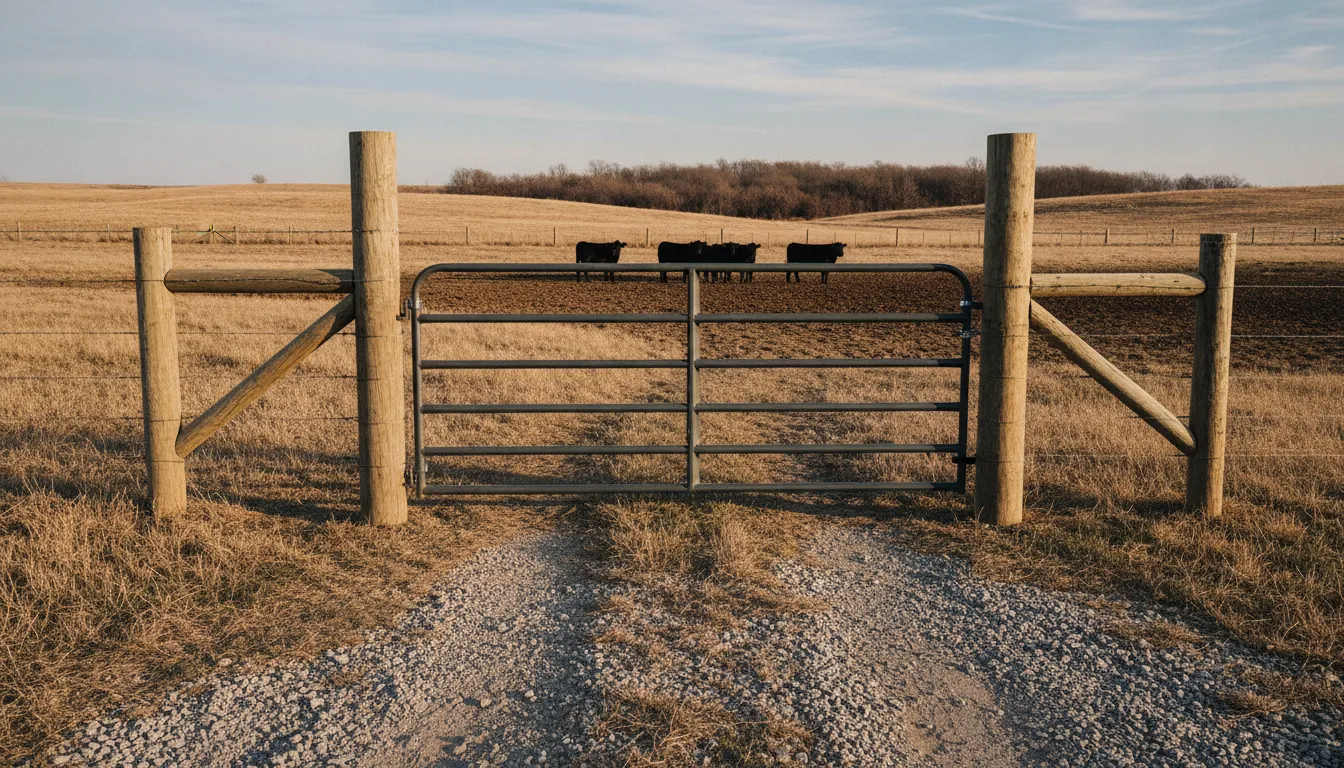
“Heavy-duty” should describe the complete installation, not only the tube or pipe used to make the gate. A durable setup has a gate frame suited to repeated use and hinges that can carry its weight. It also needs a latch that works in the field, posts that resist movement, and bracing that transfers the load into the ground. The surrounding fence must also meet the gate at the right height and tension.
The use matters just as much as the material. A narrow pasture access gate may open a few times each week. A feedlot or working-lot entrance may cycle repeatedly, receive contact from cattle, and carry more traffic from pickups, tractors, and trailers. Those are different jobs even if both gates appear to be the same length.
A strong gate plan also leaves room for maintenance. Mud, gravel, frost movement, vegetation, and equipment ruts can change how an opening works over time. The goal is a gate that remains aligned and useful after ordinary seasons of use, not one that is merely difficult to bend on day one.
How should you compare gates for sale?
Start with the work the gate must perform. Compare the following details before comparing prices:
Decision | Questions to answer | Why it matters |
Clear opening | What is the widest vehicle, implement, trailer, or group of livestock that must pass? | The usable opening must provide operating clearance, not just match the gate’s advertised width. |
Gate height and containment | Which livestock will use the area, and could they push, lean, or reach over it? | Height and rail layout should fit the animals and the adjoining fence. |
Frame and rails | Will the gate face regular livestock pressure, equipment traffic, or occasional pasture access? | Material and construction need to match the pressure and frequency of use. |
Posts and braces | Are the hinge and latch posts sized and braced for the gate’s weight and leverage? | Many gate failures begin with moving posts rather than a broken frame. |
Hinges and latch | Can the hardware be operated from the approach side in mud, snow, or gloves? | A strong gate is not useful if it binds or cannot be secured quickly. |
Ground and approach | Is the opening level, drained, and clear of ruts or brush? | Site preparation reduces dragging, standing water, and damage to the gate area. |
Ask whether a quoted price includes the posts, braces, hardware, removal of an old gate, site preparation, and installation. A low gate-only price may not represent the cost of a usable opening. At Rapid Fence, an estimate can account for the field conditions and the fence connection instead of treating the gate as an isolated purchase.
What gate width fits farm traffic?
Measure the widest thing that will pass through the opening and then allow operating room. Include mirrors, buckets, dual wheels, trailer corners, and the turning angle required to enter. A gate can be physically wide enough while still being frustrating if the approach forces a sharp turn or if the latch side is blocked by a post, bank, or vegetation.
For a small pasture access point, a narrower single gate may be convenient and economical. A main driveway, hay field entrance, or equipment route may need a larger opening or a pair of gates. Double gates can create a wider passage, but they also add a center meeting point, additional hardware, and another alignment detail to maintain.
Do not measure only between existing posts if the current opening is poorly placed. Measure the desired travel path, identify the widest equipment, and note where a vehicle can safely line up. If a trailer must swing around a corner, the approach may require more clearance than the gate width suggests.
Which gate height and rail layout suit livestock?
Consider the animals, pressure, and adjoining fence before choosing height. Cattle may lean or push, horses can react differently to open rails, and smaller livestock may require a layout that prevents them from slipping through or reaching where they should not. A gate should look continuous with the fence rather than creating a low or open spot in an otherwise secure perimeter.
A five-foot gate can be practical in some pasture settings, but it is not automatically right for every animal or opening. The existing fence height, terrain, and daily handling routine matter. Rapid Fence’s 5 ft livestock gate guide covers the measurements and use questions to review before committing to that size.
Rail spacing and visibility matter as well. Operators need to see approaching livestock and vehicles, while the openings must not invite animals to get caught or reach through. The correct choice depends on the species, the fence line, and how the gate will be used, not on a universal rail count.
Do the posts and braces matter more than the gate frame?
The gate frame carries weight, but the hinge and latch posts carry the forces that make a gate sag or shift. Every opening creates leverage. Repeated swinging, wind, contact from livestock, and a person pushing a stuck gate all transfer force to the posts and the ground. If a post moves, the gate may drag even when the steel frame is still straight.
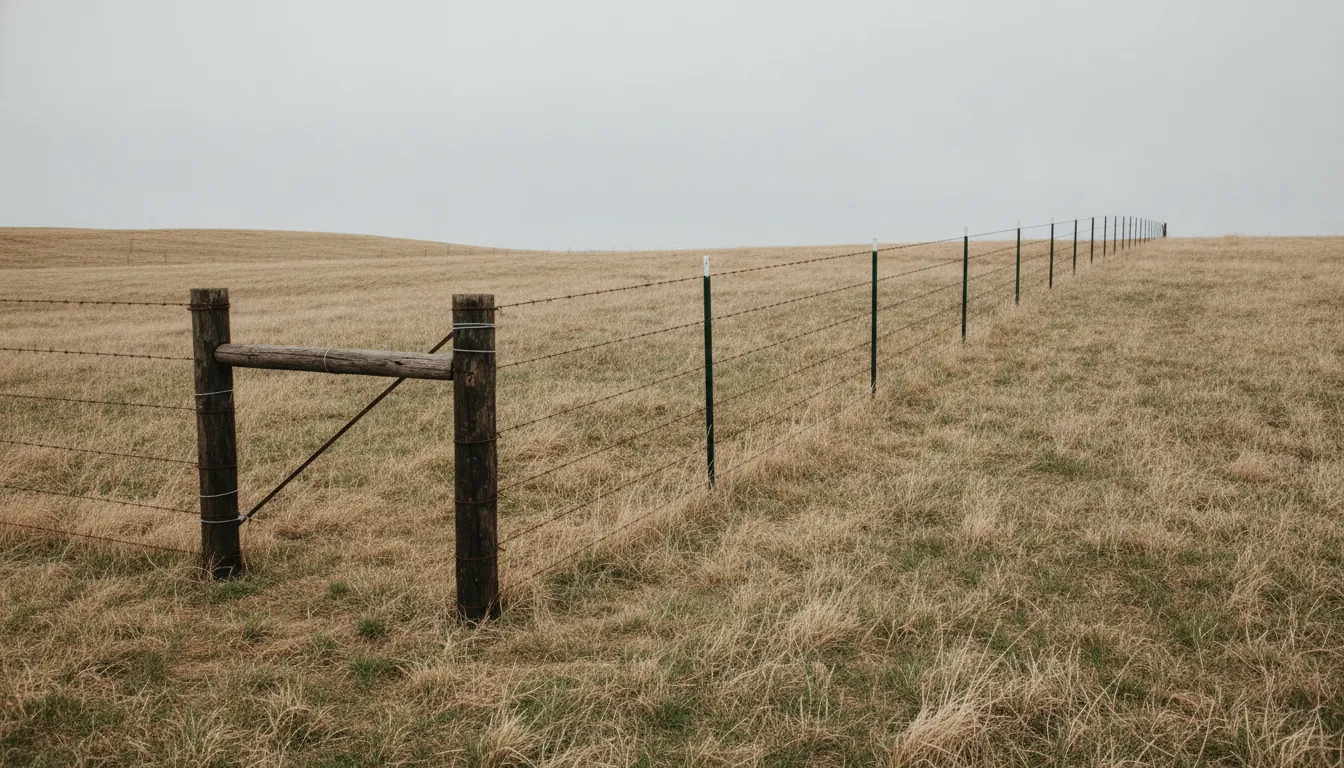
Plan the hinge post, latch post, and brace direction together. Braces need to resist the pull of the gate and the fence line, and the connection should be appropriate for the soil and the amount of use. A long, heavy gate usually demands more from its supports than a short access gate. The surrounding fence may also need a transition so its tension does not pull the gate posts out of alignment.
Central Nebraska sites can vary from firm ground to areas affected by moisture, slope, or seasonal frost movement. A professional assessment can identify when the opening needs dirt work, a different post arrangement, or more substantial bracing. For a broader look at how openings fit into a property, see Rapid Fence’s farm and ranch gates planning guide.
Post choice deserves its own review when wood is part of the plan. The University of Nebraska–Lincoln guide Native Wood Fence Posts explains that durability, availability, and ease of handling are relevant when evaluating Nebraska wood posts. That same practical approach applies to a gate opening: select the support system for the site and the work it must handle, rather than assuming one material fits every location.
What steel and hardware details should you inspect?
When comparing listings, look beyond a phrase such as “heavy-duty steel.” Ask what the frame is made from and how the rails are joined. Then ask how the hinges are supported and whether the latch is designed for field use. The right specification depends on the span and pressure, so a single advertised tube size does not make a gate suitable for every farm.
Hardware should be reachable and reliable in the conditions where the gate will operate. A latch that works only when the gate is perfectly level may become a daily problem after ground movement. Hinges should allow the gate to swing without binding, and the design should make it possible to adjust or repair hardware later. If the opening is used after dark or during poor weather, simple operation is a safety benefit.
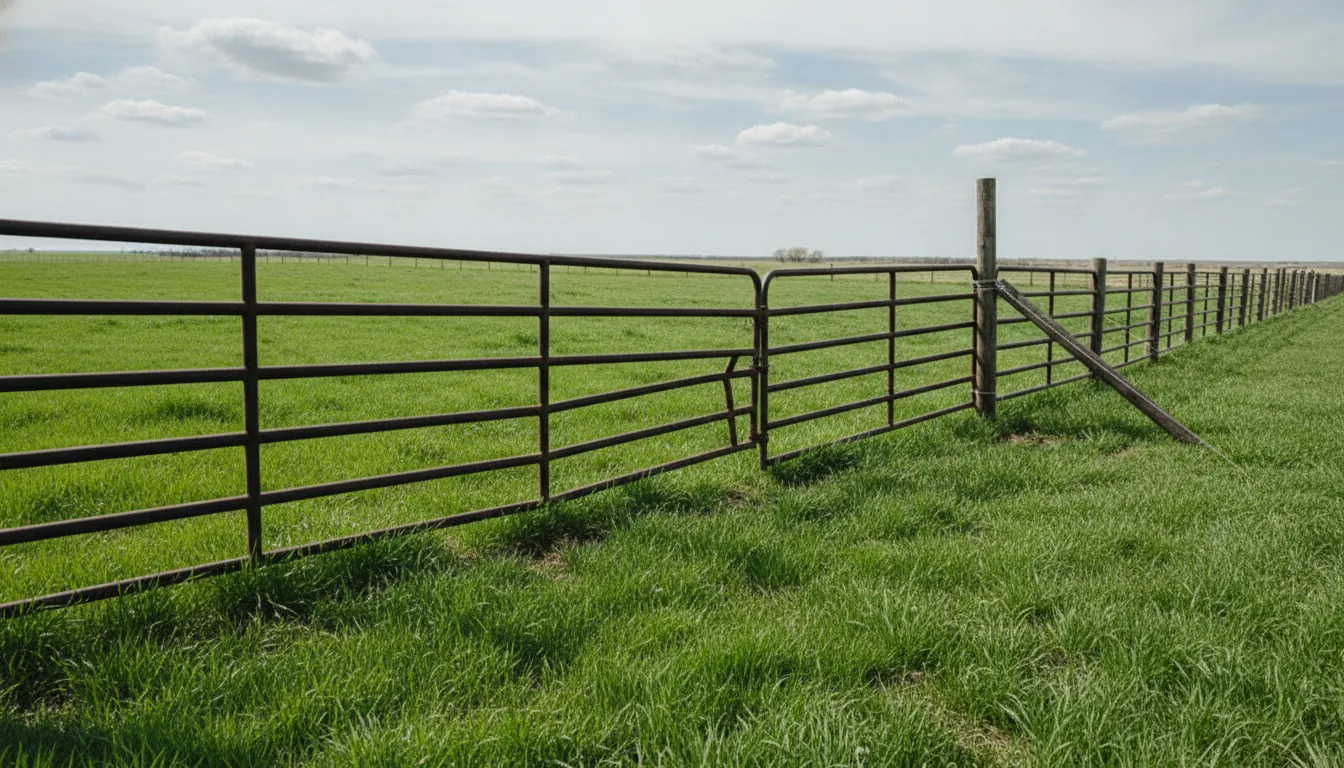
Also inspect the transition to the fence. A gate that is stronger than the fence beside it may still leave a gap, snag point, or weak connection. The fence line should meet the posts cleanly, with a layout that contains livestock and gives equipment a predictable path.
Where should a heavy-duty farm gate be placed?
Placement affects convenience and service life. A gate at the bottom of a slope may collect water, mud, and debris. A gate on a sharp bend can be difficult for a stock trailer to approach. A gate near a low spot, ditch, or eroding bank may need drainage or dirt work before the opening can operate reliably.
Walk the route as if you were using the gate in the busiest season. Consider where livestock gather, where machinery turns, how a trailer exits, and whether the gate can be opened without standing in a vehicle path. Keep enough room on the latch side for a person to work safely. If the gate is part of a corral or handling area, think about animal flow and whether the opening supports the next step instead of creating a bottleneck.
Property layout can also influence whether one gate should serve every purpose. A farm may benefit from a dedicated equipment entrance, a smaller pasture gate, and a separate livestock-handling opening. Separating those jobs can reduce wear and keep animals from moving through an opening designed mainly for machinery.
Should you buy a gate or request installation?
Buying a gate by itself can make sense when the posts, opening, and fence connection are already sound and the property owner has the equipment and experience to install it. It becomes riskier when the opening is new, the ground is uneven, the gate is large, or the existing fence is failing. In those cases, the installation details determine whether the product performs as expected.
“For sale” searches can also hide different scopes. Some listings cover a gate leaf only. Others include a complete opening, posts, hinges, latch, delivery, and installation. Before comparing offers, ask for the exact included components and whether the seller has measured the site. Make sure the plan accounts for removal of old material if the new gate replaces an existing opening.
Rapid Fence provides agricultural fence installation and repair across Central Nebraska, including work connected to barbwire, hi-tensile, continuous fence, corrals, and gate openings. Review the agricultural fencing services page to see how a gate can fit into a larger fence or livestock project. For examples of field work and materials, visit the fence project gallery.
What should you prepare before requesting a quote?
A few measurements and photographs can make the first conversation more useful. Note the desired opening width, the gate height if known, the livestock involved, and the widest equipment that must pass. Photograph both sides of the fence line, the approach from the road or yard, the hinge and latch area, and any slope, ditch, brush, or water problem.
Also explain how often the gate will be used and who will use it. A daily equipment entrance has different needs from a seasonal pasture opening. Tell the installer whether you need a single or double gate, whether an old gate must be removed, and whether the surrounding fence is staying, being repaired, or being rebuilt.
For a quote request, include the property location and the type of work you want completed. Rapid Fence is based in Scotia and serves agricultural and livestock owners throughout Central Nebraska, with projects planned around real site conditions in areas including Greeley, Buffalo, and Hall Counties. Work may also extend to nearby communities in the broader regional service area. You can use the Rapid Fence contact page for project details, but calling is the fastest way to discuss an opening.
Frequently asked questions
Are heavy-duty farm gates sold with posts and installation?
Not always. Some listings cover only the gate frame, while others may include hardware, posts, delivery, or installation. Ask for an itemized scope so you know whether the opening, braces, fence connection, and site preparation are included.
What is the best gate for cattle?
The best gate depends on the cattle, opening width, traffic, fence type, and ground conditions. A strong frame alone is not enough; the posts, braces, latch, and transition to the fence must be planned for the way the opening will be used.
Is a five-foot gate heavy-duty?
Height does not determine whether a gate is heavy-duty. A five-foot gate may fit a particular pasture, but its frame, hardware, posts, braces, and adjoining fence must all suit the livestock and pressure at that location.
How wide should a farm gate be for equipment?
Measure the widest equipment and trailer, then account for mirrors, turning angle, and clearance on both sides. The correct opening is the one that lets the equipment enter and exit without repeated contact with posts or the gate.
Does Rapid Fence sell and install farm gates?
Rapid Fence plans and installs agricultural fence and gate projects in Central Nebraska. Call (308) 223-1320 to discuss the opening, fence connection, and site conditions and request an estimate.
Plan the opening before you choose the gate
A heavy-duty gate is a system: frame, hardware, posts, braces, fence, and approach. Compare those parts against the daily work they must handle, then choose the gate configuration that supports safe movement and dependable containment. A careful site plan can prevent a gate that looks right in a listing from becoming a dragging, sagging, or difficult opening.
For a Central Nebraska farm or ranch project, Rapid Fence can review the location and help plan a durable gate connection. Call (308) 223-1320 to talk through your measurements and request a quote.
Comments