
Fence Panel Gate Transition: Farm Gate Installation

A farm gate installation is more than fitting a gate between two fence ends. The opening needs to suit the equipment and livestock that use it, while the fence panels and posts must guide movement without creating weak spots. On a Nebraska farm, plan the transition from the fixed fence to the gate as one connected section, not as separate pieces.
By Cody Koehn, CEO, Rapid Fence
What should the gate opening do?
Start by listing the regular jobs the opening must handle. A gate used to move cattle between pastures may have different needs from one used mainly by a tractor, hay equipment, or a service vehicle. Think about the largest equipment that needs to pass, how often the gate will open, and whether a person needs to use it on foot.
Write down the intended uses before choosing a width or hardware. Separate routine use from occasional use. For example, a lane gate might see a tractor and loaded implement several times a week, while a pasture opening may be used mostly during livestock moves. If the same opening serves both, it should work safely and conveniently for both jobs.
Identify the widest vehicle or implement that must pass, including anything it tows.
Note whether livestock will pass through and how they approach the opening.
Choose a preferred swing direction and check whether the gate can open fully clear.
Consider whether the person latching it can reach and operate the hardware from the normal approach.
Mark nearby lanes, ditches, other gates, buildings, and fence corners that may limit movement.
Measure equipment and the usable approach rather than selecting a width from memory. Turning room matters as much as the opening itself. A wide gate can still be awkward if a vehicle has to make a sharp turn immediately before it. Conversely, a clear approach may make a suitably sized opening easier to use than a wider gate in a cramped location. Rapid Fence’s agricultural fence installation and repair services include fence work for livestock properties; the right scope depends on the actual site and use.
How should fence panels meet the gate?
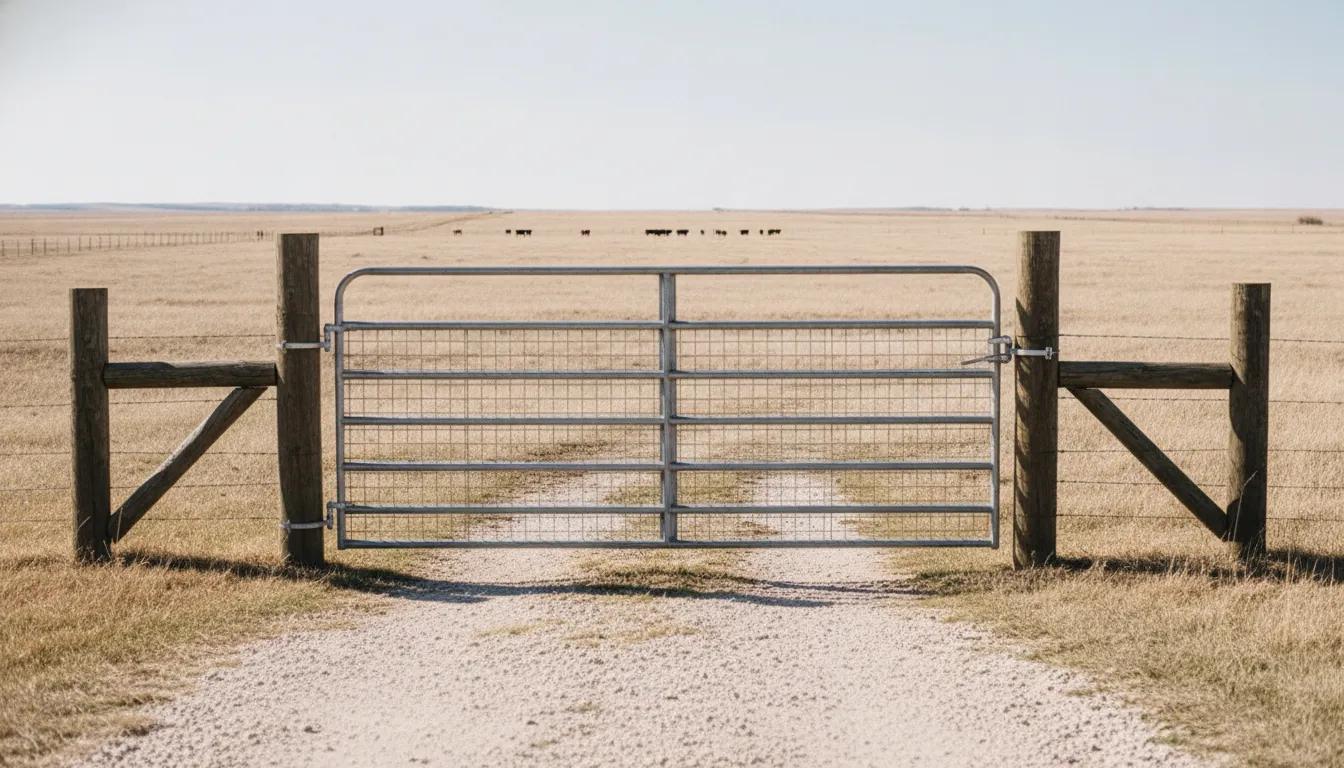
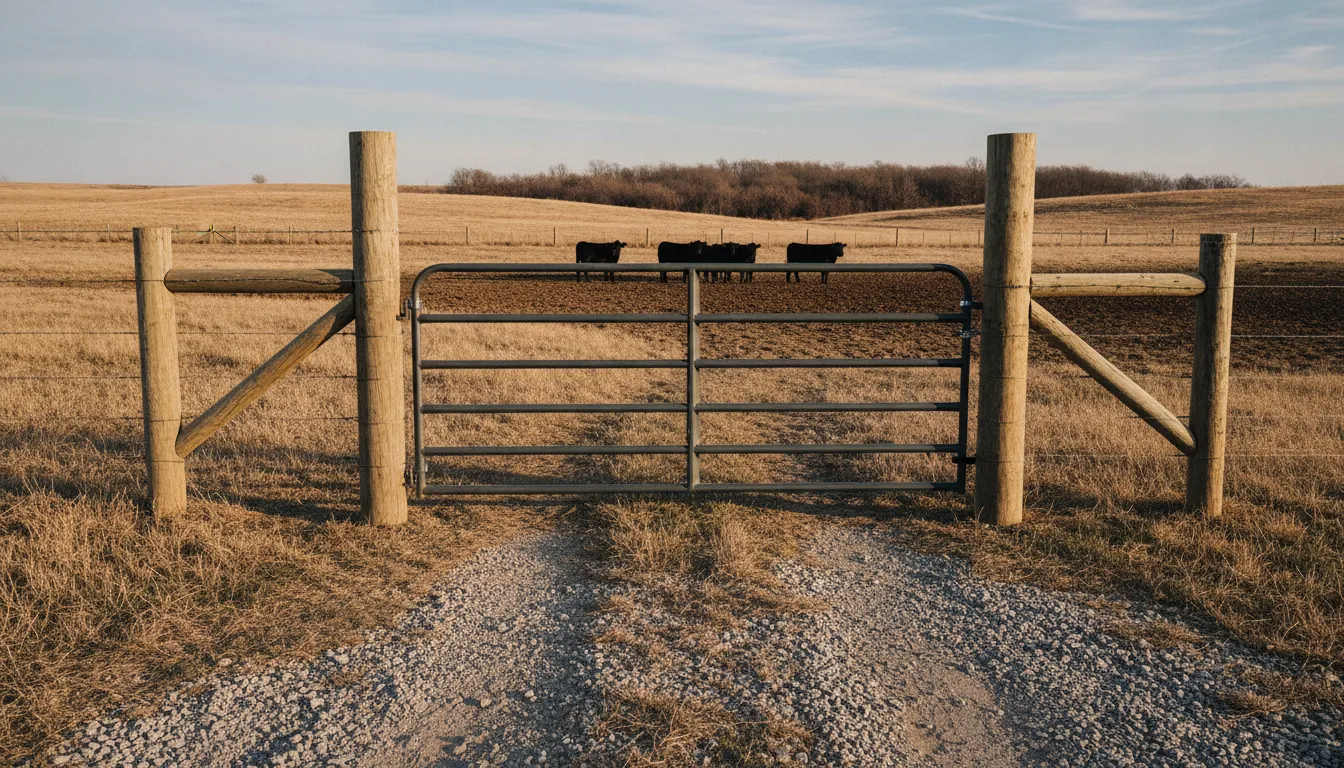
The transition includes the fixed fence end, the hinge post, the moving gate, and the latch-side connection. Walk the proposed line from both directions. Imagine driving through it and, separately, imagine livestock approaching it. The fence should direct movement toward the opening without leaving an awkward corner, an exposed panel end, or a gap that invites animals to push through.
At the hinge side, the post and connection need to support the gate while leaving its swing path clear. At the latch side, the fence must meet a stable closing point. A panel, brace, wire, or nearby object should not block the gate as it opens or make the latch hard to reach. Keep in mind that the gate must have room to move when the ground is not perfectly level.
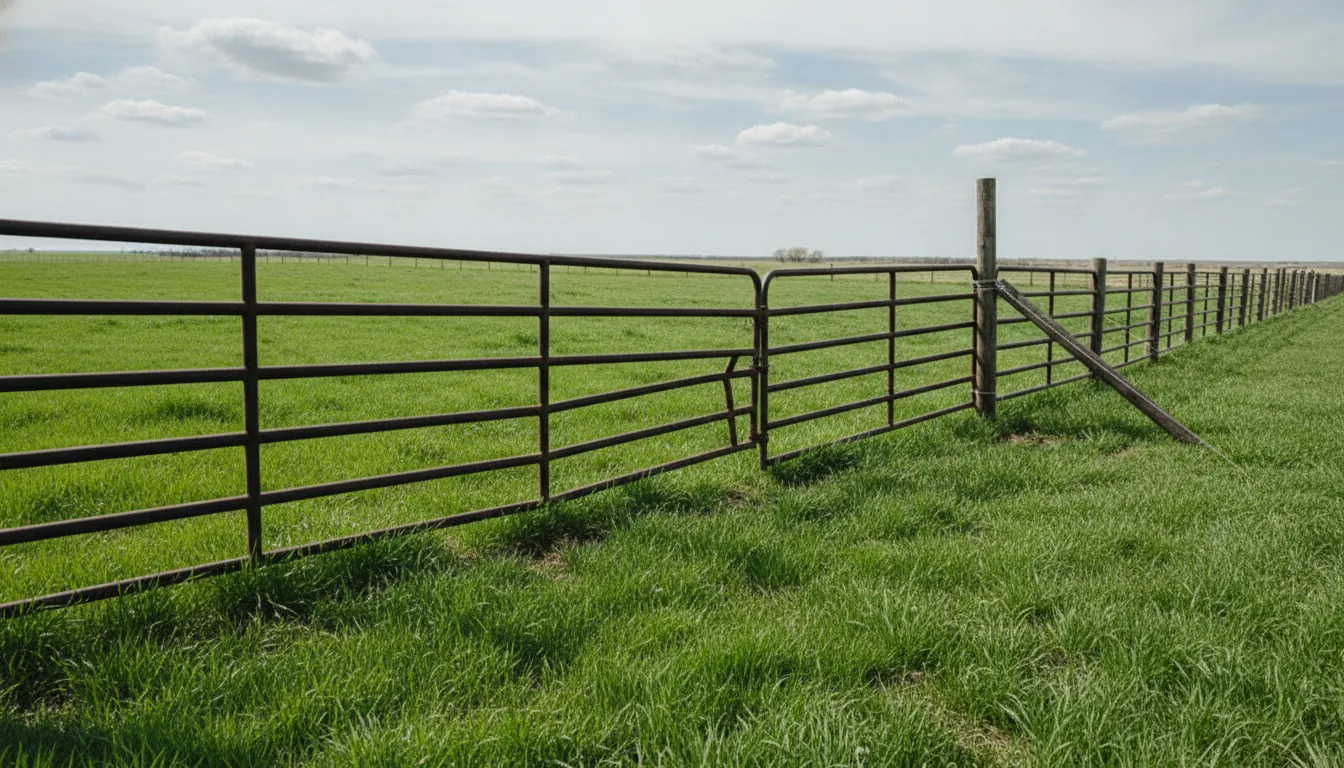
If a panel is being added or repositioned, check how its end will be secured to the gate area. The transition should match the fence type and the animals being contained. A farm fence panel plan should be considered alongside the gate location, not after the posts are set. For a long fence line, map the whole approach and nearby corners so that the opening fits the flow of the property.
Where the gate connects to barbwire, hi-tensile, or continuous fence, the connection details differ. Wire ends, braces, and gate hardware need to be arranged so that fence tension and gate movement do not work against each other. The specific layout depends on the fence design and site conditions. Avoid improvising a connection that leaves loose wire or an unsupported end near a working opening.
Which site conditions can change the layout?
Ground shape can determine whether a gate works after installation. A gate that clears on flat ground may drag where the approach dips or the slope rises under its swing. Walk the entire swing area, not only the strip directly beneath the closed gate. Look for low spots, soft ground, drainage paths, existing posts, brush, and nearby ditches.
Check the approach from each side too. A gate near a crest, sharp bend, or narrow lane may leave little room to line up a vehicle. If livestock are moved through the opening, note whether the fence naturally guides them toward it or whether the layout creates a blind corner. Relocating the gate a short distance may improve access, but the new location must still fit the fence line and use of the land.
Consider seasonal conditions as part of the site review. Nebraska farms experience changing ground and weather, so a route that looks clear on the day you inspect it may be affected by mud, snow, or runoff at other times. This is not a reason to assume a particular gate design; it is a reason to discuss the ground, drainage, and intended use before finalizing the opening. For broader working-lands and conservation planning resources, the USDA Natural Resources Conservation Service provides information for landowners and agricultural producers.
Rapid Fence is based in Scotia and serves agricultural and livestock owners across Central Nebraska, including Greeley, Buffalo, and Hall Counties and a broader service radius. If a project is in Platte, Boone, Holt, or Custer County, share the property location and access details when discussing the work. Local soil and terrain are part of the site conversation, but the specific installation plan should be based on the actual ground and fence layout.
What posts, bracing, and hardware need attention?
Gate posts carry repeated movement and force. The gate’s weight and width, hardware, ground conditions, and frequency of use all affect what support is appropriate. The post on the latch side also needs to stay aligned so the gate can close without being lifted, forced, or left with an unintended gap.
Before work begins, identify which posts will carry the hinges and latch, how each adjoining fence section will be supported, and whether any existing posts are sound enough to reuse. A post that looks straight from one angle may lean along the fence line. Inspect nearby wire, braces, and connections for looseness or damage. When an old opening is being reused, the existing gate and hardware should be checked for wear and compatibility with the planned posts.
Bracing and wire tension should fit the fence type and the job. A gate transition can become a weak point if the end of a fence is unsupported, or if a repair changes the way a connected section holds tension. Rapid Fence handles structural repair as well as installation. Its corner brace installation guide gives more context on why the adjoining structure belongs in the plan. For post considerations across an agricultural fence line, see the agricultural fence posts guide.
Hardware must fit the gate and the way people use it. Check that the hinges allow the intended swing, that the latch can be reached from a sensible position, and that the gate will not bind against the post or fence. A gate that is difficult to close is less likely to be secured consistently. Rapid Fence’s overview of farm gate hardware can help you identify details to discuss when comparing options.
How do gate and transition options compare?
The gate material and style should suit the opening’s work and the fence around it. This comparison is a planning aid, not a specification. Confirm the dimensions, gate condition, post support, latch needs, and site fit before choosing a final arrangement.
Planning option | May fit | What to check |
Livestock gate in pasture line | Routine access between pasture areas | Containment needs, approach shape, latch access, and adjoining fence connection. |
Equipment-access gate | Field lanes, hay work, or service access | Largest vehicle and implement, turning room, clear swing area, and ground clearance. |
Existing gate reused | A changed fence line or replacement opening | Gate condition, hinge and latch fit, post condition, and whether the gate still suits the use. |
New gate with adjoining panels | A new opening or substantial layout change | Coordinate gate, posts, bracing, panels, swing direction, and access on both sides. |
A familiar gate size is only a starting point. Rapid Fence’s guides to a 10-foot farm gate and a 12-foot farm gate discuss those sizes, but neither should be treated as an automatic fit for every lane or piece of equipment. Measure what must pass and consider the approach. If the opening is also part of livestock handling, explain that use as well.
How can you plan the transition step by step?
A short field review can turn a vague idea into a practical installation discussion. You do not need to design every brace or select all the hardware yourself. The aim is to describe what the opening must do and show the conditions that may affect it.
- Mark the proposed opening.
Use stakes, flags, or another visible marker to show where you think the gate belongs. Stand at the location and check the fence line from both directions.
- Measure the use case.
Record the widest equipment and anything it tows. Include the space needed to approach, turn, and pass through rather than measuring only the vehicle body.
- Walk the swing area.
Mark slopes, low spots, brush, ditches, drainage routes, and objects that could stop the gate from opening fully.
- Follow the fence connection.
Trace both adjoining panels or fence sections back to their nearest support. Note loose wire, damaged posts, or a corner that may need attention.
- Choose the daily operating direction.
Decide which side a person will normally approach from and where the open gate can rest without blocking traffic or livestock flow.
- Take photos from useful angles.
Photograph the closed opening, both approaches, the full swing area, and the adjoining fence. Include a wide view and close views of any existing post or fence damage.
- Review scope before work.
Confirm what is included: new gate, posts, adjoining panel work, removal of old material, structural repair, or other fence-line work. Ask about any uncertain detail before scheduling.
For examples of completed agricultural fencing, browse the Rapid Fence project gallery. Photos can help you explain the type of work you have in mind, but the layout still needs to be checked against your property and intended use. A farm gate hinge overview is another useful reference when preparing questions about swing and hardware.
What should you prepare before requesting an estimate?
Clear notes help frame the estimate around the actual job. You do not need a finished drawing. Share what you know and identify what you want the installer to assess on site.
Property location and a brief description of the opening’s purpose.
Approximate opening width and measurements for the widest vehicle or implement.
Photos from both sides, including the approach and the full gate swing area.
Fence type and condition, including leaning posts, loose connections, or damaged wire.
Preferred swing direction and how often the opening will be used.
Whether livestock use the opening and what movement the layout needs to support.
Any timing needs tied to livestock movement, field access, or farm operations.
Rapid Fence offers professional installation and free estimates. The estimate request page is available if you want to share project details in writing. You can also review the company’s agricultural fencing services to see the work areas that may relate to your project.
What should you confirm before installation?
Before work is scheduled, confirm the opening location, intended width, swing direction, and which fence sections connect on each side. Make sure the plan accounts for the approach, ground clearance, drainage, equipment access, livestock movement, and latch position. If old fence or posts are involved, clarify whether removal, reuse, or structural repair is part of the scope.
It also helps to agree on how the finished transition will be used day to day. Who will open it, from which side, and what needs to pass through? Which part of the fence should guide livestock toward it? A clear answer to those questions helps you review the finished work against the job’s purpose instead of judging the gate alone.
Frequently asked questions
Should a farm gate swing into the pasture or toward the lane?
That depends on available space, slope, traffic, and how livestock move through the opening. Check that the gate can open fully without striking a fence, blocking a vehicle route, or dragging on uneven ground. Choose the direction that works for the normal approach and explain the reason when planning the installation.
Can a gate be added to an existing fence?
Often an opening can be added to an existing fence, but the surrounding fence and posts need to be assessed. The work may involve new posts, bracing, a panel adjustment, or repair to nearby sections. The condition of the existing gate and hardware also matters if you hope to reuse them.
How do I choose the right gate width?
Measure the widest equipment and implement that must pass, then account for the approach and turning room. Include livestock-handling needs if animals use the same opening. The best width is based on the actual site and use, not on a standard size alone.
What information should I send with an estimate request?
Share the property location, approximate opening size, fence type, photos, equipment needs, intended livestock use, and preferred swing direction. Mention any leaning posts, damaged sections, or timing constraints tied to farm operations.
A well-planned farm gate installation connects the gate, posts, and fence panels into one usable opening that fits the way your Nebraska property works.
Comments