
5 ft Livestock Gate: When Is It Right for a Nebraska Pasture?

A 5 ft livestock gate can be a practical choice when its height suits the animals, fence, and work happening at that opening. But “5 ft” does not tell you the gate’s width, the clear opening, or whether the whole assembly will fit your fence line. For a Nebraska pasture, start with what must pass through the gate and how the opening will be used—not with the number alone. This guide walks through the checks that help you decide.
By Cody Koehn, CEO, Rapid Fence
What does “5 ft livestock gate” mean?
First, find out which dimension the five feet describes. A listing or informal description might refer to height, width, or a nominal size. Those are not interchangeable. A gate that is five feet high may have a very different passage width from one described as five feet wide. Before buying or planning an installation, check the manufacturer’s stated height and width, then compare them with the actual fence opening.
Measure the clear opening between the points where the gate will be mounted or supported. Do not assume that the distance between fence posts is the same as the usable passage. Hinges, latches, stop posts, and the way the gate swings can reduce or affect that space. For a gate that must open freely, account for its full swing and where it will rest when open.
Also confirm whether the listed height measures the gate frame itself or the overall installed height. Ground slope, clearance below the gate, and mounting position can change how much space remains between the bottom of the gate and the ground. Ask for the actual dimensions rather than relying on a product label or a quick visual estimate.
When can a five-foot gate be a practical choice?
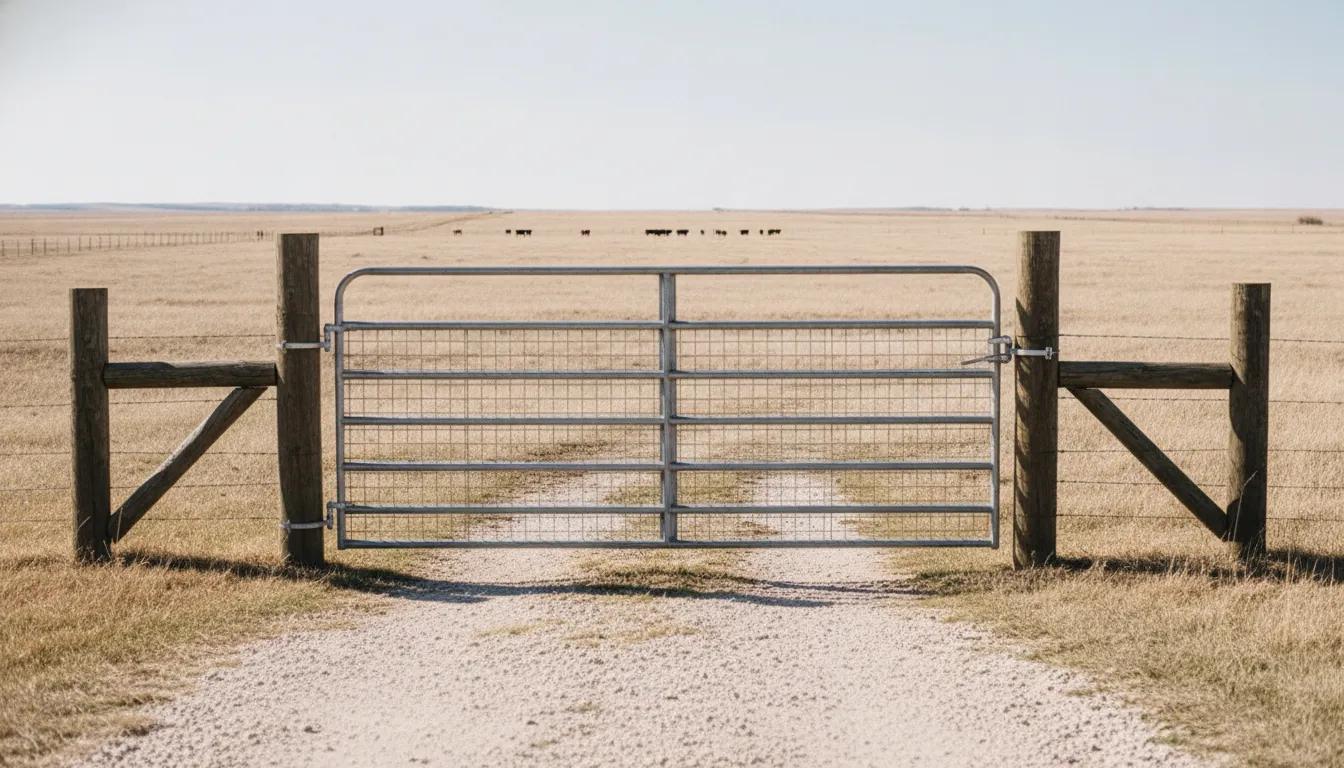
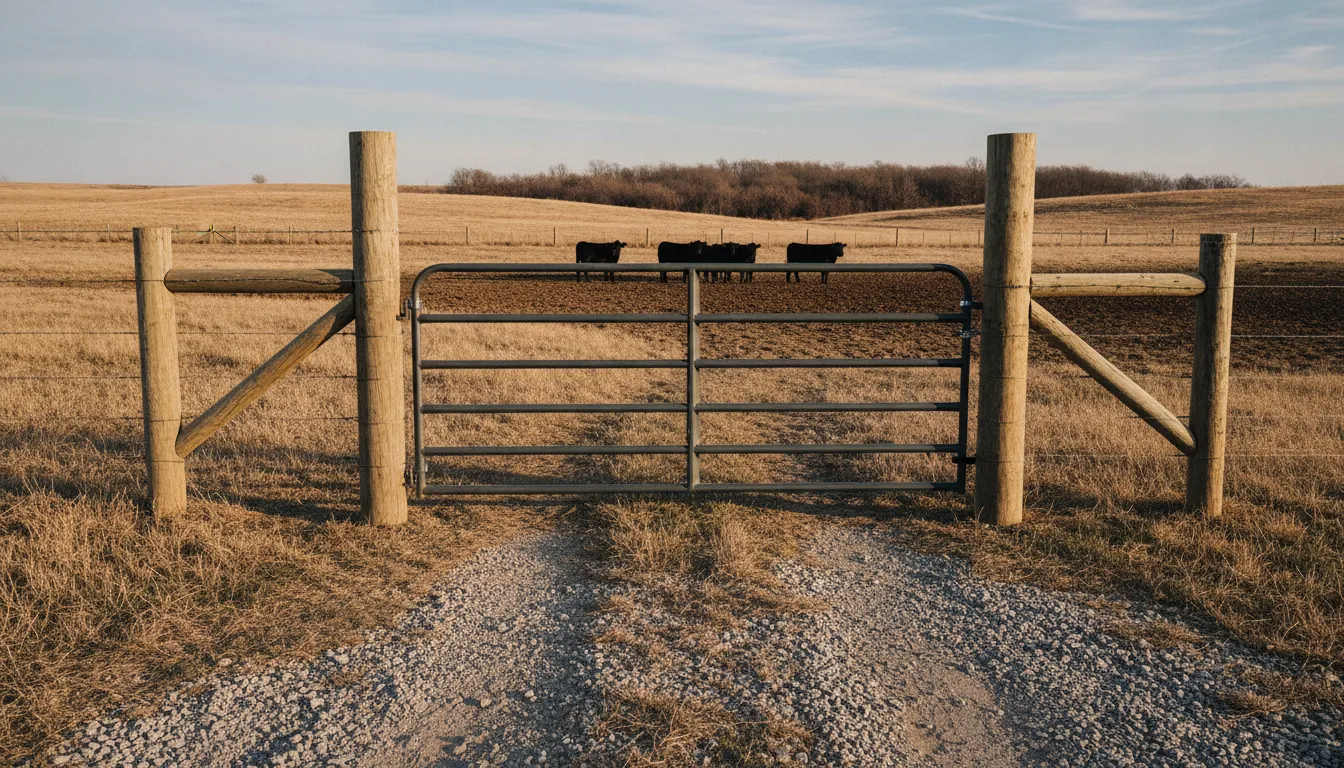
A five-foot-high gate may be worth considering when the opening is for routine pasture access and the gate height fits the livestock, fence design, and handling plan. It may work well for some entrances where a person, ATV, or farm vehicle needs to pass and the adjoining fence is built to serve the same containment purpose. The right answer depends on the animals and the job the opening must do.
Think about how the opening is used on an ordinary day. Is it mainly for moving a vehicle or equipment? Will cattle be driven through it regularly? Does it lead into a holding area where animals may bunch up? Is it part of a boundary line, a pasture rotation route, or an access point used during loading? A gate that is convenient for occasional access may not be the best fit for repeated livestock handling.
Height alone cannot establish that a gate will contain a particular animal. Animal size, behavior, pressure on the fence, the gate’s construction, its fit at the posts, and the adjoining fence all matter. Avoid assuming a five-foot gate is suitable for every herd or that a taller gate automatically solves a weak fence layout. Match the entire opening to the use.
If you are weighing a gate as part of a larger pasture project, it can help to compare it with the full fence system. Rapid Fence’s guide to choosing a farm fence for your land covers how livestock and property use shape fence decisions. For a corral, where animals may gather and push against the enclosure, review the different needs in the corral fence versus pasture fence guide.
How should the gate compare with the livestock and task?
List the animals that use the opening and the tasks they need to pass through it. Cattle being moved as a group create a different use case from a gate that mostly provides access for a tractor. If more than one kind of livestock shares the route, plan around the animals that need the most reliable containment and the way they are handled.
- Routine pasture access:
Consider how often the gate is opened, who operates it, and whether it is easy to latch securely after each pass.
- Moving livestock:
Think about animal flow, approach angle, the space available on both sides, and whether animals might bunch or turn at the opening.
- Equipment access:
Check the widest vehicle or implement that must pass, including mirrors, attachments, and room to approach and turn.
- Boundary or perimeter use:
Review how the gate ties into the fence and whether the layout creates a weak or awkward transition.
For cattle, compare the gate with the adjoining fence and the pressure expected at that location. A gate should not be treated as a stand-alone solution if the fence ends, braces, or posts around it are not suited to the job. If the opening is part of a handling setup, the surrounding layout matters too. See the guide to corral fence design and materials for planning questions that extend beyond the gate itself.
Do not choose a height based only on what looks substantial in a photo. Photos can hide the ground clearance, post spacing, hinge location, and scale of the animals. Measure the site, state the livestock and use clearly, and confirm the gate’s actual dimensions before ordering or setting posts.
What should you measure before choosing a gate?
A few careful measurements help turn a vague “five-foot gate” request into a useful plan. Measure the opening at the intended gate location, not at a nearby stretch of fence. If the ground or existing fence line changes, record those conditions as well. When possible, take photos from both sides of the opening and note the direction in which the gate needs to swing.
- Measure the clear span.
Record the distance between the planned hinge and latch supports, or between the existing posts if they will be reused. Note whether those posts are sound and set in the right positions.
- Check the grade.
Look for a rise, dip, ditch, or uneven ground beneath the gate. A swinging gate needs adequate clearance along its travel, not only when closed.
- Mark the swing area.
Identify nearby fences, trees, water tanks, buildings, equipment, and travel paths that could block the gate from opening fully.
- Measure the largest passage.
Include the width of vehicles, trailers, or equipment that must use the opening, plus enough room to line up and turn safely.
- Record the fence connection.
Note the fence type, wire count where relevant, direction of the fence line, and whether the gate is at a corner, end, or straight run.
- Confirm the gate dimensions.
Verify the stated height, width, frame style, and mounting requirements with the supplier or installer.
For an existing fence, also check whether the hinge and latch posts are leaning, loose, cracked, or affected by previous repairs. A new gate attached to unsuitable supports may not swing or close as intended. If you are planning a larger project, the article on agricultural fence posts explains why post choice and placement belong in the overall fence plan.
Which gate details matter beyond its height?
Gate height is only one part of the selection. The frame must suit the opening and expected use, the mounting must allow the gate to swing as planned, and the latch must be usable by the people who handle it. Inspect the whole assembly as a working connection between fence sections.
Detail to compare | Why it matters | What to check |
Height | Must fit the animal-containment plan and relate sensibly to the adjoining fence. | Confirm whether the stated five feet describes the frame or installed height; check ground clearance. |
Width and clear span | Determines what can pass through and how the opening functions in daily work. | Measure the passage needed for livestock, vehicles, and equipment, not just the post spacing. |
Frame and construction | Influences the gate’s fit, handling, and suitability for the intended use. | Review material, overall dimensions, mounting points, and compatibility with the fence layout. |
Posts and bracing | Support the gate and help the fence transition hold its shape in service. | Check post condition, position, bracing needs, soil, and the direction of pull. |
Hinges and latch | Affects swing, closure, and the ease of securing the opening. | Confirm swing direction, usable access to the latch, and clearance from nearby objects. |
Ground and drainage | Uneven ground can interfere with gate travel and bottom clearance. | Look for slopes, low spots, ditches, and seasonal changes at the opening. |
For a board-style farm gate, an article on building an easy, practical farm gate describes a frame with uprights spaced four to six feet apart. That is a construction detail from that particular design, not a universal spacing rule or a recommendation for every livestock gate. Gate design and supports should be selected for the actual materials, dimensions, and site.
Consider the fence type as well. A gate must connect cleanly to the fence system rather than leave an unplanned gap or a weak transition. If your property uses barbwire, hi-tensile, or continuous fence, explain which type reaches the opening and what the gate needs to do. Rapid Fence describes its agricultural fence installation and repair services for Central Nebraska properties. The right connection depends on the specific layout and application.
How do Nebraska site conditions affect the choice?
On a working Nebraska property, the gate location may matter as much as the product. A low spot can collect water or become soft under repeated traffic. A slope can affect swing clearance. Snow, mud, vegetation, and seasonal ground changes may alter how easily the gate opens over time. Walk the route in the conditions when you expect to use it most, not just when the ground is dry and clear.
Pay attention to the direction of travel. A gate that swings into a narrow lane or across a busy equipment path can be awkward, even if its size is right. Look at what happens when it is open: where will it rest, can it be secured there, and will it block another gate or fence passage? If livestock approach from more than one pasture, consider how the layout guides them through without sharp turns or bottlenecks.
For a new fence, place gates where people and equipment will actually need access. For a replacement, check whether the old location still works or whether the route has changed. The Rapid Fence project gallery can give you a sense of the kinds of agricultural fence work shown in the company’s portfolio, but a project photo cannot confirm the dimensions or suitability of a particular gate. Site measurements are still essential.
Rapid Fence is based in Scotia and serves Central Nebraska, including Greeley, Buffalo, and Hall Counties, along with broader service-area communities. For a project around Platte, Boone, Holt, or Custer County, share the exact location and access details when discussing the work. Conditions can vary across the region. A Nebraska farm fence timing guide can also help you think through how planned work fits the season and farm schedule.
When might another gate plan be better?
A five-foot gate may not be the right choice if the opening has a job it cannot comfortably handle. For example, a narrow passage used by wide equipment may be limited by its width, regardless of height. A low, sloping approach can make the swing and bottom clearance the main issue. A gate in a busy livestock-handling area may need a layout planned around animal movement, secure closure, and the adjoining enclosure rather than a quick replacement based on a familiar dimension.
There may also be a mismatch between the proposed gate and the fence. If the gate ends well below or above the adjoining barrier, or if the support posts are poorly placed, the transition deserves attention before installation. Simply choosing a taller gate does not correct weak bracing, a poor approach route, or an opening that animals can go around. Likewise, a sturdy gate cannot make an unsuitable latch easy to use or remove a bottleneck created by nearby fencing.
If your current gate sags, drags, or will not stay closed, identify the cause before deciding that replacement is the only answer. The issue may involve the gate, posts, hinges, ground, or a combination of them. A clear description and photos can help an installer understand whether the project is a gate replacement, structural repair, or part of a larger fence change. Rapid Fence offers agricultural fence repair as a service topic; the actual work needed depends on an inspection of the site.
For a planned new opening, compare options against the same checklist: required passage width, height, livestock, equipment, swing space, and connection to the fence. That keeps the decision tied to function instead of relying on a single dimension or appearance. If a five-foot gate checks those boxes, it may be appropriate; if not, clarify which requirement it misses and revise the plan before setting posts.
What should you prepare before requesting an estimate?
Before asking for an estimate, gather enough information to describe the opening and the job. You do not need a finished engineering plan. Clear measurements, photos, and a concise description help identify the questions that should be answered during planning.
Write down whether five feet refers to the gate’s height, width, or a dimension you still need to confirm.
Measure the opening and note the width of the largest vehicle or piece of equipment that must pass.
Identify the livestock, the frequency of use, and whether animals will be moved through in groups.
Take clear photos of the opening, nearby fence, ground, and the gate’s full swing area.
Describe the adjoining fence type and any existing posts, braces, or hardware you hope to reuse.
Note slopes, drainage concerns, gates nearby, and any changes planned for the pasture or access route.
Then ask how the proposed gate dimensions, posts, bracing, hinges, latch, and fence connection fit the site. If the project includes more than one gate or a long fence run, discuss the whole layout at once. That helps keep the gate location connected to livestock movement, vehicle access, and the rest of the fence plan.
Rapid Fence offers free on-site estimates, according to the company information provided. To start the conversation, use the estimate contact page and include the location, purpose, measurements, and photos you have. You can also review the company’s farm gate buyer’s guide for another example of why a named gate dimension should be checked against the actual opening and intended use.
Frequently asked questions
Is a five-foot-tall gate suitable for every type of livestock?
No. Height alone cannot determine whether a gate is suitable. Consider the animals, their behavior, the adjoining fence, the gate’s construction, and how the opening will be used. Confirm dimensions and containment needs for the specific property before choosing.
Does “5 ft livestock gate” mean five feet wide?
Not necessarily. The phrase may refer to height or another listed dimension. Check the product’s stated width and height, then measure the clear opening at the site. Do not order based on the short description alone.
How much wider should the opening be than the gate?
There is no single allowance that fits every gate and mounting setup. The required opening depends on the gate dimensions, hinge and latch arrangement, post positions, and installation requirements. Confirm the specified clear span with the supplier or installer before setting posts.
Can I attach a new gate to existing fence posts?
Possibly, but first check the posts’ position and condition and whether they can support the intended gate and fence connection. Existing posts may need repair or replacement if they are leaning, loose, damaged, or poorly located for the required swing.
What information helps an installer assess the gate location?
Share the livestock and intended use, the measured opening, the largest vehicle or equipment that needs access, the adjoining fence type, and photos of the ground and swing area. Mention slopes, drainage, and any existing posts or hardware you hope to keep.
Plan the opening around the work it needs to do
A 5 ft livestock gate is a practical choice only when its actual dimensions and installation fit the animals, traffic, fence, and ground at the opening. Confirm what the five feet measures, check the clear span and swing area, and plan the supports and fence connection as one system. A few careful checks before installation can help you choose a gate that works with the way your Nebraska pasture is used.
Comments