
Livestock Handling Corral System Design: A Farm Guide

Updated: Oct 1

A corral can look complete and still create extra work if cattle and people cannot move smoothly. Before adding panels or gates, map the work you actually do: where cattle arrive, wait, get sorted, enter the working area, and leave. This sequence helps show which parts need to connect and where a bottleneck or unsafe shortcut could develop. Write down the steps for a routine move and a busy processing day. Those may reveal different needs before construction begins.
Good livestock handling corral system design starts with the herd, the jobs you need to do, and the path cattle and people will follow through the facility. Plan connected zones for holding, sorting, crowding, and working or loading. Then fit the layout and equipment to your animals and site rather than forcing every operation into one standard plan.
This whole-system view is different from choosing a corral style or comparing materials alone. A useful plan considers how each zone hands cattle to the next, where people need to work, and what can be built or improved in stages. Rapid Fence builds custom facilities for Central Nebraska livestock operations; its guide to custom corrals and livestock infrastructure covers broader project planning. Here, the focus is the working sequence: what belongs in the system beyond the enclosure, and how those parts can support day-to-day cattle work.
What a Livestock Handling System Includes Beyond the Basic Corral
A corral is the enclosure, but a handling system is the connected work area that lets you gather, sort, process, and load cattle. Planning the whole sequence matters more than adding gates or pens one at a time. Kansas State recommends planning around the operation's needs, available space, and budget. Its guidance considers alleys, holding and sorting pens, load-outs, and related facilities (Kansas State Extension facility design guidance).
Start by listing the jobs the system needs to support. A setup used for gathering and sorting has different needs from one that also handles weighing, treatment, or loading. The USDA Natural Resources Conservation Service (NRCS) describes a facility with conditioning, holding, sorting, and crowding pens, plus working and loading chutes. Its listed equipment also includes a squeeze chute or headgate, a scale, and hospital facilities. (NRCS livestock-handling facility guidance).
Give each area a clear job
A conditioning area gives cattle room to gather before work begins. Holding pens keep groups available for the next task, while sorting pens let the handler direct cattle toward separate destinations. From there, a crowding area feeds animals into the working alley and chute for individual handling. A load-out provides a separate route for cattle leaving the facility. These zones should connect in the order cattle and handlers will use them, rather than forcing people to backtrack animals through unrelated pens.
Match the equipment at the end of the flow to the work. A headgate or squeeze chute may be needed for procedures that require controlled access to an animal. Add a scale if weighing is a regular task. Hospital space can separate animals needing care from the main group. These are options, not a checklist every farm must build at once.
Fit the plan to the herd and site
NRCS notes that the number and size of pens, the working chute, and the type of headgate depend on cattle size and head count. Its guidance also advises locating the handling facility near cattle pens and the yard for easier access. Those principles are a starting point, not a universal layout or dimension. Walk the route from pasture or holding area through sorting and processing to the load-out, and consider how the facility will work in the conditions on your farm.
Zone | Main job | Planning question |
Holding and sorting | Keep groups organized and direct cattle to their next destination. | Where will each group go after sorting? |
Crowding area | Guide a smaller group toward the working alley. | Can handlers control gates from a safe position? |
Working area | Support individual handling, treatment, or weighing as needed. | Which tasks and equipment are actually required? |
Load-out or release route | Move cattle out of the work area to the next location. | Can animals leave without crossing incoming groups? |
For a narrower look at enclosure choices and basic layout, see our basic corral fence design guide. A whole-system plan goes further by connecting that corral to the jobs, traffic flow, and support areas cattle handling requires.
How Livestock Handling Corral System Design Shapes Chute Placement
Start with the route cattle and people will take, not the equipment catalog. Sketch movement from holding through the crowding area and working alley to the squeeze chute. Then decide where cattle go afterward. A handler should operate gates and controls without crossing the animal path or standing where cattle could pin them. Plan entry, exit, and a safe way to step clear before placing posts.
Keep the handling area convenient to the cattle pens and yard, and select a site with drainage and dependable access. USDA Natural Resources Conservation Service guidance recommends locating facilities near cattle pens and the yard. It also advises choosing a well-drained site with an all-weather road. The details depend on the property. NRCS livestock handling facility guidance offers a starting point for discussion with a qualified designer.
Think about what cattle see as they approach the alley. Sudden contrasts, shadows, noise, or footing changes can interrupt movement. A review in Frontiers in Animal Science reports that visual, auditory, and physical conditions affect livestock movement through races and corrals. A curved, solid-sided working chute is one design option. It is not required for every farm. Clear movement matters more than choosing a shape by habit. Match the layout to the herd, available space, and handling routine. Avoid bends that leave cattle facing a dead end or put workers in the flow.
Walk the proposed route as if you were moving a group through it. Can a handler see the chute entrance and reach the latches? Is there room to sort cattle without blocking the next group? Can workers leave each active pen or alley without climbing a fence or moving through cattle? Mark equipment and vehicle access so loading and service tasks do not conflict with the working lane. For broader site and fence considerations, see Nebraska livestock fence planning.
How Do Fence Height and Panel Strength Affect Animal Safety?
There is no single fence height or panel specification that fits every handling area. The right setup depends on the species, animal size and temperament, how the pens will be used, and the site. Plan containment and visibility together: an animal needs to recognize the boundary, while the structure must stay secure under the conditions it will face.
Visibility matters especially with young stock. USDA NRCS guidance notes that plank fencing is easier for calves to see than wire or cable. For conditioning pens, it advises against wire or cable unless a plank is attached at calf eye level. Treat that as guidance for the situation described, not a universal rule for every species or facility. Review the intended animals and activity with a qualified designer before settling on panel spacing or height. (USDA NRCS livestock handling facilities guidance)
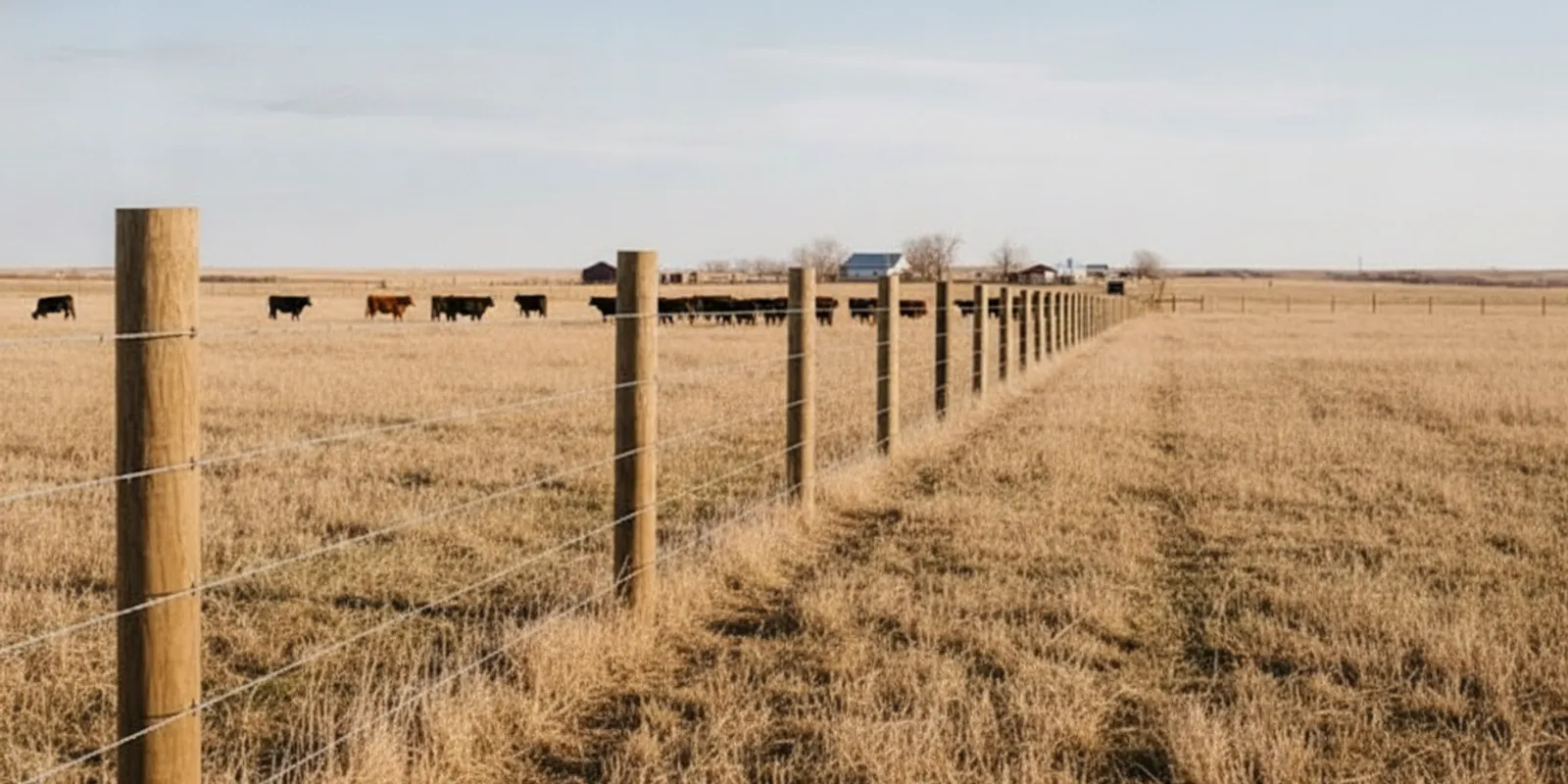
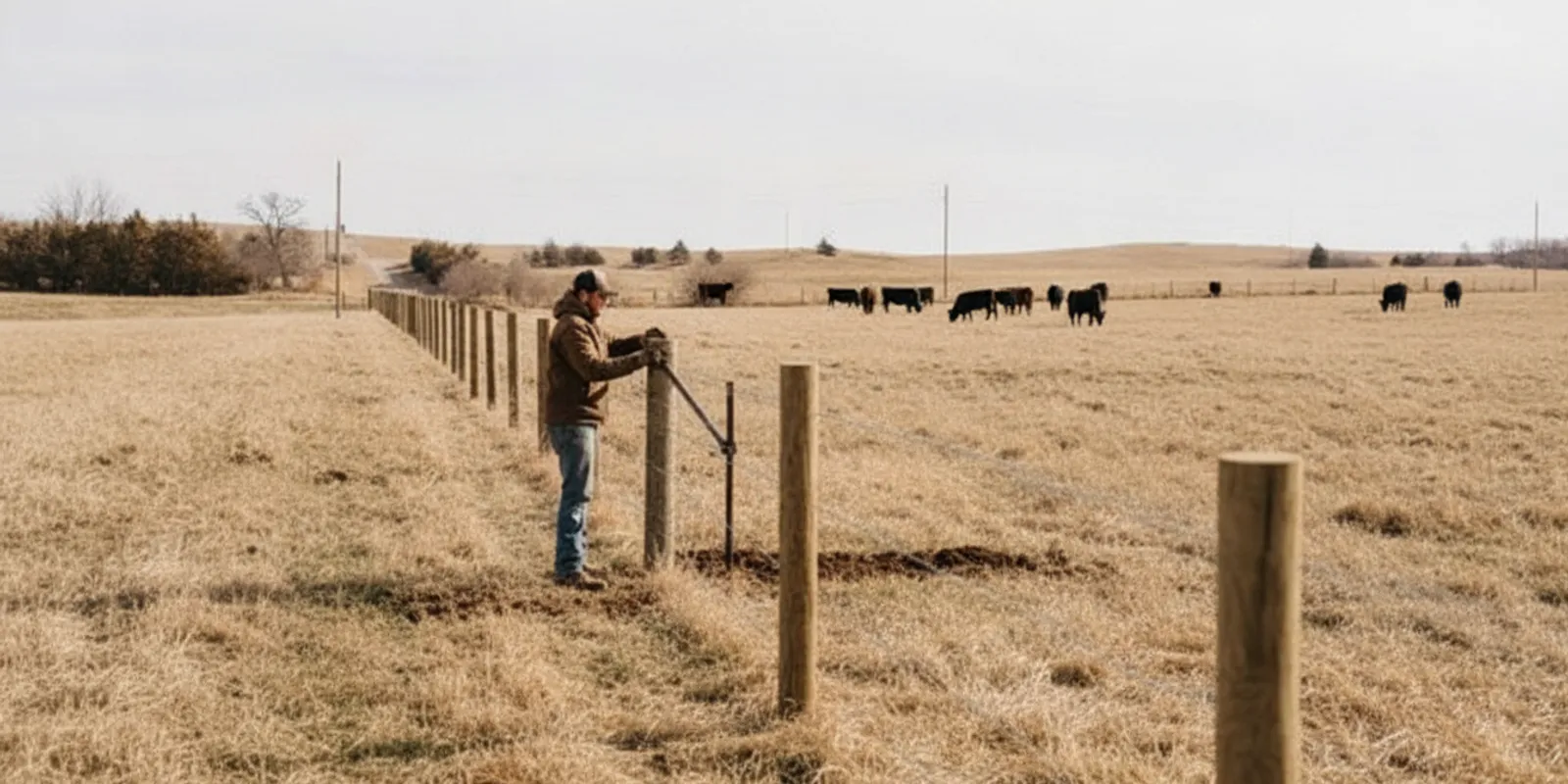
Strength is more than choosing a heavy panel. Posts, connections, gates, and bracing must work together so the enclosure stays stable during routine use. Rapid Fence emphasizes proper bracing and tension, with materials suited to Nebraska conditions. Check for loose connections, damaged panels, protruding wire, sharp edges, and latches that do not close securely. Gate choices matter too; see this guide to durable farm gate hardware.
Give equal attention to the ground. Mud, ice, uneven footing, and slick surfaces can make livestock and handlers lose traction. NRCS advises avoiding slippery surfaces in conditioning pens. A peer-reviewed review also identifies non-slip flooring as important for preventing falls during handling. Drainage and a firm surface help, but the right choice depends on the location and its use. (livestock handling environment review)
People need protected places to move, too. NRCS guidance calls for safety posts in corners and along large pens where cattle are moved on foot. Plan clear exits and safe access points, and make sure gates can be operated without trapping a worker between animals and fencing. Review the layout, footing, hardware, and containment needs as one system. Species, herd, site conditions, and applicable qualified guidance should determine final dimensions and construction details.
How Should Sorting Pens Reduce Stress During Cattle Work?
A sorting pen works best when it gives cattle and handlers a clear next step. Plan gates so a group can enter, pause, and move toward its pasture, holding area, or work zone without crossing another group's path. Keep the route easy to read, with gates that can be opened and secured from a safe position. The USDA Natural Resources Conservation Service includes holding and sorting pens among core facility components. It notes that size should fit cattle size and head count. That is a design consideration, not a fixed capacity for every ranch.
Think about the groups you sort, how often cattle arrive, and what each group does next. Avoid crowding more animals into a pen than the crew can move calmly through the next gate. Handlers should direct manageable groups without rushing or repeatedly turning cattle around. Trace each route on a site sketch. This can expose a gate that sends cattle back toward the entrance or forces two groups to meet in a narrow space.
Keep the route visible and uncluttered
From the pen, handlers should be able to see the working route and the gate they need to use. Check sightlines from normal working positions, not only from above a drawing. Shadows, abrupt changes in footing, or confusing visual distractions can affect how cattle move. A review in Frontiers in Animal Science describes how physical, visual, and auditory conditions can influence movement through handling facilities. Clear clutter from the route, look for dark entrances, and notice loud intermittent noise that may interrupt flow.
Protect the people working the gates
Do not make handlers stand between cattle and a closing gate or reach a latch from a trapped corner. Provide a way to step out of the animals' path and place gate handles where they can be reached safely. NRCS guidance recommends safety posts in corners and along larger pens where people move cattle on foot. Review the working positions with the crew before construction. Clear exits, secure latches, sound footing, and a quiet pace help make routine sorting more controlled for people and livestock.
What Should You Build First in a Phased Handling-System Plan?
A handling area does not have to be rebuilt all at once. Start with the work the facility must do, the livestock it serves, and the space available. A useful plan connects the steps from holding and sorting through safe movement and the task at hand. Kansas State Research and Extension advises that design planning account for an operation's needs and available space to create a functional system. Its system approach to cattle handling facility design is a useful resource for planning a new setup or an upgrade.
- Map the jobs and the site.
List the work you handle now, such as sorting, treatment, weighing, or loading, and note what may be added later. Walk the site to identify access, ground conditions, existing pens, gates, and the route cattle and people need to take. A system should fit the farm and its cattle, not force the operation into a generic layout.
Address immediate safety and containment problems.
Before adding optional equipment, identify damaged fencing, unreliable gates, poor footing, or points where cattle and handlers are forced into awkward movement. Prioritize secure boundaries, dependable latches, safe operator access, and clear movement through the areas used most. If a dark entrance or loud intermittent noise is disrupting movement, modest changes may help without a full reconstruction, according to an animal-handling review:
- Build the connected essentials.
Make sure the core zones work together: holding, sorting, and a clear route into the working area, with the equipment needed for the routine job. A chute or pen added without considering its connection to the rest of the system can leave bottlenecks in place. Have the layout reviewed for the animals, handlers, and tasks it must serve.
- Expand when a real need is clear.
Add features such as a scale, another sorting pen, or a loading area when they solve a recurring operational need. Leave room for future expansion where practical, but do not build extra components simply because they appear in a standard plan.
Project work can be divided into site preparation, removal of old structures, installation, structural repair, and finishing, depending on the property and scope. Rapid Fence describes custom corral construction services for ranching operations, with attention to structural integrity and longevity. A staged plan keeps essential flow and safety ahead of optional additions while giving the operation room to adapt.
Frequently Asked Questions
What is the best design for a cattle corral?
The best layout fits your cattle, site, and routine jobs. Plan connected areas for holding, sorting, crowding, and working, with a clear route to the chute and a safe way for handlers to move. The NRCS livestock-handling facility guidance describes these as parts of a complete system rather than a single standard layout.
How should I plan a cattle handling system?
List the jobs you need to do, such as sorting, treatment, weighing, or loading. Check access, drainage, and available space. Consider how cattle move between work areas. Choose pen sizes and equipment for the animals and expected use before construction. Kansas State Research and Extension's system approach to cattle handling facility design also emphasizes matching plans to operation needs and space.
What corral design works for 50 head of cattle?
Head count alone is not enough to choose a layout or pen capacity. Consider whether the group includes mature cows, calves, or mixed sizes, how often you handle them, and whether you need to sort animals into smaller groups. NRCS notes that component size and the number of pens depend on cattle size and head count. So published examples are planning references rather than requirements for every farm.
What is the recommended size for a cattle corral?
There is no single size that fits every operation. Sizing depends on animal size, herd size, handling work, available space, and how groups move through the facility. Map the steps and groups you expect to handle, then have the layout reviewed before construction. Do not choose dimensions from a head-count example without checking that it fits your animals and site.
Does a cattle working alley have to be curved?
No. A curved, solid-sided working chute is one design option, not a rule for every farm. Consider the site, workflow, how cattle approach the chute, and what handlers can operate safely. Clear movement and a safe handler position matter more than choosing a curve simply because it appears in an example plan.
A well-planned handling area starts with the way your livestock, crew, and equipment use the farm. Rapid Fence builds custom corrals and livestock infrastructure for Central Nebraska operations, with attention to proper bracing, practical access, and durable construction suited to local conditions. Call to discuss your project and the work your system needs to support, or review custom corral construction services.
Comments