
Professional Barbwire Fence Installation: Step-by-Step

Updated: Sep 14
A barbwire fence is only as dependable as the planning, bracing, and tension behind it. For Nebraska farmers and livestock owners, professional barbwire fence installation typically includes site preparation, layout, post setting, brace construction, wire stringing, tensioning, and a final inspection. The goal is not simply to get wire in the ground. It is to build a livestock boundary that fits the property, handles daily pressure, and accounts for local soil, weather, and seasonal conditions.
Professional barbwire fence installation starts with defining the fence's purpose and livestock needs, then matching the layout, posts, braces, and wire tension to the site. A complete job also includes preparation, cleanup, and quality checks before the fence is put into service.
That process begins well before the first post goes in. A careful assessment helps identify the boundary, pasture divisions, gates, crossings, access points, and ground conditions that will shape every step that follows. For a broader look at agricultural projects, see this agricultural fence installation guide.
Site Assessment and Layout: What Happens Before the First Post Goes In
A durable fence starts with a field assessment, not a truck unloading posts at the nearest corner. Before construction begins, the installer needs to understand what the fence must do, where it needs to run, and what conditions could affect the work. This planning stage keeps the project focused on livestock containment and helps prevent avoidable changes after installation is underway.
The first question is the fence's purpose. Is it a perimeter boundary, a cross-fence dividing a pasture, or part of a livestock handling area? The answer affects the layout, access points, and construction priorities. Livestock requirements also vary by species, age, breed, and production system. A fence intended for mature cattle may need a different layout and level of attention than one serving a mixed operation or a high-pressure livestock area.
Next, the installer walks the proposed fence line. In Central Nebraska, soil conditions, weather patterns, and seasonal installation windows can influence preparation and execution. Low areas, uneven ground, drainage paths, and places where water crosses the property deserve attention before the line is marked. A practical layout follows the land where possible while still creating a clear, workable boundary.
Gates and Crossings Are Part of the Layout
Gates should be planned around how people, equipment, and livestock move through the property. Their locations affect daily chores, pasture access, and the fence's structural points. The same is true for crossings, stock gaps, and cattle guards. These features should be identified before posts are set, rather than treated as last-minute openings cut into a completed line.
The assessment also accounts for post spacing, brace assemblies, corners, and changes in direction. Those decisions are connected. A line that looks simple from a distance may need additional planning where the terrain changes or where livestock regularly push against the fence. Careful planning and construction support useful service life and lower maintenance needs, according to the University of Tennessee farm-fencing guide.
Prepare the Fence Line Before Construction
Site preparation can include clearing brush, removing an old fence, cleaning the fence line, or completing dirt work where access and installation require it. Clearing is not merely cosmetic. It gives the crew a more accurate line, improves visibility during construction, and helps the finished fence remain accessible for inspection and maintenance.
For a broader overview of agricultural planning and construction, see Rapid Fence's agricultural fence installation guide. This article keeps the focus on the assessment decisions that make a professional installation fit the property, the livestock, and the way the farm actually operates.
Line Posts and Corner Posts: How Spacing and Depth Affect the Whole Fence
Posts are the fence's working structure. Line posts keep each strand tracking along the planned route, while end and corner posts absorb the pull created when wire changes direction or terminates. If those posts are out of alignment, too shallow, or placed without accounting for the ground, even well-installed barbwire can develop uneven lines and weak spots.
Alignment starts with the fence line
A professional crew establishes the route before setting posts. The first reference line should follow the approved layout rather than simply following every curve in the terrain. Line posts are then positioned to keep the fence straight and consistent through the run. This matters for livestock containment, gate operation, maintenance access, and the way tension is distributed across the wire.
Post spacing is a design decision, not a number to copy from a random guide. One supplier example uses the first wire as a straight reference and places line posts 15 to 20 feet apart, adjusting the distance as needed. Other installation guides give different examples for wood or T-post systems. Those figures describe particular materials, fence designs, and conditions. They are not universal rules for every Nebraska pasture or every barbwire installation. Corners, changes in grade, gates, livestock pressure, and long straight runs may all call for a different approach.
Fence location | Primary job | What the installer checks |
Line posts | Support the wire through a straight run. | Check alignment, spacing, setting, and secure attachments. |
End posts | Resist the pull where a run terminates. | Check embedment, plumb position, and brace connection. |
Corner posts | Manage pull from two directions. | Check the direction change, brace strength, and livestock pressure. |
Depth depends on soil and the job
Post depth must match the post, fence design, soil, and expected loading. Nebraska conditions can vary across a single property. Firm ground, sandy areas, wet soil, frost movement, and seasonal moisture can all affect how a post settles and holds. A guide for one H-brace example states that a 6-inch end post should be installed at least 42 inches into the soil and notes that deeper is preferable. That is a useful reference point for that brace design, not a blanket prescription for every line post.
The same principle applies to anchoring and alignment. Posts should be set plumb and secured so they do not lean as the wire is attached or tensioned. End and corner assemblies need more attention because they carry concentrated loads. Line posts support the run between those stronger points. They still need enough embedment to stay stable when livestock push against the fence or weather changes the ground.
Fence height changes the post plan
Height affects both the visible portion of the post and the amount that must be available below ground. A cited farm-fencing guide says perimeter cattle fences should be at least 54 inches tall. But that is guidance for a stated cattle perimeter application, not a universal height for every species, property, or fence purpose. Livestock type, age, breed, production system, terrain, and access requirements should shape the final layout.
For a closer look at material selection and setting considerations, review Rapid Fence's agricultural fence posts guide. A site-specific plan helps keep spacing, depth, height, and bracing working together instead of treating each measurement in isolation.
How Professional Barbwire Fence Installation Uses Corner Braces
Every strand of barbwire pulls against the places where the fence starts, stops, changes direction, or meets a gate. Line posts keep the wire in position, but corner and end assemblies carry much of the accumulated load. If those assemblies lean, settle, or loosen, the wire can sag across an entire run even when the line posts were installed carefully.
That is why proper bracing and tension belong together in a professional barbwire fence installation. A brace is not an afterthought added once the wire is already tight. Its location, depth, alignment, and connection should be considered during layout and post setting. The University of Tennessee farm-fencing guide identifies brace post assembly and installation as part of the core planning process, alongside post spacing, gates, and crossings: read the fencing planning reference.
How H-bracing distributes the pull
An H-brace uses an end or corner post, a brace post set farther down the fence line, and a horizontal brace member connecting them. The assembly gives the end post a stronger structure to work against instead of leaving one post to resist the full pull of the wire by itself. At a corner, the fence pulls in two directions, so a single straight-run assembly may not address the load from both legs. One supplier installation example specifies H-braces at ends and double H-brace assemblies at corners. That is an example of a commonly used arrangement, not a universal prescription for every property.
Similarly, an NRCS H-brace reference gives an example using a 6-inch end post installed at least 42 inches into the soil. The brace post is positioned 8 feet inside-to-inside down the fence line. The same guidance notes that deeper installation is preferable. These dimensions are reference details for a specific design. They are not a substitute for local engineering or site judgment. NRCS itself cautions that national conservation standards should not be used alone to plan or install a practice. Soil, materials, fence design, and local Field Office Technical Guide guidance still matter.
Why Nebraska conditions change the inspection
In Central Nebraska, a professional crew has to account for soil conditions, weather, seasonal timing, and the way livestock will use the fence. Frost heaving can lift posts. Wet or disturbed soil can settle around them. A long straight run may perform differently from an angle point, and cattle pressure can expose a weak assembly sooner than a visual inspection from the road would.
The practical check is whether each end and corner remains plumb, deeply set, properly connected, and able to hold tension without movement. Angle points deserve the same attention as obvious 90-degree corners. A careful installer checks the brace before final tensioning, then checks it again after the wire is brought tight. That measured process helps produce a fence that supports containment and day-to-day ranch operations instead of merely looking finished on installation day.
Wire Stringing and Tensioning: What Proper Tension Actually Feels Like
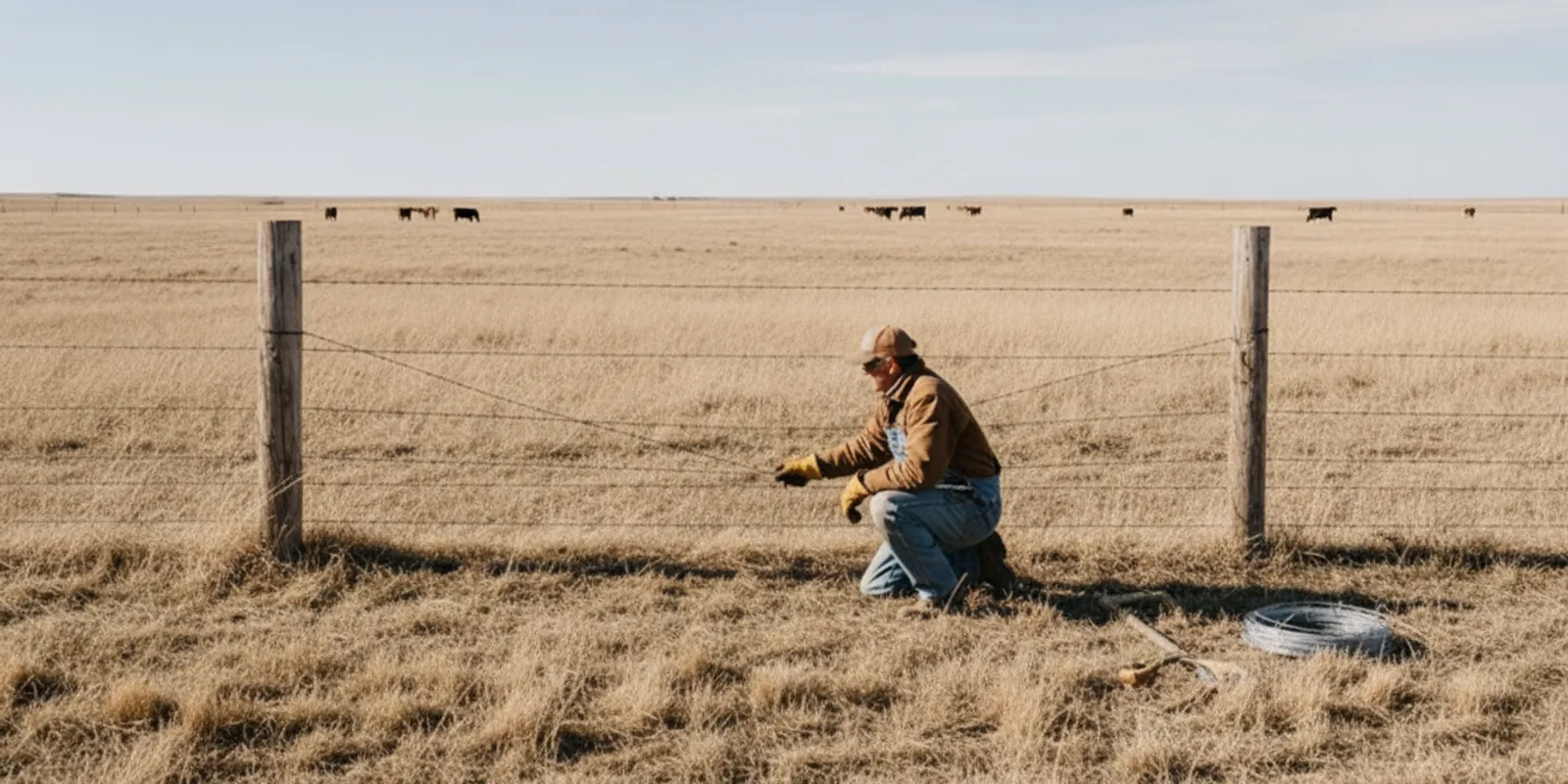
Once the posts and braces are ready, the crew can install the wire in a controlled sequence instead of pulling every strand at once. The starting end post is the reference point. The installer places the first strand at its planned height, wraps it securely around the post, and then unrolls the wire toward the opposite end. A practical installation guide describes wrapping the wire back onto itself at the end post. The installer then pulls it to the far end and secures it before tying or stapling it to intermediate posts. This barbed-wire installation reference outlines that sequence.
That order matters. Line posts should support the strand without forcing it into a crooked path or creating unnecessary slack. A professional crew watches the wire as it travels the fence line. The crew checks that the barbs are oriented correctly and that attachments are secure without damaging the wire. The first strand also gives the crew a visual reference for the remaining lines. Each additional strand is laid out at its planned height and installed with the same care.
What the crew checks while tensioning
- End-post security:
The wrap and attachment must hold the pull without slipping or cutting into the wire.
- Line and height:
The strand should follow the intended fence line, with consistent placement through changes in terrain.
- Post attachments:
Staples or wire ties should hold the strand while allowing the fence system to perform as designed.
- Brace response:
End and corner assemblies need to carry the load. Proper bracing and tension work together as part of durable construction.
- Livestock hazards:
The finished strand should not have loose ends, sharp projections, or avoidable catch points.
Proper tension is not simply the tightest pull a person can create. The correct feel depends on the fence system, wire type, post layout, brace strength, span, and current conditions. A crew may use a tensioning tool or radisseur to bring a strand into position, then pause to inspect the line before securing intermediate posts. Nebraska soil, weather, and seasonal conditions can affect how the entire system settles, so the final check is both visual and mechanical.
Ordinary barbwire and hi-tensile wire must be treated as different systems. Hi-tensile installation references may provide a specific testing range, but that number is not a universal rule for ordinary barbwire. A professional installer should identify the material, follow the appropriate installation method, and avoid over-tensioning a strand or loading a brace beyond what the design can support. That distinction is one reason an experienced crew builds the fence around the intended livestock use, not just around a generic tension number.
For a broader look at material selection, bracing, and the factors that shape a project, review Rapid Fence's barbwire services before requesting an installation plan.
How Gates, Crossings, and Livestock Pressure Shape the Installation
A fence line is only as dependable as the places where animals, equipment, and people pass through it. During a professional barbwire fence installation, gates and crossings are planned with the same care as posts and wire. Their location affects daily chores, livestock handling, pasture rotation, and the amount of pressure placed on the fence.
Start with the purpose of the enclosure. A boundary fence, a pasture divider, and a working-livestock area do not carry the same demands. The species, age, breed, and production system also influence the design. Cattle movement through a frequently used gate may require a different layout from a low-traffic pasture entrance. These planning considerations are supported by the University of Tennessee farm-fencing guide, which identifies livestock type and gate location among the factors that shape a fence plan: farm fencing planning guidance.
Gates should serve the work, not fight it
A gate needs enough practical clearance for the equipment and livestock using it, while its posts and brace assemblies must handle repeated opening, closing, and movement nearby. Placement should account for where a producer turns a tractor, sorts cattle, checks water, or moves animals between paddocks. A gate installed where the ground stays soft or runoff concentrates may need additional site preparation before the fence is built.
Daily livestock movement matters as much as the static fence line. Animals tend to test weak points, crowd familiar openings, and apply pressure when feed, water, shelter, or companions are on the other side. A well-planned installation keeps the approach orderly and avoids creating a funnel that pushes stock into a gate corner or an unsupported end post. For corrals and handling areas, the livestock corral design guide offers related guidance on layout, gates, bracing, and low-stress movement.
Stock gaps and cattle guards need a complete layout
Where a driveway or equipment route crosses the fence, the plan may call for a stock gap or cattle guard rather than a conventional gate. That decision should be made before posts are set, because the crossing changes the fence line, termination points, and containment strategy on both sides. The surface, drainage, seasonal Nebraska weather, and expected traffic all deserve attention. Nebraska soil conditions and seasonal installation windows can affect both preparation and execution.
Professional work connects every opening back to the full enclosure. Gates, crossings, and stock gaps should align with the intended use, support safe containment, and leave the surrounding barbwire properly terminated and tensioned. That is how an efficient project avoids shortcuts that create maintenance problems later.
Final Walk-Through: What a Completed Professional Job Should Look Like
A professional installation is not finished when the last strand is attached. The final walk-through should confirm that the fence is ready for daily livestock pressure, changing Nebraska weather, and the work your operation needs it to do. Rapid Fence describes its workflow as including final tensioning and quality verification, not just construction.
Check the structure from end to end
Walk the line and look for posts that are plumb, stable, and aligned with the planned fence path. Pay particular attention to corners, end posts, and angle points. These locations carry the force created by wire tension, so brace assemblies should be tight, properly connected, and free of obvious movement. If an older section is being retained, note whether structural repair is practical or whether a tear-out and replacement will provide a sounder result.
Do not treat every soil condition the same. Nebraska soil, weather patterns, and seasonal installation windows can affect how posts settle and how the finished fence performs. A careful contractor checks for loose posts, disturbed ground, frost-related movement, and areas where water or erosion could change the fence line over time.
Inspect wire, fasteners, and livestock-facing details
Each barbwire strand should follow its intended line without damaging sags, sharp unexplained deviations, or loose sections. Fasteners should hold the wire securely at intermediate posts, while end connections should remain neat and firmly secured. Tension should be consistent with the fence design and wire type. Ordinary barbwire and hi-tensile products are not interchangeable, so a professional should not apply a hi-tensile testing figure as a universal barbwire specification.
Open and close every gate. Check that gates swing as intended, latch securely, and do not create a catch point for livestock. Review crossings, stock gaps, and cattle guards for safe passage and dependable closure. The layout should match how people, equipment, and animals actually move through the property, rather than merely looking straight from the road.
Confirm the site is ready for real use
Before accepting the work, walk both sides of the fence where access allows. Look for exposed wire ends, discarded staples, old barbwire, construction debris, ruts, or dirt-work areas that need final attention. Fence-line clearing and old-fence tear-out are part of a full-cycle project when the scope calls for them, and cleanup should leave the working area usable.
Ask what was completed, what materials were used, and what routine checks make sense after the first weather changes or livestock contact. A clear final review supports the long life and lower maintenance that careful planning and construction are meant to provide. Rapid Fence serves farms and ranches across Central Nebraska with barbwire, hi-tensile, continuous fence, structural repair, and related site work.
What Should You Ask Before Hiring a Fence Installation Contractor?
A good contractor should be able to explain the work before asking you to approve it. That matters on a Nebraska farm or ranch, where soil, weather, livestock pressure, access, and seasonal timing can change how a fence should be built. Before requesting a quote, use these questions to compare the process, not just the final number.
Will you assess the site in person?
Ask the contractor to walk the proposed line, identify difficult soil or terrain, locate existing fence. And discuss whether the project is a boundary, pasture divider, livestock perimeter, or another use. Livestock species, age, breed, and production system can also affect the design.
University of Tennessee agricultural fencing guidance
recommends starting with these practical questions.
- How will you plan posts and bracing?
Ask where line posts, end posts, corner posts, gates, crossings, and brace assemblies will go. The contractor should explain how post depth and setting will account for local soil and the risk of settling or frost movement. Do not accept a universal spacing or depth answer without discussing the actual site.
- What wire and tensioning method will you use?
Confirm whether the project calls for ordinary barbwire or hi-tensile wire. These are not interchangeable specifications. Ask how each strand will be laid out, fastened, tensioned, and checked, and how the contractor will avoid over-tensioning or leaving loose sections. Proper bracing and tension are central to a durable agricultural fence.
- How will gates and livestock movement be handled?
Ask how gate locations, stock gaps, cattle guards, turns, and daily equipment access will affect the layout. The right plan should support containment and normal ranch operations instead of treating gates as an afterthought.
- What exactly is included in the quote?
Have the written scope identify fence-line clearing, dirt work, old-fence tear-out, materials, installation, structural repairs, final tensioning, cleanup, and quality checks. A complete scope makes it easier to compare proposals and prevents important preparation work from being assumed or omitted.
Rapid Fence serves farms, ranches, and agricultural property owners across Central Nebraska, including the Scotia, Greeley, Buffalo, and Hall County area. When you ask for an estimate, expect the conversation to connect the fence design to your livestock, land, and operating needs. That process is a better sign of professional barbwire fence installation than a vague promise to work quickly.
Frequently Asked Questions
How tall should a barbwire fence be for cattle?
Fence height depends on the livestock, fence purpose, terrain, and overall design. A cited farm-fencing guide recommends at least 54 inches for perimeter cattle fences, but that figure should not be treated as a universal rule for every Nebraska property. A professional installer will match height and strand layout to the animals being contained and the pressure expected along the fence.
What posts are used for professional barbwire fence installation?
Installations commonly combine treated wood posts for ends, corners, gates, and brace assemblies with wood or steel line posts. The correct spacing and setting depth depend on soil, terrain, fence layout, and livestock use. End and corner posts need stronger structural support because they carry wire tension, while line posts keep each strand aligned between those assemblies.
How are the corners and end posts braced?
Professional work uses H-brace assemblies at end and corner locations, with additional bracing where the fence changes direction or carries extra load. One NRCS example places a 6-inch end post at least 42 inches into the soil and sets the brace post 8 feet inside-to-inside from the end post. Those are reference details, not a universal prescription, so local soil and site conditions still guide the final design.
Is barbwire tension the same as hi-tensile tension?
No. Barbwire and hi-tensile wire have different construction and installation requirements. A tension figure documented for hi-tensile wire should never be transferred to ordinary barbwire. The installer should tension each strand according to its material, fastening method, fence layout, and livestock purpose, then inspect the completed fence for sagging, overstressing, and weak attachments.
Ready to Plan Your Fence Installation?
A site-specific review can help match the fence layout, bracing, wire, and gates to your livestock operation and Nebraska conditions. That gives you a clearer starting point before work begins.
Comments