
What Makes a Quality Custom Cattle Corral?
When you plan livestock handling improvements, the question is not just what a corral looks like on installation day. What makes a quality custom cattle corral is how its posts, braces, connections, and gates work together under real farm conditions. The build should fit the animals, the work, the site, and the equipment that will use it. For a broader planning overview, read Rapid Fence's guide to custom-built corrals and livestock infrastructure.
By Cody Koehn, CEO, Rapid Fence
A corral is a working system, not a collection of parts. A weak post can shift, a poor connection can loosen, and a gate that drags can turn routine work into a frustrating job. Use the questions below to compare proposals and inspect a completed build.
Start with the job the corral must do
A quality custom cattle corral starts with the work it must support. Sorting, gathering, loading, and holding livestock can require different layouts, gate locations, and access points. Before discussing materials, map how animals, people, trailers, and equipment will move through the site.
Think about where livestock may bunch up, how the corral connects to pasture fencing or lanes, and whether a truck or trailer needs a clear approach to a loading area. A design that works on one farm may not suit another. Ask each contractor to explain what the layout is meant to do and what the proposal includes.
Also discuss the work that happens around the corral. A crew may need room to stage materials, bring equipment to the site, or remove an older fence before the new structure is installed. If access is tight or the ground changes across the property, identify those conditions early. Clear site information helps the contractor plan a practical build and helps you compare proposals on the same basis.
For the broader picture, review Rapid Fence's custom-built corrals and livestock infrastructure guide. The separate Nebraska custom cattle corral design guide covers planning questions that can help you prepare for that conversation.
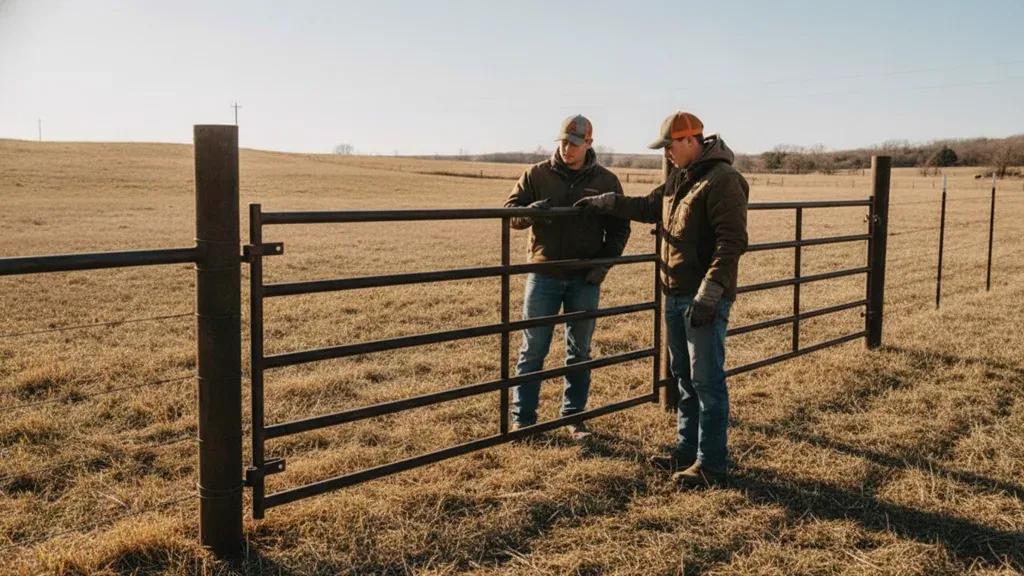
Inspect gate movement and connections from a safe position before accepting the work.
What makes a quality custom cattle corral hold up? Start with the support system
Posts and braces carry loads from rails, continuous fence, panels, and gates. Their size and setting should match the design, soil, expected use, and site conditions. There is no single post depth or diameter that fits every corral, so a measurement without context is not proof of quality.
Ask how the contractor will determine post size and embedment for your ground and the planned structure. Wet, loose, rocky, or disturbed areas can require different decisions than firm ground. Corners, ends, gate openings, and direction changes also deserve special attention because they carry or redirect force.
Do not focus only on the visible height of a post. Ask how the post, brace, rail, and connection details work as one support system. If excavation reveals ground that differs from what the proposal assumed, ask what will change, why the change is needed, and how the revised work will affect the agreed scope. That conversation is more useful than comparing one isolated measurement.
Match post setting to the load point
Support details should change where the fence changes direction or where a gate concentrates movement. The USDA Natural Resources Conservation Service livestock-handling guidance treats bracing, gates, and animal flow as connected design decisions, not isolated parts. Ask the contractor to identify the load points on the plan and explain how corner, end, and gate posts will be supported. NRCS livestock-handling facility designs provide useful questions for that discussion.
The setting method matters as much as the measurement. A contractor may drive a post where soil permits or auger and backfill where rock, unstable soil, or a larger post changes the installation method. The proposal should explain how the crew will respond if actual soil conditions do not match the initial assumption.
- Ask what supports the design:
Have the contractor explain how soil, layout, gate width, and intended use shape the post plan.
- Check alignment:
Posts should follow the intended line without obvious leaning or unexplained variation.
- Look at bracing as a system:
Braces should transfer tension and load instead of serving as decoration.
- Discuss concealed work:
Ask how the buried portion will be set and, where practical, observe representative stages before they are covered.
Proper bracing and tension are part of a fence built to last. Rapid Fence provides agricultural fence installation and related fencing services in Central Nebraska.
How do welds and panel connections show construction quality?
Connections join individual pieces into a working structure. Whether a project uses continuous fence, panels, or another configuration, inspect joints and fasteners from a safe position. Look for visible gaps, cracked areas, sharp projections, loose fasteners, or parts that move when they should be secure.
Pay close attention to corners, gate openings, and transitions because these areas see repeated use or forces from more than one direction. Do not judge a weld only by how smooth it looks. Appearance alone cannot establish strength, and paint may hide details. Ask the builder to explain the connection method and identify any areas that need special attention.
Ask how the chosen materials work together
A durable build is more than a strong-looking panel. Ask which steel, wood, or other support materials are specified, how exposed surfaces are protected, and which fasteners or welds join the parts. The answer should connect material choice to livestock pressure, repeated gate use, moisture, and the site's soil conditions. If the proposal lists only a generic panel or rail without describing the support posts and connection points, ask for the missing details before comparing bids.
Panel alignment also affects daily use. Rails should meet cleanly at corners and openings. The finished structure should not have unexpected spaces, exposed ends, or edges that create an avoidable livestock or worker safety concern. Compare the completed work with the agreed layout before accepting it.
Ask how the connection details will be protected and maintained in the conditions where the corral will operate. A connection that looks acceptable on a dry installation day still needs to remain secure as the structure is used. You do not need to perform a technical weld test during a walk-through. You do need a clear explanation of what was built, what you can inspect safely, and what should be reported if movement or damage appears later.
What makes a quality custom cattle corral easy to use? Check the gates
Gate hardware determines whether a fixed structure remains easy to use. A dependable gate needs suitable hinges, secure attachment points, enough ground clearance, and a latch that works from the positions where people will reach it. Gate weight, width, swing direction, and livestock flow all matter.
Walk through every opening with the contractor. Open and close each gate through its full range. It should not drag, bind, strike nearby parts, or require an awkward lift. The latch should line up and engage securely without an improvised tie or workaround.
Confirm that hinges are firmly attached to sound support posts.
Make sure the gate clears the ground during its normal swing.
Test the latch several times and confirm that it holds.
Look for pinch points, sharp edges, or gaps that do not fit the intended livestock use.
Consider access beyond the gate itself. An opening may need to accommodate a trailer, animal movement between sections, or routine equipment. Rapid Fence's farm gate buyer's guide offers additional planning questions.
What should a Nebraska corral handle through changing weather?
A Nebraska corral should be planned for ordinary exposure to wind, moisture, temperature changes, and ground movement. Weather-ready construction does not mean a fence is maintenance-free. It means the materials, bracing, drainage, and layout are selected with the site and expected use in mind.
Ask how the chosen materials fit the setting and what routine checks make sense. Drainage matters around posts and gates, especially where standing water or runoff can change the ground. Slopes and high-traffic areas may need practical adjustments rather than a one-size-fits-all installation.
Plan for soil, moisture, and temperature changes
Seasonal movement is a construction issue, not just a maintenance issue. Moisture can change soil support, freeze-thaw cycles can move poorly set posts, and temperature changes can affect tension in wire systems. Ask when the crew expects to set posts, how water will move away from high-use areas, and what should be checked after the first period of severe weather. A site-specific answer is more useful than a promise that any material will remain maintenance-free.
For Nebraska-focused agricultural background, review the University of Nebraska-Lincoln Extension resource and the USDA NRCS livestock handling facilities designs. Specific recommendations still depend on the property, animals, and construction method.
After installation, check for leaning posts, loose connections, damaged rails, gate changes, or shifted bracing, especially after severe weather or heavy use. If an existing fence needs attention, Rapid Fence also provides agricultural fence repair in Nebraska.
Pay particular attention to gates and other high-use areas during the first part of normal operation. Notice whether equipment approaches cleanly, whether animals move through the intended path, and whether mud, debris, or ground movement changes gate clearance. These observations can reveal a layout or maintenance issue that is easy to miss when the corral is viewed only from the road.
How do you evaluate a completed corral before signing off?
A final walk-through lets you compare the completed work with the written scope while the crew is still on site. Walk the full perimeter, inspect corners and transitions, operate every gate, and write down anything that needs correction or explanation.
What to compare | Question to ask | What a clear answer covers |
Posts and bracing | How do the support details fit this site? | Soil, load points, layout, and how the system works together |
Materials | Why were these rails, panels, posts, and fasteners selected? | Livestock use, exposure, protective finish or treatment, and connection compatibility |
Connections | How are rails, panels, corners, and transitions joined? | Connection method, secure fit, and correction process |
Gates | What hardware and swing setup are included? | Support, clearance, latch operation, and safe access |
Site conditions | How will slope, drainage, or unexpected ground be handled? | Site review and how changes will be discussed |
Completion | What will we inspect before sign-off? | Walk-through, remaining work, agreed changes, and care guidance |
Keep the comparison tied to the actual scope. One proposal may include fence tear-outs, fence line cleaning, dirt work, or access preparation while another covers installation only. Ask each contractor to state what is included, what is not, and how unexpected obstructions or layout changes will be handled.
Keep a copy of the scope, agreed changes, and maintenance information with your farm records. If you cannot be present for every stage, agree in advance on how important decisions will be shared.
Before sign-off, confirm that the work area is left in the condition promised by the scope and that any removed material, debris, or access preparation has been addressed as agreed. Ask who to contact with a question after the crew leaves. A short, documented handoff gives the farm owner and contractor the same understanding of what was completed and what care the system needs.
For examples of completed work, review Rapid Fence's fencing project gallery. Use examples to start a conversation, not as a promise that another layout or material will suit your operation.
What makes a quality custom cattle corral fit the work?
Quality comes from decisions that fit together: a plan based on livestock and daily work, with posts and braces suited to the site, dependable connections, and gates that function well. Nebraska weather and ground conditions make a site-specific discussion especially important.
Before work begins, understand the scope, layout, change process, and final inspection. If you are gathering proposals, ask each contractor the same questions and compare the explanations as well as the materials listed. That makes it easier to choose a corral that fits your handling needs and working land.
Frequently asked questions
Is there one correct post depth for every cattle corral?
No. Appropriate post setting depends on the site, soil, design, and loads the structure must handle. Ask the contractor to explain the plan for your property instead of relying on a measurement without context.
How can I tell whether a gate is installed correctly?
Open and close it fully several times. It should move without dragging or binding, clear the ground, and latch securely. Check that hinges and support posts appear secure and that the opening fits the planned use.
What should I inspect before accepting a new corral?
Walk the full perimeter, check alignment and visible connections, operate every gate and latch, and compare the work with the written scope. Note concerns and agree on how they will be addressed before signing off.
Does a durable corral require no maintenance?
No fence should be treated as maintenance-free. Periodically check posts, braces, connections, rails, and gates, especially after severe weather or heavy use, and address damage or movement promptly.
Comments