
Farm Fence Maintenance: Farm Gate Snow Clearance Steps

Farm fence maintenance in winter often starts at the gate. A drift can block the route used for feed, equipment, or livestock, and forcing a stuck gate may strain hinges, posts, braces, or wire. Clear snow carefully, then check the gate and the fence connected to it before putting the opening back into regular use.
Why can winter snow around a gate become a fence problem?
A farm gate is part of a working fence system. It has to swing through a clear path, meet its latch, and transfer its load to sound support. When snow packs against the gate or fills its swing area, a person may push harder, try to drive through a drift, or leave the gate partly open. Those actions can turn a blocked approach into a damaged connection or an unsecured livestock opening.
Snow does not always collect evenly. Wind may leave a deep bank at one entrance while nearby ground stays mostly clear. A thaw and refreeze can also leave packed snow or ice where the gate meets the ground. In Central Nebraska, check exposed approaches after wind and weather changes, especially where drifting could conceal the bottom of the fence or hide an uneven spot in the travel path.
A gate that binds is not automatically a hinge problem. Snow and ice, a sagging gate, shifted post, loose brace, or latch misalignment can feel much the same when you try to move it. Clear the opening first, then inspect the gate without forcing it. For background on moving parts and support, see Rapid Fence's guide to farm gate hinge types.
Which gates and fence sections should you inspect first?
Begin with the openings that matter to daily work: the gate used to bring in feed, the equipment entrance, and the route livestock use between pasture and handling areas. Then inspect both fence sections attached to each opening. A gate can swing normally while the adjacent wire, post, or brace has shifted, leaving a weak point at the transition.
- Gate approach:
Look across the full width used by people, vehicles, and livestock. Include the arc of the gate, not just the latch area.
- Hinge end:
Look for a post that leans, a visibly loose connection, or a gate that has dropped or twisted.
- Latch end:
Check whether the gate lines up with its latch without lifting, pulling, or pushing it into place.
- Braces and corners:
Look for movement, broken or loose parts, or a change in how the brace meets the post.
- Wire and panels:
Notice broken strands, slack, displaced connections, or a gap at the gate transition.
- Ground and drainage:
Check for ice, ruts, and meltwater that could leave the approach slick or uneven.
- Livestock boundary:
Look for any opening that snow could conceal or animals could press through.
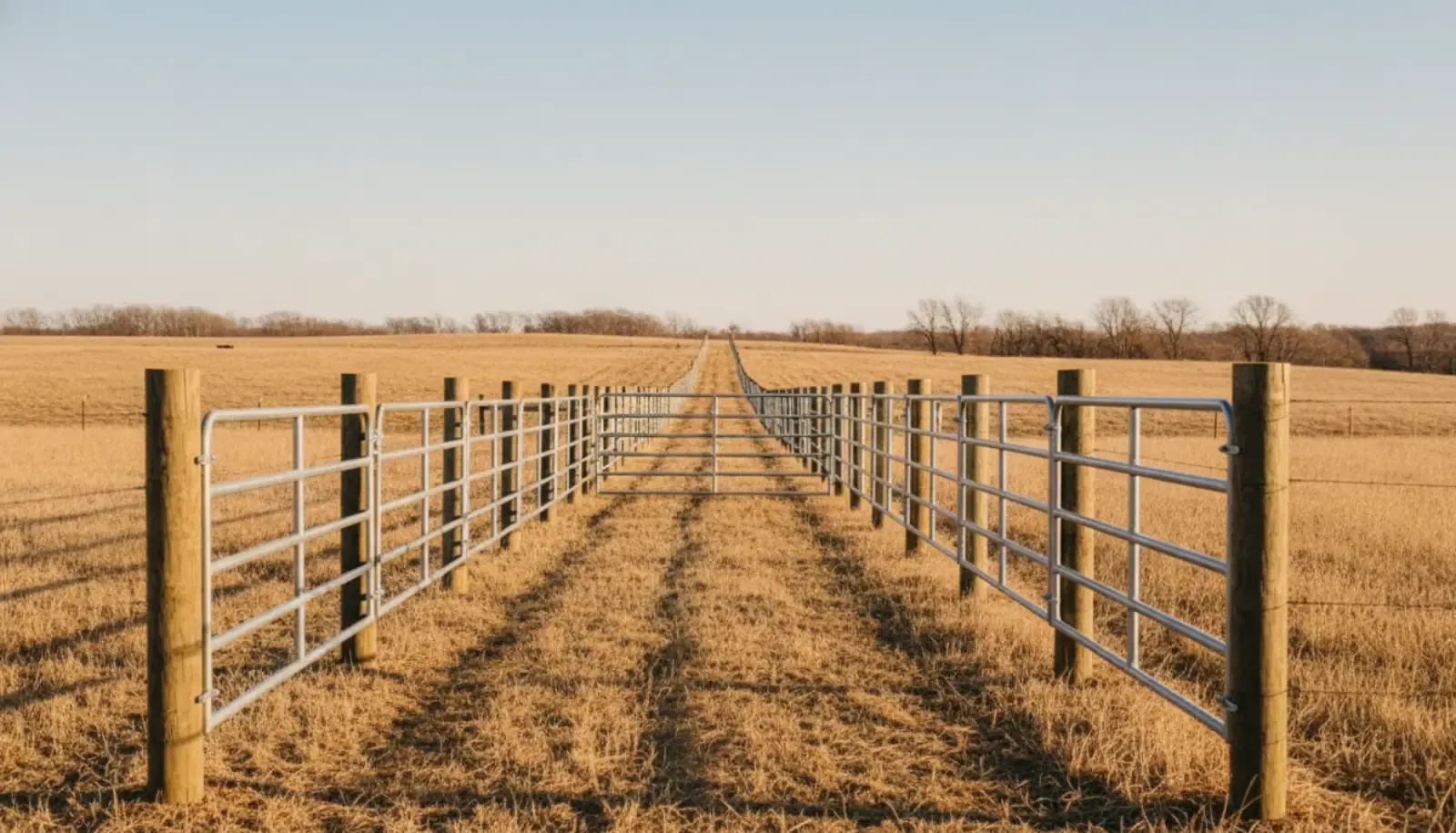
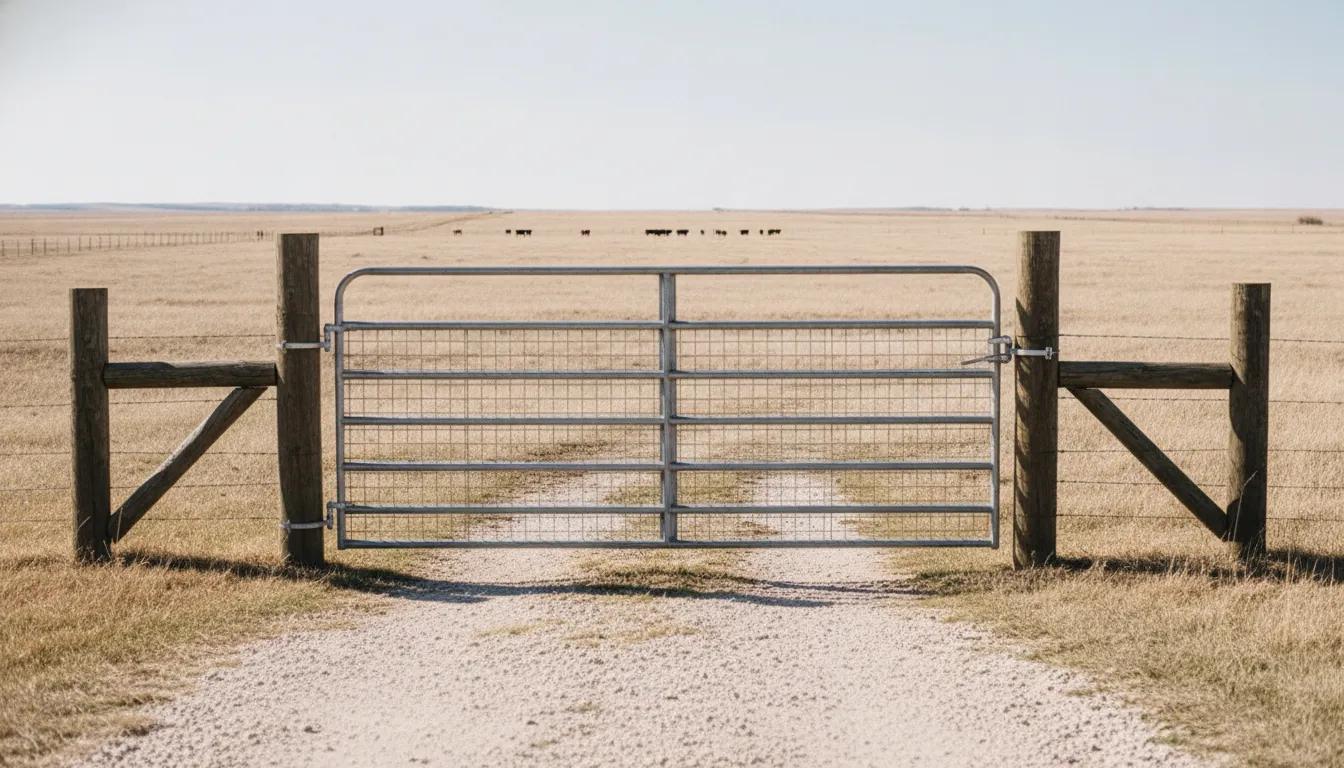
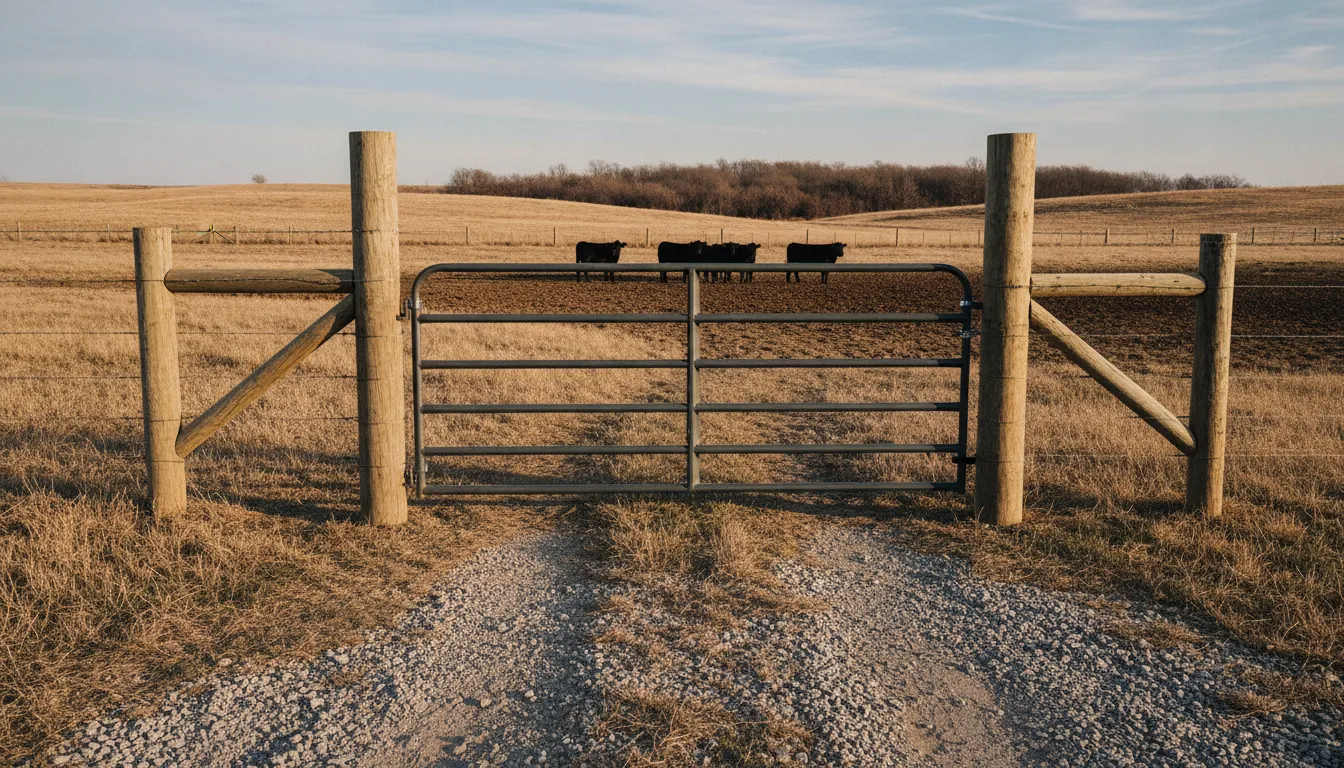
Take a wide photo first so the gate, fence line, and approach appear together. A close photo can show the hinge, latch, brace, or wire connection. Rapid Fence's agricultural fence photos provide examples of farm fencing, but the useful comparison is the condition and layout at your own site.
How should you clear snow without stressing the gate?
Before working, keep people and livestock out of the gate's travel path. Do not stand beneath a gate that appears unstable, and do not try to free frozen hardware by yanking or striking it. If a post is leaning, a gate is bent, or a connection has pulled loose, stop using that opening and keep the area controlled while you plan the next step.
- Decide what needs to pass.
Identify the clearance needed for the vehicle, trailer, person, or animals involved. If the gate must swing fully, the route includes its entire travel arc.
- Clear loose snow in manageable layers.
Work from the approach toward the gate. Keep tools away from wire, hinges, and latches; do not use the gate to push snow aside.
- Open the full swing path.
Clear the space where the gate moves and where it rests when open. A narrow passage may not be enough if the gate catches on a snowbank.
- Make a safe working area.
Clear footing where you need to stand and turn. Place removed snow where it will not block the opening, cover fence components, or send meltwater back across the route.
- Test gently, only if the gate looks sound.
Move it slowly by hand after clearing. Stop if it catches, drops, twists, rubs hard, or pulls on its post.
- Keep containment in place.
If the gate must remain open during work, use a safe alternate enclosure or plan to keep animals away from the opening. Do not leave livestock access unsecured.
Do not ram a drift with a vehicle or drag a gate free. Force can travel from the gate frame into hinges, the post, the brace, and the connected fence. If heavy equipment is needed to clear snow, work cautiously and keep the blade or bucket away from the fence structure. Check the forecast and winter weather information from the National Weather Service before planning outdoor work; conditions and alerts can change, so use current local information.
What should you record during a winter fence check?
A brief record helps you distinguish a temporary snow blockage from a problem that remains after the area is clear. Write down the date, which gate you checked, recent weather, what you observed, and how the gate behaved during a gentle test. Note whether the latch worked after clearing or whether the same binding remained. If the concern changes, photos taken from the same position make the difference easier to see.
Area | What to look for | Useful next step |
Approach and swing path | Drift, packed snow, ice, blocked travel lane | Clear carefully and note where snow returns |
Gate movement | Binding, sagging, dragging, poor latch fit | Do not force it; photograph the alignment |
Hinge post and brace | Leaning, looseness, visible movement or damage | Limit gate use and request an assessment |
Connected fence | Loose or broken wire, displaced connection, gap | Protect livestock containment and record the span |
Ground | Ice, rutting, pooling meltwater, unsafe footing | Make access safer and watch for a recurring issue |
It can help to compare a winter observation with a check made after rain or thaw. Rapid Fence's article on inspecting a fence after changing weather offers another way to think about changes at posts, low areas, and fence transitions. The point is not to diagnose a structural problem from a photo; it is to record what changed and where.
A simple post-storm routine keeps the check focused. First, confirm that weather and footing allow a safe visit. Next, walk the route from a distance and identify whether the blockage is loose snow, packed snow, ice, or a possible fence problem. Clear only what is needed to restore the route safely. Then test the gate gently and compare its movement with what you noted before the storm. If it works normally once clear, make a note of where drifting collected so you can plan snow placement next time. If it still drags or will not meet the latch, do not keep testing it under force. Record the remaining symptom and check the hinge post, brace, and connecting fence for visible changes.
That order also helps separate access work from repair work. A shovel or snow blower can address a clear snow blockage; it cannot correct a shifted post or damaged brace. Keep the gate out of regular use when its condition is uncertain, especially if livestock or a vehicle could load it unexpectedly. When another route is available, use it until you can make a safer assessment. When no alternate route exists, decide first how to maintain livestock containment and safe access rather than improvising around a weak gate.
When is the problem more than snow clearance?
If the gate is still difficult to move once the snow is out of the way, do not keep applying force. Look for visible signs that the issue involves alignment or support: a leaning hinge post, a loose brace, a bent connection, a gate that has dropped, or a latch that no longer meets cleanly. A broken strand, pulled connection, or opening that livestock can reach also calls for attention beyond clearing the approach.
Different parts of a fence share load. A gate and its posts connect to the brace and the fence line, so a problem that appears small at one point may involve the adjoining structure. Repeatedly tying up loose wire or adjusting a latch without understanding why the gate shifted may leave the cause in place. Rapid Fence provides agricultural fence installation and repair, including structural repair. The Nebraska agricultural fence repair guide also discusses signs that a fence issue needs a closer look.
If cattle are loose or the boundary is open, prioritize containment. Move animals only when it is safe, use a sound alternate enclosure if one is available, and keep people away from a gate or post that appears unstable. For decisions about gates and openings, Rapid Fence also has practical guidance on choosing farm and ranch gates and farm gate hardware.
How can you prepare the gate before the next snow?
A short pre-winter walk-through can reveal a gate that already drags or a brace that appears loose before snow makes access harder. Test the gate in normal conditions, confirm that it swings and latches without a hard pull, and note the space needed for equipment to approach and turn. If a gate is part of a busy route, confirm that snow can be placed without blocking the entrance or burying the fence edge.
List the gates needed for feed, livestock movement, and equipment access.
Check each gate's swing path and the space needed to approach it.
Look at hinges, latches, posts, braces, and fence connections for visible changes.
Decide where cleared snow can go without blocking access or concealing wire.
Identify a safe alternate enclosure or route in case a gate becomes unusable.
Record the location of any concern so it is easy to check again after a storm.
Gate size and approach layout affect how much working room you need. Rapid Fence's guides to a 10-foot farm gate and 12-foot farm gate cover gate planning from a broader perspective. They are useful context when you are reviewing access, but the actual opening should match the traffic and site layout on your property.
What information helps when requesting a fence repair?
Give the contractor a clear description instead of only saying that a gate is frozen or stuck. Name the pasture or entrance, explain what needs to pass through, and say whether the problem remained after loose snow was cleared. Note whether the gate sags, binds at one point, misses its latch, or appears to pull on a post. Mention any broken wire, loose brace, or livestock-containment concern.
Photos are helpful when taken safely. Include one view that shows the approach and adjacent fence, then closer views of the part that appears damaged. If snow hides the ground or a connection, say so rather than guessing what is underneath. Rapid Fence is based in Scotia and serves Central Nebraska, including Greeley, Buffalo, and Hall Counties, along with additional communities such as Columbus in Platte County, Albion in Boone County, O'Neill in Holt County, and Broken Bow in Custer County. You can review farm fencing and gate access for hay routes, browse the corral fencing guide, or use the contact page to request fencing service.
The service page also outlines farm fence maintenance and repair options. When describing a project, include the fence type, approximate affected length, and whether the gate is currently usable. Share the location and any safely captured photos so the concern is clear from the start.
Frequently asked questions
Can I force a farm gate open if it is frozen?
No. Forcing a gate can strain the frame, hinge, post, or brace. Clear loose snow first. If the gate still catches or appears damaged, stop using it and arrange an assessment.
Should I pile cleared snow beside the fence?
Avoid piling snow against a gate, wire, or post. A bank can block inspection, cover a gap, and make it harder to see how close livestock are to the boundary. Put removed snow where it will not obstruct the approach or fence line.
What if the gate swings but will not latch?
Check whether snow or ice remains in the approach, then look for a visible change in alignment or sagging. Do not lift or shove the gate into the latch repeatedly. If it still will not line up, the post, brace, gate, or hardware may need attention.
When should I ask for structural repair?
Ask for an assessment when a post or brace has moved, a gate is bent or sagging, wire is broken, or the fence no longer contains livestock. Keep animals away from an unsafe opening while arranging next steps.
Keep winter access and containment in view
Clearing a farm gate is about more than making a path for a vehicle. Check the opening, its supports, and the fence attached to it, then stop if anything looks unstable. A careful winter check can restore access where snow is the only problem and help you recognize when the gate or fence needs repair.
Article by Cody Koehn, CEO, Rapid Fence.
Comments