
Metal Livestock Fence Panels for a Cattle Lane

Metal livestock fence panels for a cattle lane work when the whole lane is planned as one connected system. The panels have to hold animal pressure. The line has to stay straight. People and equipment still need a way in. And the lane has to meet the gate and the rest of the pen without a weak joint. A panel that looks strong in the yard can still fail if the posts, ground, and gate swing were never lined up together.
Call Rapid Fence at (308) 223-1320 to talk through a cattle-lane layout and request a fencing quote.
Rapid Fence builds agricultural and livestock fence from Scotia, Nebraska, for farms and ranches across Greeley, Buffalo, and Hall counties, and farther across Central Nebraska, including places out toward Custer County. The livestock fencing options include continuous fence, the heavy-duty steel choice for high-pressure working areas. Custom corrals, barbwire, and hi-tensile perimeters sit beside that work. Fence line cleaning and dirt work come first, so the posts go into ground that was actually prepared.
What metal livestock fence panels have to do in a cattle lane
A cattle lane is not simply a pasture fence with a fancier name. Cattle are packed closer together, and they push, turn, and stop against the same steel. A person often walks the line while a tractor or stock trailer uses the same ground on another day. Metal livestock fence panels earn their place here because a welded or piped steel section stays rigid when a cow leans on it. Wire can contain a herd on open grass. It makes a poor wall once cattle are packed into a working lane.
Think of the lane as four jobs stacked on one footprint:
Hold animal pressure without bowing or opening a gap at the post.
Stay straight enough that cattle can see where they are going.
Leave access for a handler, a gate, and the equipment that services the pen.
Transition cleanly into the next panel, a gate, or a different fence type.
Skip one of those jobs and the others get harder. A bowed panel hides the next gate. A gate that swings into the lane blocks the cattle that were moving fine a minute earlier. A low spot collects mud, and cattle then shove the same panel every time they slip.
University of Nebraska Extension has noted that bruises and hard handling often trace back to corners, gates, and the way cattle meet the facility, not to one bad afternoon. Ruth Woiwode's BeefWatch note on feedlot cattle handling practices is a useful reminder: layout and stockmanship work together. Temple Grandin's handling facility layout rules make a related point. A crowd pen should be level, and an animal should be able to see a short distance up the single-file race before it bends. A farm lane is not a packing-plant chute. The same idea still applies. Cattle move better when the path is obvious and the footing is even.
This article stays on the lane. If you are still choosing panel style, height, or a general shopping list, start with the farm fence panels buyer's guide. If you are deciding whether a steel line belongs in the working area at all, the continuous cattle fence guide covers that system. The lane plan below assumes you already want metal panels in the high-pressure stretch.
How animal pressure shows up on a lane
Pressure is not spread evenly along a cattle lane, even when the panels look identical. It piles up where animals stop, turn, or get crowded. The first panel after a holding pen takes more abuse than a quiet middle section. So does the panel beside a gate that cattle have learned to rush. Bulls, cows with calves, and a full alley on processing day are different loads. Plan for the hardest day you actually run, not for an empty lane in a photo.
Watch the lane on a normal work morning before you order steel. Where do cattle pause? Where does a person stand? Where does a gate slam back against a post? Those spots need the stiffest panel, the best post, and a brace that does not rely on the next section to stay upright. A light portable panel can be fine for a temporary sort, but it is the wrong wall where the same animals hit the same place every week.
Footing changes the load. Packed, drained ground lets cattle walk. A soft spot makes them scramble, and scrambling cattle hit panels with a shoulder instead of a nose. In Central Nebraska that often means spring thaw, a low pocket after a hard rain, or a lane that was never graded before the posts went in. Dirt work is not a cosmetic extra on a working lane. It is how you keep the pressure where the steel can take it.
Height and openness matter too, but they are herd decisions, not catalog defaults. Calves find a gap that a mature cow ignores. A solid lower line can calm some cattle and spook others if it blocks the view of the path ahead. Grandin's layouts favor a race cattle can see into before it curves. On a farm lane, that usually means a straight, readable wall, not a surprise bend hidden behind a solid sheet.
Do not treat panel strength as a substitute for posts. A rigid panel still fails if the post it hangs on leans. Set posts for the pressure at that point in the lane. Brace the ends and the corners. A long run of panels with one lonely brace at the far gate will rack as soon as cattle push the middle.
How to keep the lane straight
Alignment is both a cattle decision and a construction decision. Cattle follow a line they can read. A zig-zag of panels, a post that drifted, or a gate frame that sits proud of the wall makes them balk. The same kink is where a panel joint starts to open.
Lay the lane out on the ground before a posthole is drilled. Mark both sides, not just the pretty edge you see from the yard. Check that the two lines stay parallel and that the opening at the end matches the gate you plan to hang. A lane that is wide at the holding pen and pinched at the exit creates the exact jam you were trying to avoid.
Straight does not mean the lane has to run unbroken all the way to the horizon. A gentle, planned curve can help cattle move, and Grandin's race drawings use that idea on purpose. An accidental crook in the panel line is a different problem. If you need a bend, make it one clear change of direction. Keep the footing level through it, and give cattle a view of the path before the turn. Hide the bend behind a solid panel and you will spend the season pushing cattle that cannot see an exit.
Tie alignment to the ground, not to an old fence that was never straight. Many Nebraska lanes get rebuilt on a line that wandered around a dead tree, a junk pile, or a soft spot. Clear the line first. If the old posts are the reference, the new panels will inherit every lean. Rapid Fence's site work includes fence tear-outs and fence line cleaning for that reason. The new steel should sit on a line you chose, not on whatever the last fence left behind.
Check the lane from cattle height, not only from the pickup. Kneel or stand at the entrance and look down the panels. You should see a clean edge, a gate that belongs in that edge, and no post sticking into the path. If a brace, a latch, or a hinge barrel breaks that line, cattle will treat it as a stop sign.
Where people and equipment need access
A lane that only works for cattle is only half a plan. Someone has to open a gate, step out of the way, and still reach a sick animal. A tractor has to bring bedding, feed, or a stock trailer close enough to matter. Access is the set of openings and standing room that make those jobs possible without cutting the panel line.
Start with the person who has to work the lane on foot. A handler needs a place to stand that is not inside the pinch point. A walk-through gate, a step-through at a braced end, or a gate that swings out of the lane can do that. The opening should not land where cattle are already stacked against the panel. Put the human door where you can reach the lead animal without becoming the blockage.
Then size the equipment opening for the machine you actually own, not for a trailer in a catalog. Measure the stock trailer, the tractor with the loader on, and the pickup you actually pull through the yard. Include mirrors, fenders, and the swing of a gate that has to clear the vehicle. A gate that looks wide on paper and clips a fender will get chained open. A chained-open gate is no longer a gate.
Access also means you can service the lane after it is built. Leave a way to grade a low spot, pull a damaged panel, and reach the latch side of every gate. Burying the only approach behind a continuous run of steel feels tidy until the first wheel rut needs dirt. On Rapid Fence jobs, dirt work and the fence are planned together so the lane can be maintained after the posts are set.
If the lane is one piece of a larger working corral, do not redesign the whole system in this step. Chute placement, sorting pens, and what to build first are covered in the livestock handling corral system design guide. Use that page for the big layout. Use this one to make the panel lane itself hold, stay straight, and stay usable.
How the lane should meet the next fence
Transitions are where otherwise good panels usually start to fail. The joint between two panels, the joint between a panel and a gate, and the joint between steel and a wire perimeter all move differently. If you only overlap them and hope, animal pressure finds the gap.
Panel-to-panel joints should land on a post or a connector that was meant to carry the load. A joint floating between posts lets the two sections work against each other. Over time the gap grows, a calf tests it, and the lane has a new exit. Line the joints up on both sides of the lane so the posts also line up. Staggered joints look minor and make bracing sloppy.
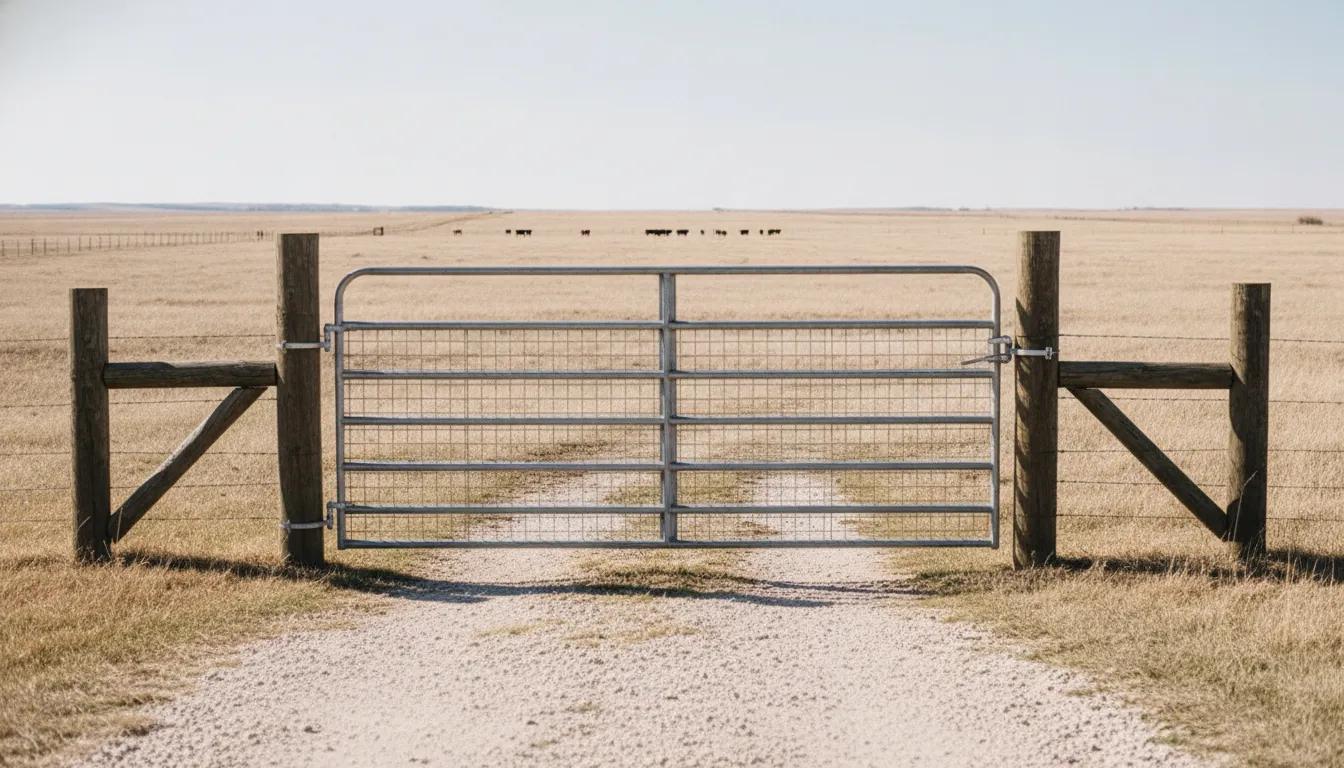
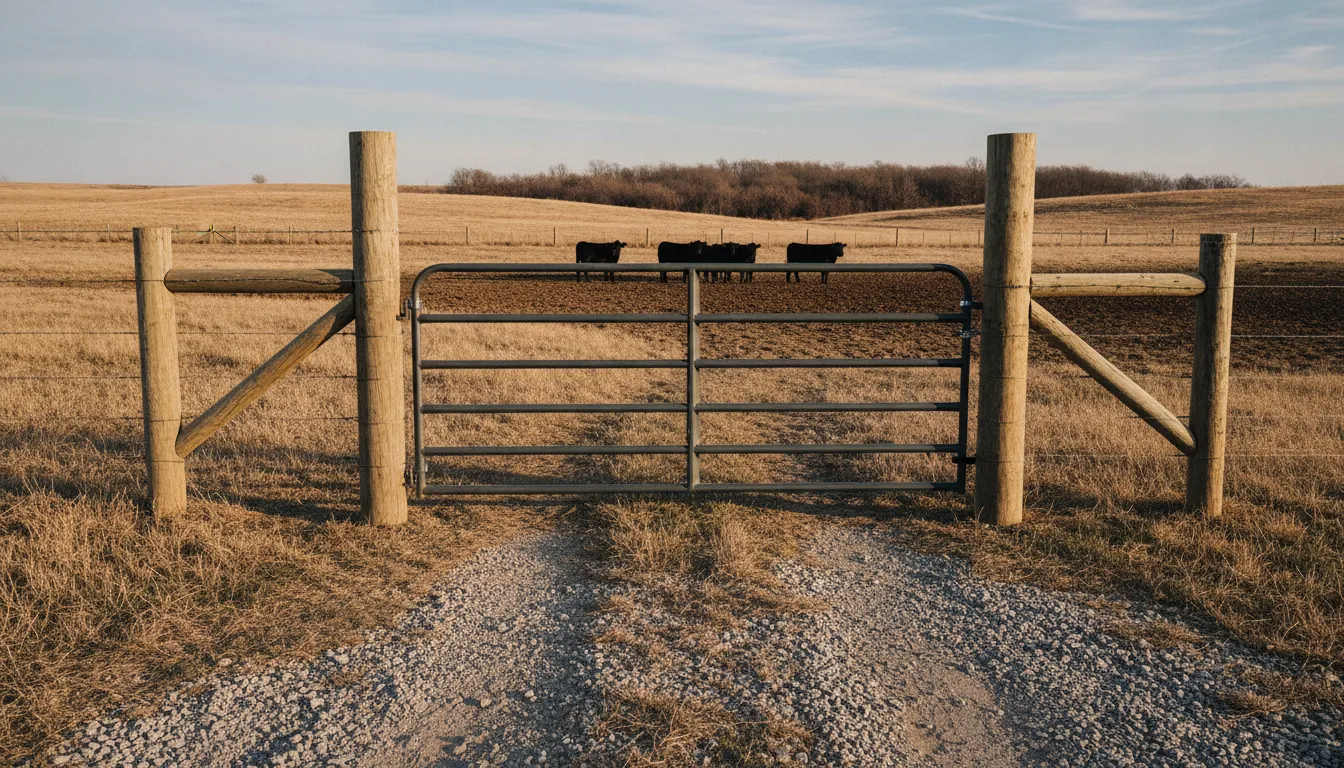
Panel-to-gate joints need a post that can carry the gate and the panel, not a panel end asked to act like a hinge post. The gate frame should sit in the same plane as the panels, or just enough outside it that the swing is clear. A gate that sticks into the lane is a bruise point and a balk point. For the hardware and the step-by-step of joining a gate to panels, use the fence panel gate transition guide. This lane plan only decides where that joint belongs.
Panel-to-wire joints are really a change from one fence type to another. Many Central Nebraska places use steel in the working lane and barbwire or hi-tensile on the long perimeter. That is a sound split. The transition still needs its own braced end. Do not tie a stretched wire directly to a light panel and expect either one to stay tight. End the steel on a real terminal post, then start the wire fence from that post or from the next braced assembly.
Walk every transition and ask one question: if a cow hits this joint at a walk, what moves? If the answer is "the panel gap" or "the gate latch," the joint is not finished. If the answer is "the post, and the post does not move," you can build on.
Which lane choice changes the build
The table below is a planning comparison, not a price sheet. Rapid Fence quotes each job from the site. The point is to see which choice moves the layout before anyone drills a hole.
Lane choice | What it is good for | Where it gets weak | Plan this before you build |
Heavy steel or continuous panels on set posts. | A lane cattle use every week, including bulls and cow-calf pairs. | Cost and a fixed footprint if you later move the pen. | Post depth, end braces, and a drained, graded base. |
Portable metal panels. | A short-term sort or a lane you truly relocate. | Racking and gaps once animals learn to push the same joint. | How the panels lock, and what keeps the ends from walking. |
Steel lane plus a wire perimeter. | Strength in the working alley and a lighter fence on the pasture line. | The joint where steel stops and wire starts. | A braced terminal, not a wire tied to a panel end. |
A straight lane with one planned bend. | Cattle that need to turn toward a gate or a holding pen. | A blind corner or a bend on soft ground. | A clear view into the turn and level footing through it. |
A wide equipment gate in the lane. | Stock trailers, tractors, and a way to grade the alley later. | A gate that swings into cattle or will not clear the machine. | Measure the real machine, then set the hinge post for that swing. |
If two rows in the table both describe your place, build for the harder of the two. A portable lane that becomes permanent is a common regret. So is a steel lane with no way to get a tractor in after the first wet spring.
A lane plan you can walk before you call
Use this order while you are still standing on the farm. It keeps the metal livestock fence panels tied to the lane instead of turning into a loose stack of steel.
Walk the route on a day you work cattle, and mark where animals push, stop, and turn.
Mark both sides of the lane and the gate openings, including the equipment gate.
Note low ground, old posts, and anything that has to be torn out or graded first.
Decide where steel must run and where a wire perimeter can take over.
Place every panel joint on a post, and give every gate its own hinge post.
Stand at cattle height and confirm the line is readable before you commit to the posts.
Leave a way for a person to step out and for a machine to service the lane later.
Bring that marked plan to the quote conversation. Photos of the push points help. So does a note on the trailer and tractor that must pass. Rapid Fence installs barbwire, hi-tensile, continuous fence, and custom corrals, and the crew also handles tear-outs, fence line cleaning, and dirt work. Match the lane to the rest of the farm fence before you ask for a number. The project gallery shows the kind of steel and pasture work already on the ground.
A cattle lane is a small piece of fence and a large piece of the workday. Get the pressure, the line, the access, and the transitions decided first. The panels then have a job they can actually do.
Ready for a quote? Call (308) 223-1320 and walk the cattle lane with Rapid Fence.
Frequently asked questions
Are metal livestock fence panels better than wire in a cattle lane?
For the working lane, metal panels are the stronger choice in most herds. Panels give you a rigid wall where cattle push and turn. Wire still makes sense on long pasture perimeters where the pressure is lower. Many farms use steel in the lane and barbwire or hi-tensile beyond the braced end.
How wide should the cattle lane be?
Make it wide enough for the animals you move and the machine that has to enter, while still keeping cattle pointed toward the exit. There is no single width that fits every Scotia-area place. Measure your trailer, your tractor, and a calm group of your own cattle, then set the two panel lines parallel to that opening.
Can portable panels stay in a permanent lane?
They can for a while. They get weak where the same joint is pushed every week and where the ends are not tied to a real post. If the lane is part of the regular working pen, set posts and treat the panels as a fixed fence.
Where do cattle usually break a panel lane?
At the first panel out of a holding pen, beside a gate they rush, and at any joint that does not land on a post. Soft ground makes all three worse because cattle hit the steel harder when they slip.
Do I need a contractor for the lane if I already own the panels?
Owning the panels does not solve posts, grade, braces, or gate swing. If the lane carries weekly cattle pressure, a crew that sets posts and does the dirt work will save the rebuild. Call (308) 223-1320 and describe the lane you marked.
Comments