
Types of Cattle Fencing Around a Pond

A livestock pond is a water source and a hazard at the same time. Cattle that walk the full shoreline cut the banks, foul the water, and can break through ice in a Central Nebraska winter. The useful question is not which fence brand to buy. It is how the layout keeps cattle off the pond while they can still drink, and how a crew can still reach the dam, the spillway, and the water line.
The types of cattle fencing that work on open pasture still work here, but the pond decides the shape. Fence the cattle out of the water and leave a grass buffer, while keeping the emergency spillway clear of wire and trails. Put a gate where a truck or a skid steer needs to enter. Then give the herd water from a tank below the dam, or from one limited ramp, instead of turning the whole shore into a watering hole.
Call Rapid Fence at (308) 223-1320 to walk a pond-edge layout in Central Nebraska.
What a Pond-Edge Fence Has to Do
A pasture fence has one job, which is holding cattle on the grass. A pond fence has four jobs, and they conflict if you treat the pond like any other corner of the pasture.
- Keep cattle off the water.
Unrestricted access erodes the shore and the dam face, drops sediment into the pond, and leaves manure where cattle drink. Kansas State University's livestock watering guidance lists those as the main reasons to fence a pond, and it also flags the winter risk of cattle walking out on ice.
- Leave a way to drink.
Fencing the pond without a tank or a limited ramp only moves the herd to a dry corner, so the fence and the watering point belong in the same project.
- Protect the drainage.
The emergency spillway has to pass a big rain, and a fence across it, or a cattle trail worn into it, can cut the dam's safety outlet.
- Leave room to maintain the site.
Someone still has to mow the buffer, check the pipe through the dam, and get equipment in after a storm. A fence with no gate becomes a barrier for the owner, not just for the cattle.
University of Nebraska-Lincoln Extension treats fencing and water as the basic infrastructure of a grazing system, rather than as two separate purchases. On a pond pasture, the layout is the decision. Wire type comes after the line is drawn. Rapid Fence builds that line as agricultural fence installation for farms and ranches from Scotia outward across the Central Nebraska service area, including Greeley, Buffalo, Hall, and neighboring counties such as Custer and Holt.
Lay Out the Line Before You Pick Wire
Walk the pond before anyone sets a post. Mark the waterline at a normal full pool, rather than after a dry August. Then mark where the water stands during a wet spring. A line that looks generous in September can sit in the water by May.
Kansas State recommends at least 30 feet of grass between the pond edge and the fence, because that strip filters sediment and nutrients before they reach the water. A wider strip is safer on a soft bank, or where geese and cattle have already cut a shelf into the shore. Keep the buffer in grass rather than brush. Woody cover along the shore makes the water harder to manage, and it hides weak spots in the fence.
Shape the enclosure so cattle do not carve trails into the corners. Sharp inside corners collect animals, and those corners turn into mud holes. A smoother curve, or a few longer sides, spreads that pressure along the line. Steep banks cost more to build, and they are where posts heave after a freeze. If a slope is too steep to hold a brace, move the line back onto ground a truck can drive.
Leave the top of the dam and the emergency spillway outside the cattle area whenever the ground allows it. Cattle trails on a dam face, or through a spillway, are how small ponds begin to fail. If the only practical line must cross a low saddle, build that piece so water can pass and so you can repair it after a wash. Do not close the spillway with a tight woven barrier that catches debris during a storm.
One practical test, also from the K-State pond guidance, is a temporary electric wire on the proposed line for a full season before you build a permanent fence. A wet spring will show which posts land in the flood line, and which corner the cattle refuse to respect. Adjust the drawing before you build the permanent fence.
A simple order for the walk-through
Mark full-pool shoreline, the dam, and the emergency spillway.
Step off at least a 30-foot grass buffer, wider on soft or steep banks.
Place one equipment gate and note where a tank can sit below the dam.
Flag corners you can brace on firm, dry ground.
Run a temporary wire for a season if the water line is uncertain.
Types of Cattle Fencing That Fit a Pond Edge
A pond fence is usually a short, high-pressure run with extra corners. It need not match every mile of pasture fence. It does have to stop thirsty cattle that still use the old path to the water. These are the types of cattle fencing that belong here, and what each one is bad at.
Fence type | Where it fits a pond | Watch-outs on a pond edge |
Four-wire barbwire | The usual permanent pond fence on flat to rolling Nebraska pasture. K-State calls four barbed wires on posts about 16 to 20 feet apart adequate for most pond enclosures. | Needs real braces at the extra corners a pond creates. Loose wire sags into the buffer and cattle push through. |
Hi-tensile or continuous wire | Longer, straighter runs set well back from the shore, where you want a tight cattle fence with fewer posts. | A wavy pond line full of corners wastes the advantage. Do not stretch it tight across a spillway that floods. |
Temporary electric | A one-season test of the line, or a way to flash-graze the buffer when banks are dry. | A single wire is hard for cattle and wildlife to see, and frozen ground fights the posts, so it should not be the winter fence. |
Woven wire | Short stretches where calves are the problem, set on dry ground behind the buffer. | Woven wire catches flood debris if it crosses a draw or a spillway, and it is harder to repair after a wash than a few strands of barbwire. |
For most Scotia-area cow herds, a braced barbwire enclosure is the permanent answer. Electric wire is only for testing the line or grazing the buffer. If the pond fence ties into a long pasture run, match the pasture fence at the junction so you are not maintaining two systems on one corner. A full herd-wide comparison of those wires lives in the guide to choosing a cattle fence. This page stays on the pond layout, while the adjoining pasture is a separate choice. Where that pasture is already hi-tensile, the continuous cattle fence guide covers that build. Continuous wire is a poor default for a tight curve around the water.
Keep the Water Available Without Opening the Shore
Fencing cattle away from the pond only works when the herd can still drink. Kansas State's pond-fencing chapter gives two clean options. Run a pipe through the dam to a tank below it, or build one limited ramp so cattle drink at a single hardened spot. Solar or animal-powered pumps can lift pond water to a tank when gravity will not.
A gravity tank below the dam is the cleaner layout when the pond sits on higher ground. Cattle never have to stand in the pond. You can set the tank on firm ground, fence it into the pasture, and service the float valve without opening the shoreline to the herd. Place the tank where the herd already travels, rather than in a mud pocket at the bottom of the slope. Leave a gap in the pond fence, or a short alley, so the tank stays on the cattle side while the dam stays protected.
A limited ramp is the fallback when a pipe through the dam is not practical on an older structure. Build one opening with a firm approach, and fence the rest of the shore tight. Cattle should reach the water and back straight out. They should not be able to walk the bank. If the approach is already cut down, repair that ground before you build around it, or the ramp simply formalizes the erosion.
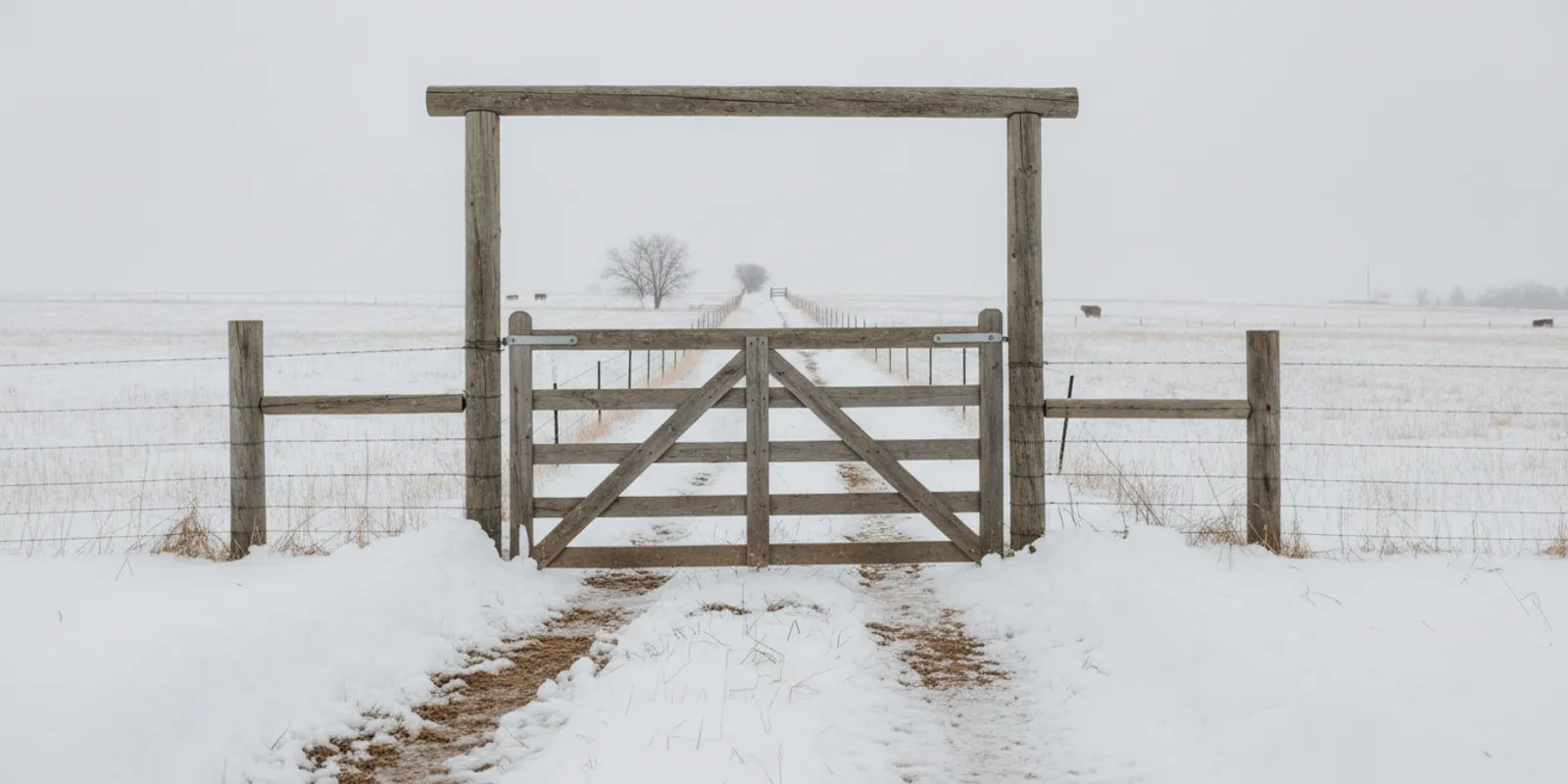
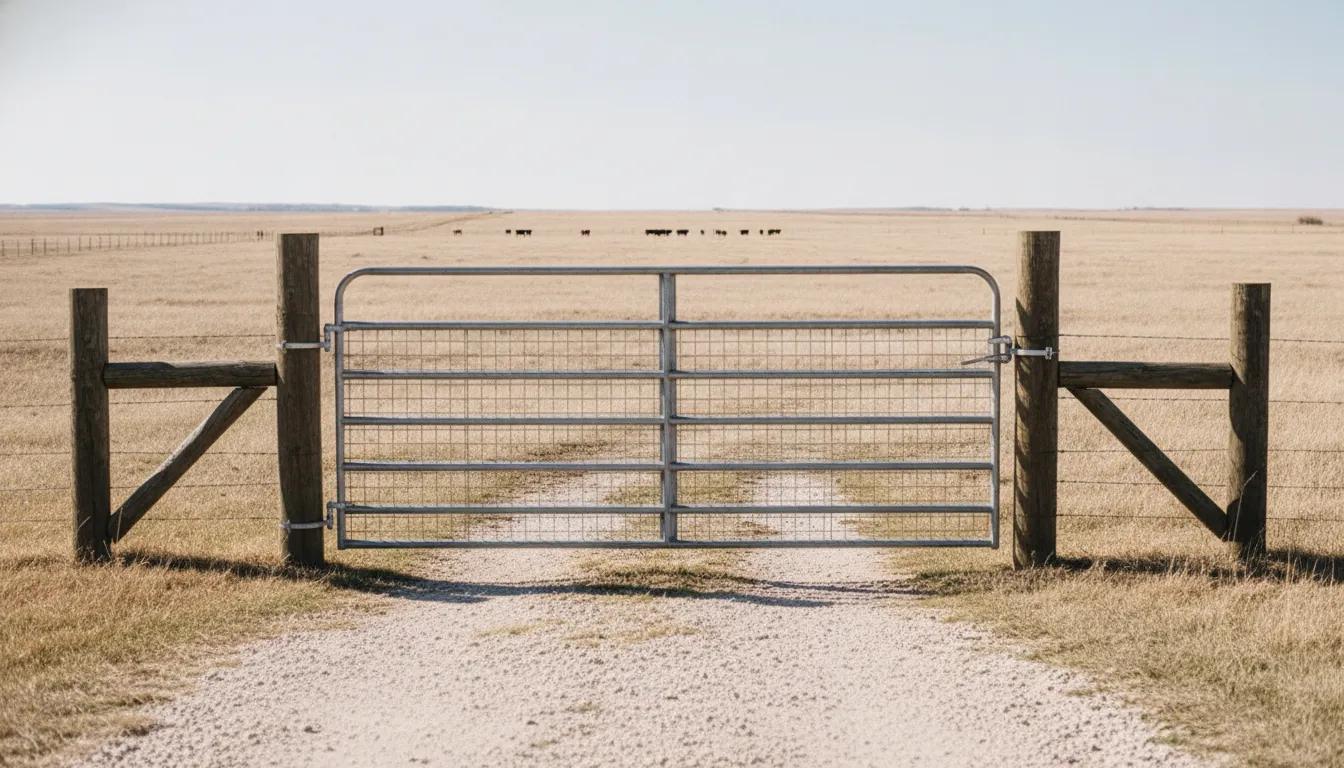
Either choice needs a gate in the pond fence. The gate is how you flash-graze the buffer once the banks are dry. It is also how a truck reaches the shore after a washout. Kansas State says to graze that buffer only after the banks are dry and stable. One well-placed gate beats three random openings. For how that gate should swing, and how wide it must be for equipment, use the farm and ranch gate guide rather than guessing from a narrow pasture walk-through gate.
Braces, Drainage, and the Pieces That Fail First
Pond fences fail at the corners, the low spots, and the gates, rather than in the middle of a straight span. An irregular shoreline creates more corners than a square pasture of the same size. Every corner needs a brace that stays tight in wet ground. Undersized braces are why a pond fence looks sound in July and lies down by April.
Posts spaced at 16 to 20 feet match the K-State guidance for a four-wire barbwire pond fence. Tighten that spacing where cattle crowd the tank or the gate. Keep the posts above the flood line you marked during the wet season. A post that stands in water for part of the year rots or heaves, and it takes the wire with it.
Do not treat the emergency spillway as if it were an ordinary fence line. If the line must cross a low spot, plan that bay as the piece you will rebuild, and leave room to clear debris after high water. A corner brace built to last belongs on the dry ground at each end of that bay, not in the channel. Strand count on the cattle side should follow the pasture practice you already trust. The strand-count guide for cattle is the place for that choice. Four wires remain the K-State baseline for the pond enclosure itself.
Maintenance access is part of the layout, not an afterthought. You should see the whole buffer from the pasture side. You should walk the pipe or the ramp without climbing the wire, and mow the grass so it keeps filtering runoff. A fence tucked into cedars hides breaks until cattle are already in the water.
What This Layout Does Not Try to Answer
A pond-edge plan is a small and specific build. It is not a substitute for a whole-ranch fence choice, and it is not a corral. Alleys, sorting pens, and chute placement are a different project, and they use different spacing and different gates. Keep that work in the corral articles, rather than stretching a pond fence into a working facility.
This layout is also not a water-gap fence across a creek. A draw that floods is a different structure from a line set 30 feet back from still water on a pond. If the pasture has both a pond and a live creek, design them separately. A flood in the draw should not take out the pond fence.
An electric-only fence can prove a proposed line, or protect a buffer, for a single season. It is a weak permanent choice wherever cattle push toward open water through the winter. For the tradeoffs between hi-tensile and woven wire on the larger pasture, read the pasture wire comparison. Use this page to decide where the pond line sits, where the gate belongs, and how cattle reach water without standing in it.
Rapid Fence crews see these ponds from the home ground around Scotia and Greeley County out toward Ord, Broken Bow, and Burwell. The soils and the dam change from place to place. The layout rules do not: stay off the shore, stay off the spillway, and leave yourself a gate.
Call (308) 223-1320 and ask Rapid Fence to price the pond fence, the gate, and the water-access point together.
Frequently Asked Questions
How far should a cattle fence sit from a livestock pond?
Give the shore at least 30 feet of grass between the water and the fence. Add more width where the bank is soft, steep, or already cut into a shelf. That grass buffer filters sediment before it reaches the pond, and it keeps cattle off the face of the dam. Measure the setback from a normal full-pool line, because a drought shoreline will put the posts in the water during a wet spring.
Can cattle still drink if the pond is fenced off?
Yes, if you replace the open shore with another drink. Run a pipe through the dam to a tank on the pasture side, or build one limited ramp and fence the rest of the shore tight. Cattle still need a daily drink, so fencing the water without a replacement only teaches the herd to push through the new fence. A tank below the dam is the cleaner of the two choices when gravity will carry the water.
What wire works best around a farm pond in Nebraska?
Four strands of barbwire, on posts about 16 to 20 feet apart, are the standard permanent fence for most Nebraska pond enclosures. Add a solid brace at every extra corner the shoreline creates. Hi-tensile wire fits a long, straight setback well back from the water. A temporary electric fence is useful for testing the line for a season, but it is a weak choice for carrying the herd through winter.
Should the fence cross the emergency spillway?
No, not if you can help it. Avoid the spillway whenever the ground lets you. That outlet has to pass flood water, and a cattle trail worn through it will erode the safety valve for the dam. If a crossing truly cannot be avoided, treat that one bay as a piece you can clear and rebuild after a storm. Set the braces on dry ground at each end, not down in the channel.
Do I need a gate in a pond fence?
Yes, plan on one. One equipment-width gate lets you flash-graze the grass buffer after the banks have dried, and it lets a truck reach the shore for a repair. Without that opening, the fence that protects the pond also blocks the owner. Set the gate on firm ground beside the enclosure, not down in the emergency spillway.
Sources: Kansas State University, Pond Fencing, livestock watering handbook. University of Nebraska-Lincoln, Fencing and Water for Beef Cattle, BeefWatch, October 2020.
Comments